
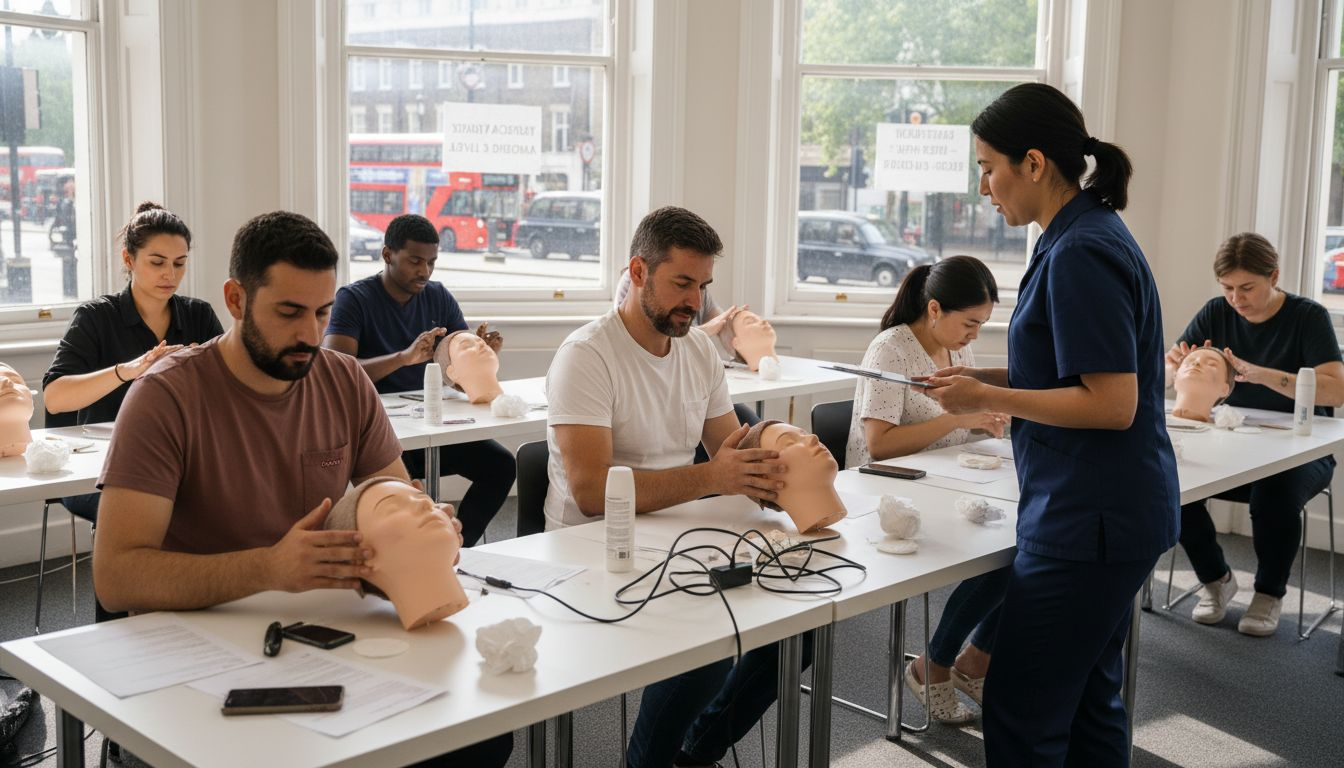
Choosing the right path in beauty therapy can feel confusing, especially with so many courses promising quick results. For those in Essex aiming to stand out, understanding the value of recognised qualifications is essential. Accredited training goes beyond learning basic techniques, offering a trusted route to professional status and higher career prospects. Discover how accredited fast-track courses can help you gain confidence, reputable credentials, and real opportunities in the thriving aesthetic industry.
Table of Contents
- Definition And Role Of Accredited Training
- Types Of Beauty Therapy Accreditation
- How Accredited Training Works In The UK
- Essential Requirements And Entry Criteria
- Key Benefits For Aspiring Therapists
- Comparing Accredited And Non-Accredited Courses
Key Takeaways
| Point | Details |
|---|---|
| Importance of Accreditation | Accredited training in beauty therapy ensures high-quality education and industry recognition, enhancing employability and professional credibility. |
| Types of Qualifications | Beauty therapy qualifications range from Level 2 to Level 4, each catering to different skill levels and specialisations within the industry. |
| Role of Awarding Bodies | Key organisations like VTCT, City & Guilds, and ITEC provide structured accreditation, validating training programmes to uphold professional standards. |
| Benefits of Accredited Training | Pursuing accredited courses offers improved job prospects, higher earning potential, and access to advanced opportunities within the beauty sector. |
Definition and Role of Accredited Training
Accredited training represents a rigorous educational pathway designed to validate and enhance professional skills within specific industries. In the beauty therapy sector, accreditation serves as a critical quality assurance mechanism that ensures training programmes meet established professional standards.
At its core, accreditation provides a formal recognition by recognised awarding organisations that a course delivers comprehensive, high-quality learning experiences. This process involves a detailed evaluation of curriculum, assessment methods, and educational outcomes to guarantee learners receive industry-relevant knowledge and practical skills.
Key characteristics of accredited training include:
- Formal approval from recognised awarding bodies
- Standardised curriculum meeting industry benchmarks
- Comprehensive skills assessment
- Recognition by professional organisations
- Potential pathways for career progression
In the beauty industry, accreditation goes beyond simply obtaining a qualification. Professional validation means that students gain credentials recognised by employers, demonstrating their commitment to professional development and adherence to established industry standards.
Pro tip: Always verify the specific accrediting body and their recognition within your chosen beauty therapy specialisation before enrolling in any training programme.
Types of Beauty Therapy Accreditation
Beauty therapy accreditation in the United Kingdom encompasses several distinct levels and recognised qualifications that validate professional competence and skill development. Professional beauty qualifications range from foundational entry-level certifications to advanced specialised credentials, each designed to meet specific industry standards and career progression requirements.
The primary types of beauty therapy accreditation include:
- Level 2 Qualifications: Basic beauty skills and foundational treatments
- Level 3 Qualifications: Advanced beauty therapy techniques and comprehensive treatment knowledge
- Level 4 Qualifications: Specialised aesthetic treatments and advanced professional practice
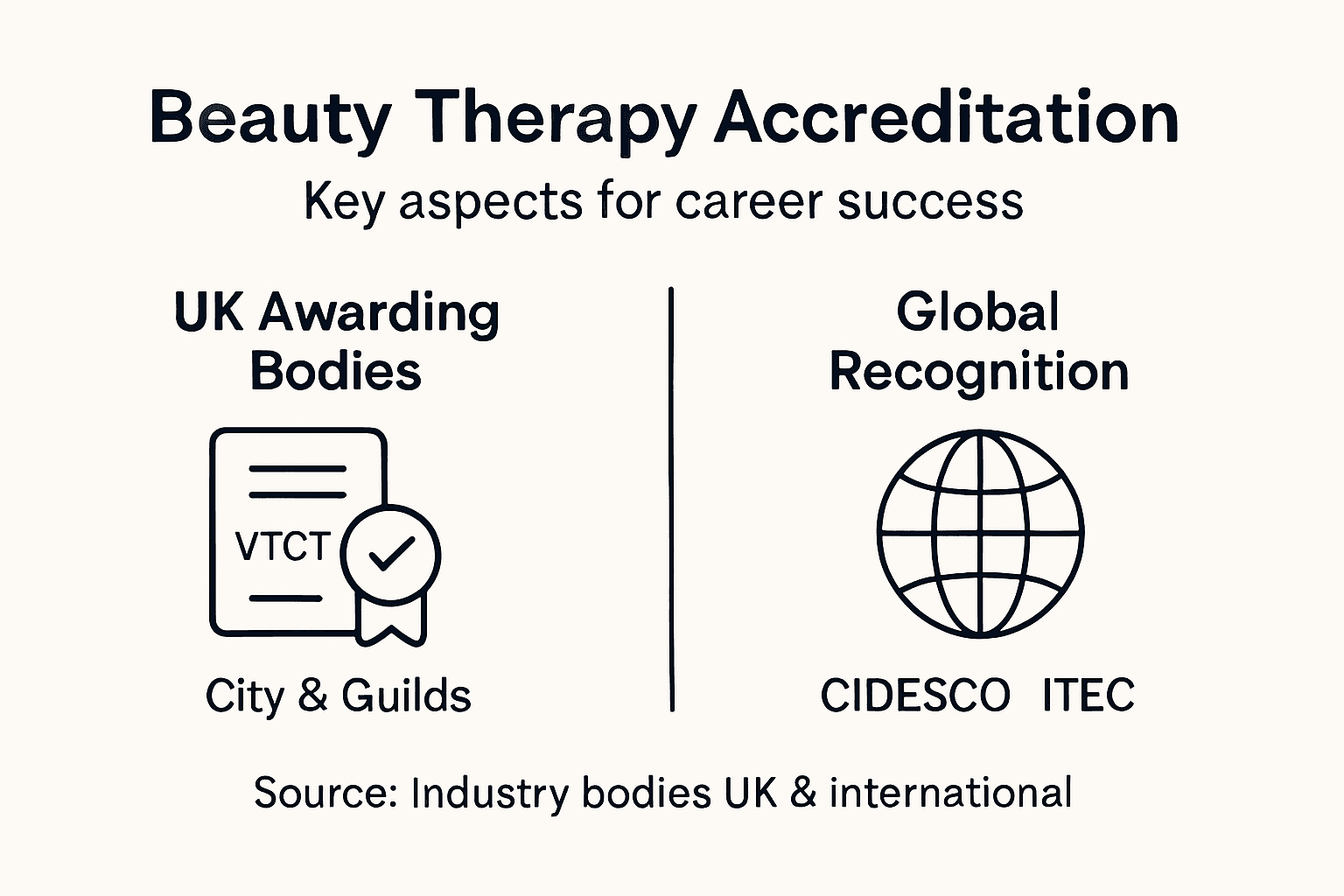
Key awarding bodies in the United Kingdom responsible for beauty therapy accreditation are VTCT, City & Guilds, ITEC, CIBTAC, and CIDESCO. These organisations ensure that training programmes meet rigorous professional standards, providing learners with recognised and validated qualifications that are respected across the beauty industry.

International recognition plays a crucial role in beauty therapy accreditation. Qualifications from bodies like CIDESCO and CIBTAC offer global validation, enabling therapists to demonstrate their expertise beyond local markets and potentially pursue international career opportunities.
Moreover, different accreditation levels serve specific professional development stages. Level 2 and Level 3 qualifications typically cover essential beauty treatments, while Level 4 and advanced certifications focus on specialised techniques such as laser treatments, skin needling, and semi-permanent makeup.
To better understand the main awarding bodies and their international relevance, see the comparison below:
| Awarding Body | Primary Focus Area | UK Industry Recognition | International Opportunities |
|---|---|---|---|
| VTCT | Beauty, Hairdressing, Spa | Highly recognised in the UK | Limited abroad |
| City & Guilds | Beauty, Hospitality, Technical Skills | Widely accepted in the UK | Some global presence |
| ITEC | Beauty, Fitness, Complementary | Respected in the UK | Broad international scope |
| CIBTAC | Beauty, Complementary Therapies | UK standard setter | Strong global links |
| CIDESCO | Advanced Beauty, Aesthetics | Professional prestige | Global authority |
Pro tip: Research the specific insurance and licensing requirements for your chosen beauty therapy specialisation, as different accreditation levels may impact your professional credentials.
How Accredited Training Works in the UK
Accredited training in the beauty therapy sector follows a structured pathway designed to transform aspiring professionals into skilled practitioners. Course accreditation in beauty involves a comprehensive process of evaluation, validation, and continuous quality assurance that ensures students receive industry-standard education.
The accreditation process typically encompasses several critical stages:
- Initial curriculum design and development
- Rigorous assessment by awarding bodies
- Validation of teaching methodologies
- Ongoing quality monitoring
- Regular review and update of training standards
Professional awarding organisations like VTCT, City & Guilds, and ITEC play a pivotal role in establishing training standards. These bodies meticulously review educational programmes to ensure they meet the precise requirements of the beauty and aesthetic industries, covering theoretical knowledge and practical skill development.
Training providers must demonstrate their ability to deliver high-quality education through several key mechanisms. This includes maintaining up-to-date course content, employing qualified instructors, providing appropriate learning resources, and implementing robust assessment methods that accurately measure student competence.
Successful accreditation ensures that beauty therapy training meets the highest professional standards, providing students with recognised qualifications that are valued by employers and industry professionals.
Professional recognition requires continuous commitment to educational excellence. Accredited training programmes must regularly undergo reassessment to maintain their status, ensuring that the curriculum remains current with evolving industry practices and technological advancements.
Pro tip: Always verify an institution’s current accreditation status and the specific awarding bodies recognised by professional insurance providers before enrolling in a beauty therapy course.
Essential Requirements and Entry Criteria
Navigating the entry requirements for beauty therapy training involves understanding the specific criteria set by professional awarding bodies. Beauty therapy qualifications demand a structured approach to student selection and skill development across multiple learning levels.
General entry requirements for beauty therapy training typically include:
- Minimum age of 16 years
- Basic communication skills
- Physical fitness for practical treatments
- Commitment to professional development
- Appropriate educational background (GCSEs or equivalent)
Academic Prerequisites vary depending on the specific qualification level. Level 1 and Level 2 programmes are designed for beginners with no prior experience, while Level 3 and Level 4 courses require demonstrated foundational knowledge and potential prerequisite qualifications.
Physical and personal attributes play a significant role in beauty therapy training. Students must demonstrate:
- Good manual dexterity
- Attention to detail
- Strong interpersonal communication skills
- Professional presentation
- Ability to work hygienically
Professional beauty therapy training requires more than academic qualifications – it demands a genuine passion for client care and personal aesthetic expertise.
Training centres carefully assess candidates to ensure they possess the necessary attributes for success. This holistic evaluation process considers not just academic potential, but also personal characteristics that indicate suitability for a career in beauty therapy.
Pro tip: Research specific entry requirements for your desired qualification level, as each awarding body may have unique criteria beyond standard academic prerequisites.
Key Benefits for Aspiring Therapists
Pursuing an accredited beauty therapy programme offers transformative advantages for professionals seeking meaningful career development. Advantages of accredited courses provide a comprehensive pathway to success in the competitive beauty industry.
Key benefits for aspiring beauty therapists include:
- Enhanced professional credibility
- Improved employability prospects
- Higher earning potential
- Access to advanced career opportunities
- Greater client trust and confidence
- Comprehensive skills validation
Professional Recognition stands as a critical advantage of accredited training. Employers and clients alike value qualifications that demonstrate rigorous training, systematic skill development, and commitment to industry standards. This recognition translates directly into increased employment opportunities and potential career advancement.
Accredited programmes offer more than just technical skills. They provide a holistic approach to professional development, including:
- Comprehensive theoretical knowledge
- Practical hands-on training
- Industry-standard safety protocols
- Professional networking opportunities
- Continuous learning pathways
Accredited training is not just about obtaining a qualification – it’s about building a robust foundation for long-term professional success in the beauty therapy sector.
Beyond immediate career benefits, accredited training supports long-term personal and professional growth. Students gain not just technical expertise, but also develop critical professional attributes such as communication skills, client management, and business acumen.
Pro tip: Research multiple accreditation providers and compare their industry connections, practical training opportunities, and post-qualification support to maximise your career potential.
Comparing Accredited and Non-Accredited Courses
The distinction between accredited and non-accredited beauty therapy courses represents a critical decision point for aspiring professionals seeking to establish their careers. While both types of training can provide fundamental skills, the differences in quality, recognition, and long-term career potential are substantial.
Key differences between accredited and non-accredited courses include:
- Formal recognition by professional bodies
- Quality-assured curriculum standards
- Comprehensive assessment processes
- Industry-standard practical training
- Potential for professional insurance
- Career progression opportunities
Quality Assurance stands as the most significant differentiator. Accredited courses undergo rigorous external evaluation, ensuring that the curriculum meets established professional standards. Non-accredited courses, by contrast, lack this systematic verification, which can potentially compromise the depth and reliability of training.
Practical implications of choosing accredited versus non-accredited training involve several critical considerations:
- Employer recognition
- Insurance eligibility
- Professional credibility
- Skills validation
- Potential for advanced qualifications
Non-accredited courses might offer lower upfront costs, but accredited training represents a strategic investment in long-term professional development and career success.
The financial and professional implications extend beyond immediate training. Accredited qualifications typically provide clearer pathways for continuous professional development, enabling therapists to build more robust and adaptable career trajectories.
Below is a summary comparing accredited and non-accredited beauty therapy courses to assist career decision-making:
| Aspect | Accredited Courses | Non-Accredited Courses |
|---|---|---|
| Curriculum Quality | Externally assessed to industry standards | No formal external checks |
| Employer Value | Widely recognised and sought after | Often not accepted by employers |
| Insurance Eligibility | Usually qualifies for professional insurance | May not be insurable |
| Career Progression | Access to advanced roles and further study | Progression can be restricted |
Pro tip: Always verify the specific accreditation status and professional recognition of any beauty therapy course before committing to your training investment.
Unlock Your Beauty Career with Medisoma’s Accredited Training
The article highlights the vital importance of accredited training in the beauty therapy industry for gaining professional recognition, enhancing employability, and ensuring long-term career success. If you are seeking to overcome challenges like uncertain course quality, limited career progression, or lack of insurance eligibility, Medisoma offers a trusted solution. Our accredited, fast-track beauty therapy courses deliver industry-standard qualifications with a focus on innovation, creativity, and personalised support to help you thrive.
Take the next step towards a rewarding career by enrolling with Medisoma Academy, where excellence in teaching meets recognised accreditation. Explore our accredited training courses today and join a community that values your growth, boosts your confidence, and unlocks your full professional potential. Your successful future in beauty therapy starts now.
Frequently Asked Questions
What is accredited training in beauty therapy?
Accredited training in beauty therapy is a formal educational pathway that ensures training programmes meet established professional standards. It offers recognition from awarding bodies that validate the quality and relevance of the course content and skills training.
Why is accreditation important for beauty therapy courses?
Accreditation is vital as it provides quality assurance, ensuring that the educational programme delivers industry-relevant knowledge and practical skills. Accredited qualifications are recognised by employers, enhancing professional credibility and employability prospects.
How do I know if a beauty therapy course is accredited?
To determine if a beauty therapy course is accredited, check for recognition by official awarding bodies such as VTCT, City & Guilds, ITEC, CIBTAC, or CIDESCO. Always verify the specific accreditation status with the institution before enrolling.
What are the different levels of beauty therapy accreditation?
Beauty therapy accreditation includes several levels: Level 2 for basic skills, Level 3 for advanced techniques, and Level 4 for specialised aesthetic treatments. Each level caters to different stages of professional development and skill enhancement.