
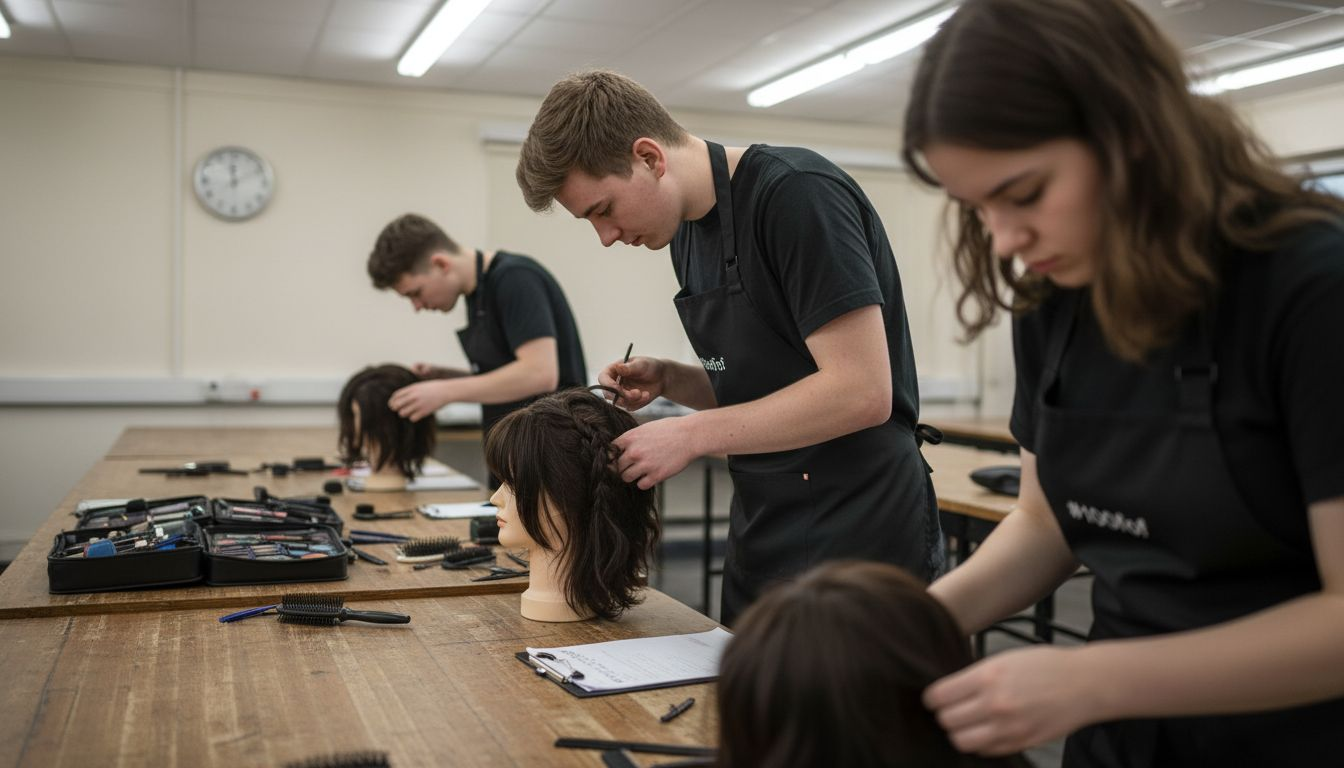
Balancing everyday commitments with the dream of launching a beauty therapy career in London or Essex can seem overwhelming. Many aspiring therapists want a swift path into the industry but worry about committing years to traditional training. Accredited fast track courses offer a bold solution, providing intensive programmes that combine practical skill building with recognised qualifications. Discover how these innovative training options help you build real expertise and start working as a beauty professional in months instead of years.
Table of Contents
- Defining Fast Track Training In Beauty
- Types Of Accredited Fast Track Courses
- How Fast Track Courses Operate
- Entry Requirements And Qualifications Needed
- Career Opportunities And Industry Recognition
- Costs, Myths, And Common Pitfalls
Key Takeaways
| Point | Details |
|---|---|
| Fast Track Training Offers Efficiency | These programmes drastically reduce training duration to 3-6 months, enabling rapid entry into the beauty profession. |
| Accredited Qualifications Are Essential | Students should prioritise courses with recognised certifications to enhance their employability and professional credibility. |
| Flexibility in Learning Formats | Fast track training often includes part-time and weekend options, catering to diverse learner needs and schedules. |
| Awareness of Common Myths | It is important to understand that fast track courses require personal commitment and offer quality education; misconceptions can mislead potential students. |
Defining Fast Track Training in Beauty
Fast track training represents a revolutionary approach to beauty education, offering aspiring beauty professionals an accelerated pathway into their desired career. Unlike traditional long-form courses, these programmes are designed to rapidly equip students with comprehensive skills and professional qualifications in significantly reduced timeframes.
Typically, fast track beauty training programmes aim to condense comprehensive curriculums into more intense, focused learning experiences. These courses strategically combine theoretical knowledge with practical hands-on training, enabling students to gain VTCT certified qualifications more efficiently. The key strategies for beauty career progression often involve selecting training models that maximise learning potential while minimising time investment.
Key characteristics of fast track beauty training include:
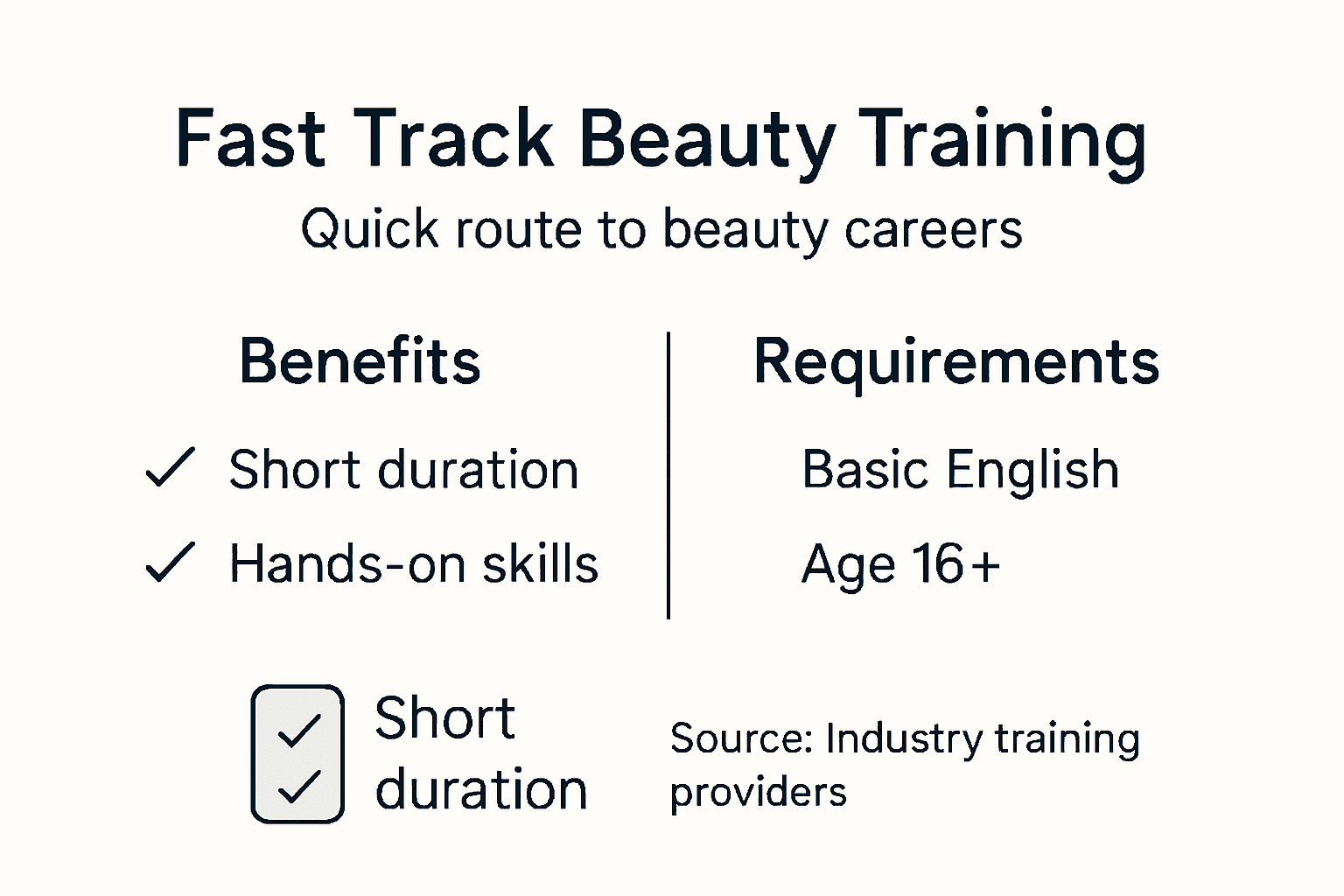
- Condensed learning timelines (typically 3-6 months)
- Intensive practical skill development
- Industry-recognised certification pathways
- Targeted modules focusing on essential professional competencies
- Flexible learning options including part-time and weekend schedules
Fast track programmes are particularly attractive for individuals seeking rapid professional transformation. They eliminate traditional barriers like extended study periods and provide direct routes into beauty therapy roles. Students can quickly transition from learners to professionals, gaining industry-standard skills with remarkable efficiency.
The following table summarises how fast track and traditional beauty education pathways differ:
| Aspect | Fast Track Programmes | Traditional Courses |
|---|---|---|
| Duration | 3-6 months | 1-2 years |
| Study Mode Flexibility | Weekend and part-time options | Mostly fixed full-time schedules |
| Skill Acquisition | Rapid, hands-on learning | Gradual, extended practice |
| Entry Requirements | Basic skills, some experience | More formal academic criteria |
| Career Transition Speed | Immediate post-graduation | Often delayed by extended study |
Pro tip: Research accredited fast track programmes that offer comprehensive skill development and recognised qualifications to maximise your career potential.
Types of Accredited Fast Track Courses
Accredited fast track beauty courses offer diverse pathways for aspiring beauty professionals to rapidly develop specialised skills and qualifications. Comprehensive fast track training programmes are strategically designed to meet varied career aspirations within the beauty and aesthetic industry.
The primary categories of accredited fast track courses typically include:
- Beauty Therapy General Level 3: A foundational course covering comprehensive beauty treatment techniques
- Facial Electrotherapy Level 3: Specialised training in advanced facial treatment technologies
- Skin Booster Certification: Advanced skincare and non-invasive treatment techniques
- Advanced Beauty Therapy Level 4: Comprehensive professional-level training for experienced practitioners
Each course type serves a specific professional development objective. For instance, the Beauty Therapy General Level 3 provides a broad skill base, while more specialised courses like Facial Electrotherapy focus on advanced technological treatments. These programmes are meticulously structured to provide industry-recognised qualifications within condensed timeframes.
Students can select courses based on their career goals, prior experience, and specific areas of interest within the beauty sector. The flexibility of these programmes allows individuals to quickly transition into professional roles, gaining practical skills and recognised certifications simultaneously.
Pro tip: Research the specific accreditation and industry recognition of your chosen fast track course to ensure optimal career advancement opportunities.
How Fast Track Courses Operate
Fast track beauty courses are meticulously designed to provide intensive, efficient learning experiences that dramatically reduce traditional training timelines. These programmes leverage innovative educational strategies to compress comprehensive skill development into shorter, more focused periods, allowing students to quickly transition into professional roles.
The operational framework of fast track courses typically involves:
- Condensed Curriculum: Streamlined learning modules covering essential skills
- Flexible Learning Formats: Options including part-time, weekend, and online learning
- Practical Skill Emphasis: Significant hands-on training and practical assessment
- Modular Progression: Structured learning paths with clear competency milestones
- Industry-Aligned Content: Curriculum directly mapped to current beauty industry standards
Intensive Learning Approach: Unlike traditional courses, fast track programmes concentrate essential knowledge into shorter timeframes. Students experience comprehensive training strategies that prioritise practical skills and rapid competency development. This approach allows participants to acquire professional-level expertise within months rather than years.
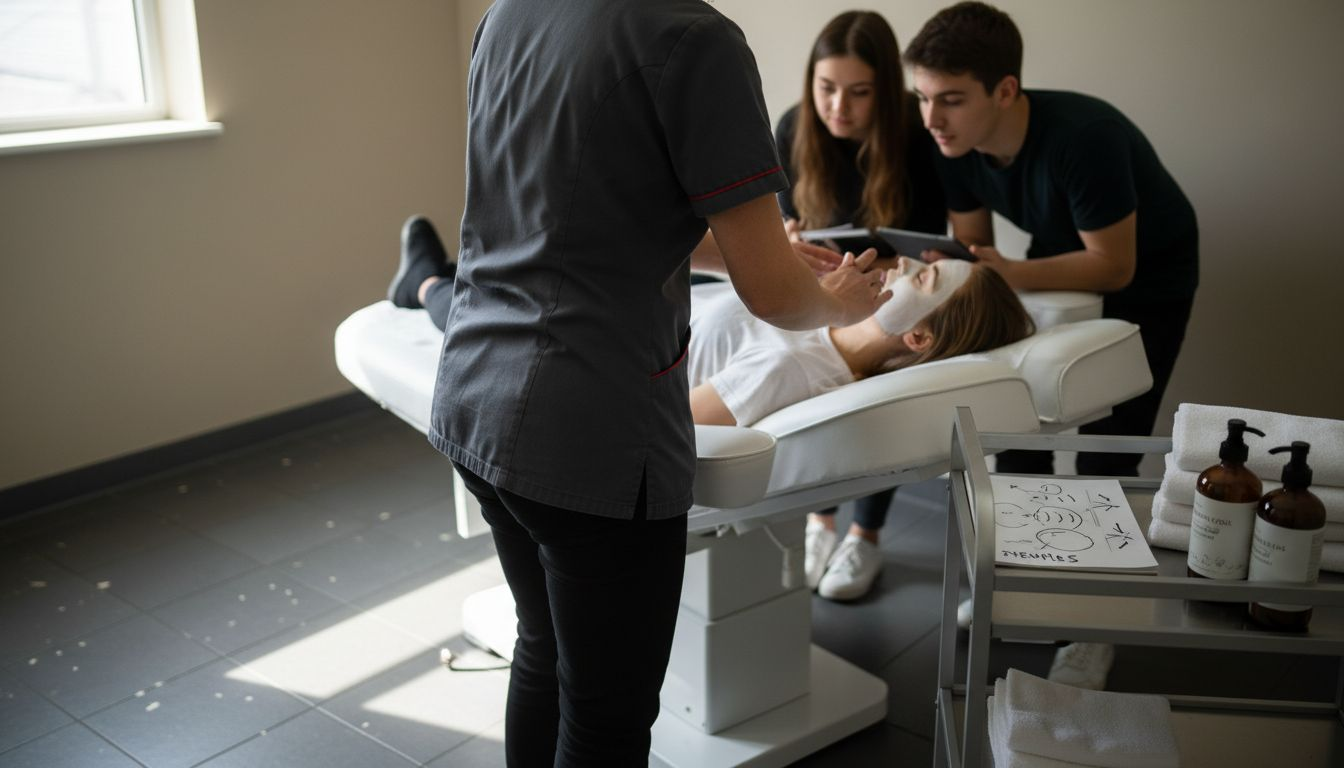
The learning methodology combines theoretical instruction with extensive practical training, ensuring students develop both technical knowledge and hands-on skills. Experienced instructors guide students through accelerated learning paths, providing personalised support and industry insights that enable rapid skill acquisition and professional readiness.
Pro tip: Prioritise courses offering robust practical training and industry certification to maximise your career potential in beauty therapy.
Entry Requirements and Qualifications Needed
Entry requirements for fast track beauty courses are designed to ensure students have the foundational skills and potential to succeed in professional beauty therapy training. Professional beauty training criteria typically involve a combination of educational background, practical experience, and personal attributes.
Standard entry requirements for most fast track beauty courses include:
- Minimum age requirement of 16 years
- Basic English and mathematics skills
- Previous experience in beauty, hair, or related industries (preferred but not always mandatory)
- Physical fitness and ability to perform practical treatments
- Enthusiasm for professional development in the beauty sector
- Good communication and interpersonal skills
Additional qualifications that can strengthen an application include prior VTCT certifications, NVQ levels in beauty therapy, or relevant vocational training. Some advanced courses might require specific prerequisite qualifications or demonstrable professional experience in beauty-related fields.
Candidates should also be prepared to provide supporting documentation such as academic transcripts, proof of previous work experience, and potentially a personal statement outlining their career aspirations. Accredited institutions typically conduct initial assessments to ensure candidates have the appropriate skills and motivation for accelerated learning programmes.
Pro tip: Contact training providers directly to understand their specific entry requirements and potential pathways for your individual circumstances.
Career Opportunities and Industry Recognition
Fast track beauty therapy courses open substantial career pathways across multiple professional sectors, enabling graduates to rapidly transition into dynamic and rewarding roles. Career progression strategies demonstrate the significant potential for professional development within the beauty and aesthetic industries.
Key career opportunities for fast track course graduates include:
- Beauty Therapist: Direct client treatment and salon-based roles
- Aesthetic Practitioner: Advanced non-invasive treatment specialist
- Spa and Wellness Consultant: Holistic wellness and treatment planning
- Skincare Specialist: Advanced dermatological treatment expert
- Training and Education: Industry instructor or academic programme developer
- Freelance Beauty Professional: Independent treatment and consultation services
Industry recognition plays a crucial role in career advancement. Accredited VTCT certifications provide nationally recognised qualifications that validate professional competence. These credentials are essential for securing insurance, establishing professional credibility, and accessing higher-level employment opportunities within beauty and aesthetic sectors.
Professional development extends beyond initial certification. Many graduates leverage their fast track training as a foundation for continuous learning, specialisation, and potential entrepreneurial ventures in beauty therapy. The comprehensive and practical nature of these programmes equips individuals with adaptable skills that are highly valued by employers across various beauty industry segments.
Pro tip: Continuously update your professional skills and seek additional specialisations to enhance your marketability in the competitive beauty therapy landscape.
Costs, Myths, and Common Pitfalls
Navigating fast track beauty training requires understanding potential challenges and misconceptions that could impact your educational journey. Critical training insights reveal that success depends on realistic expectations and thorough research.
Common myths surrounding fast track beauty courses include:
- Myth: These courses are easier than traditional programmes
- Myth: Accelerated training means lower quality education
- Myth: Fast track courses are not recognised by employers
- Myth: You can complete training without significant personal commitment
- Myth: All fast track programmes are identical in structure and quality
Financial considerations are crucial when exploring fast track training options. Typical cost ranges vary depending on course complexity and institution, with prices generally spanning £1,500 to £5,000. Prospective students should investigate funding options such as professional development loans, payment plans, and potential employer sponsorships.
Potential pitfalls in selecting a fast track beauty course include neglecting to verify accreditation, underestimating the required time commitment, and failing to align the programme with specific career objectives. Students must conduct comprehensive research, request detailed curriculum information, and potentially speak with programme alumni to make informed decisions.
The table below details typical costs, funding sources, and potential pitfalls for fast track beauty courses:
| Cost Range | Common Funding Options | Typical Pitfalls |
|---|---|---|
| £1,500–£5,000 | Professional development loans | Overlooking accreditation |
| Employer sponsorship | Underestimating workload | |
| Payment instalments | Choosing unsuitable courses |
Pro tip: Always verify a course’s accreditation and industry recognition before committing financial resources or time.
Accelerate Your Beauty Career with Accredited Fast Track Training
If you are ready to overcome the challenge of lengthy traditional courses and want to gain recognised qualifications quickly, fast track training is the key to unlocking your professional potential. These intensive programmes address common pain points such as condensed learning timelines and the need for hands-on skills that lead to industry-valid VTCT certifications. At Medisoma Academy, we embrace this innovative approach by offering high quality, accredited courses designed to boost your confidence and competence in as little as 3 to 6 months.
Experience personalised teaching that values your individuality and promotes self-esteem while you learn practical beauty therapy skills from experts who encourage creativity and enjoyment. Discover how our courses focus on excellence with flexible formats tailored to your lifestyle, so you can transition swiftly into thriving roles within the beauty industry.
Ready to take control of your future with fast track beauty training that truly works? Explore our full range of accredited fast track courses and start building the career you deserve. Visit Medisoma Academy today for details on entry requirements, course options, and how you can join a community committed to excellence and innovation in beauty education.
Frequently Asked Questions
What is fast track training in beauty?
Fast track training in beauty is an accelerated educational pathway designed to equip students with essential skills and professional qualifications in a condensed timeframe, typically ranging from 3 to 6 months.
How do fast track beauty courses differ from traditional courses?
Fast track courses condense learning timelines and focus on intensive practical skills development, whereas traditional courses usually span 1 to 2 years with a more gradual approach to skill acquisition.
What qualifications do I need to enrol in a fast track beauty course?
Standard entry requirements typically include a minimum age of 16 years, basic English and mathematics skills, and some previous experience in the beauty industry. Additional qualifications can enhance an application but are not always mandatory.
What career opportunities can I pursue after completing a fast track beauty course?
Graduates of fast track beauty courses can pursue various roles, including beauty therapist, aesthetic practitioner, skincare specialist, spa consultant, and even freelance beauty professionals, leveraging accredited certifications for industry recognition.