
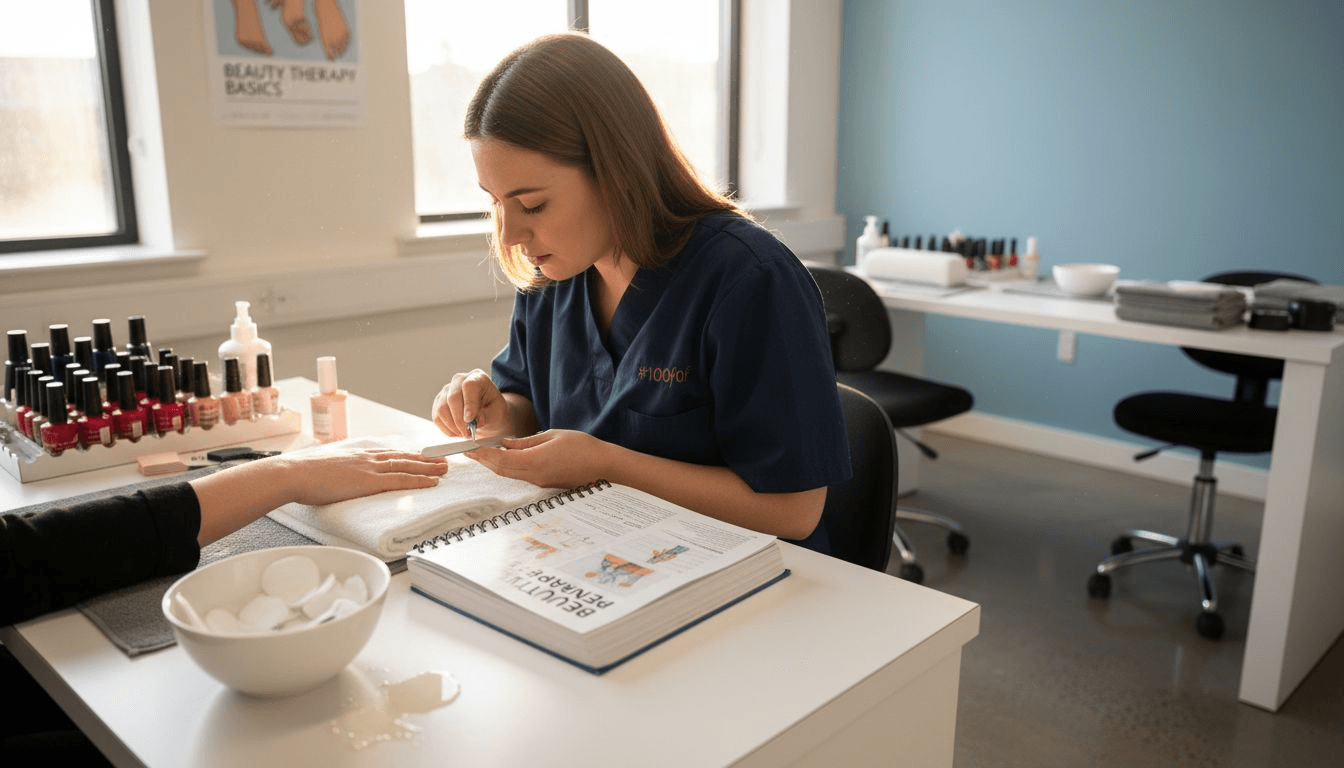
Starting a journey in beauty therapy can feel exciting yet overwhelming, especially when trying to find the right accredited courses in London or Essex. With so many routes to professional success, knowing the essential entry requirements and choosing training with real industry recognition makes all the difference. This guide helps you cut through confusion by focusing on what truly matters for aspiring beauty professionals: accredited training and genuine skill development that lead to a fulfilling and respected career.
Table of Contents
- Step 1: Assess Entry Requirements And Motivation
- Step 2: Select Accredited Beauty Therapy Training Courses
- Step 3: Prepare Essential Materials And Set Learning Goals
- Step 4: Engage With Expert Instructors And Practical Modules
- Step 5: Demonstrate Skills And Verify Course Achievement
Quick Summary
| Key Point | Explanation |
|---|---|
| 1. Understand Course Entry Requirements | Evaluate academic qualifications and personal motivation before applying to beauty therapy courses. |
| 2. Choose Accredited Training Programmes | Select courses with recognised qualifications and practical training to enhance employability. |
| 3. Prepare Learning Materials and Goals | Gather necessary kits and set clear skill objectives to structure your training journey effectively. |
| 4. Engage Actively with Instructors | Participate proactively in lectures and practical sessions to maximise learning opportunities. |
| 5. Showcase Skills for Qualification | Complete practical assessments and maintain a portfolio to demonstrate competency in beauty therapy. |
Step 1: Assess entry requirements and motivation
Starting your beauty therapy training requires understanding the specific requirements and ensuring you have the right motivation to succeed in this dynamic industry. Before diving into a course, you’ll need to carefully evaluate your current qualifications and personal drive for becoming a professional beauty therapist.
Most beauty therapy courses have clear entry requirements that vary slightly between institutions. For instance, beauty therapy courses at Bedford College typically require candidates to have:
- At least 3 GCSEs in grades 9-3
- Preferably including English and maths
- Demonstrated interest in client care and communication skills
Alternatively, some programmes like the SCQF Level 6 Beauty Therapy course accept applicants who are:
Here is a summary of typical entry routes for beauty therapy courses:
| Entry Route | Typical Qualifications Required | Additional Attributes |
|---|---|---|
| Standard Academic Pathway | 3 GCSEs (9-3), including English/maths | Interest in client care |
| Scottish Equivalent | National 5s at Grade C+, SVQ 2 | Minimum age 16, practical skills |
| Experience-Based Pathway | Relevant industry work experience | Strong communication abilities |
- Aged 16 by 30 September
- Hold National 5 qualifications at grade C or above
- Possess an SVQ 2 in Beauty Therapy
- Have relevant industry experience
Your genuine passion and commitment are just as important as meeting academic requirements.
Beyond formal qualifications, successful beauty therapy students demonstrate a strong combination of practical skills, interpersonal abilities, and genuine enthusiasm for helping clients feel confident and cared for.
Top tip: Before applying, speak with current beauty therapy students or professionals to gain realistic insights into the training and career path.
Step 2: Select accredited beauty therapy training courses
Choosing the right accredited beauty therapy course is crucial for launching a successful career in the beauty industry. Your selection process should involve careful research and consideration of several key factors that will impact your professional development.
When evaluating potential courses, prioritise programmes that offer industry-recognised qualifications at Uxbridge College. Look for training that provides comprehensive coverage across multiple levels, including:
- Level 2 foundational qualifications
- Level 3 advanced beauty therapy certifications
- Hands-on practical experience in professional salon environments
- Specialist equipment and expert instruction
Key considerations when selecting an accredited course should include:
- Verify official accreditation with recognised bodies
- Check course curriculum depth
- Evaluate practical training opportunities
- Understand progression pathways
Accreditation ensures your qualification meets industry-standard professional requirements.
Beyond formal credentials, investigate the course’s additional benefits such as industry partnerships, potential work placement opportunities, and the reputation of the training institution. These factors can significantly enhance your learning experience and future employability.
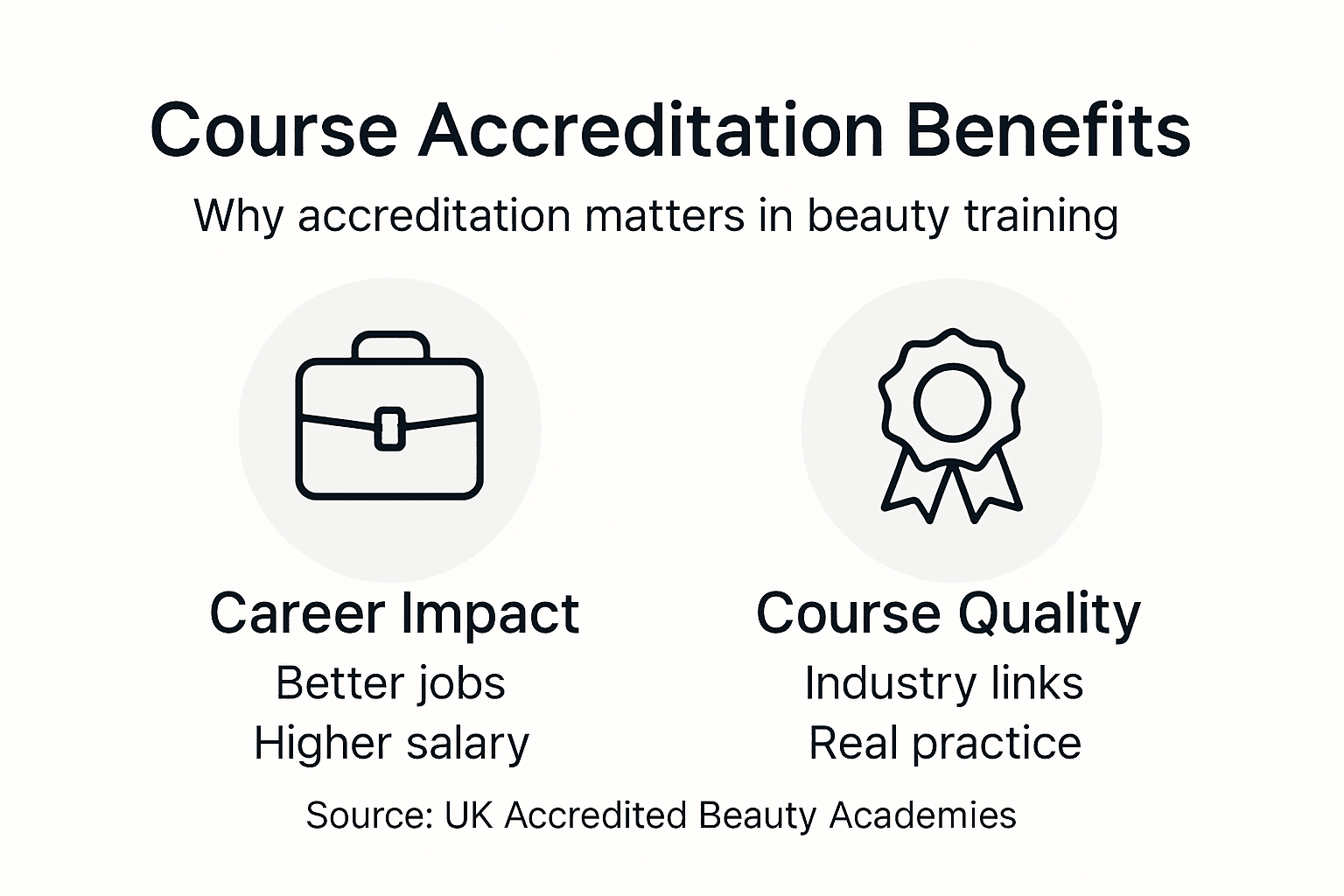
This table highlights how course accreditation benefits your beauty therapy career:
| Benefit of Accreditation | Impact on Career | Example Aspect |
|---|---|---|
| Recognised Qualification | More job opportunities | Meets industry standards |
| Enhanced Skillset | Increased client trust | Access to advanced training |
| Professional Progression | Pathway to specialisation | Eligibility for higher study |
Top tip: Contact course providers directly to request detailed syllabuses and speak with current students about their experiences.
Step 3: Prepare essential materials and set learning goals
Successfully launching your beauty therapy training journey requires careful preparation and strategic goal setting. You’ll need to equip yourself with the right materials and develop a clear roadmap for your educational and professional development.
When preparing for your course, pay close attention to the specific requirements. HNC Beauty Therapy students must purchase uniforms and kits upon acceptance, which typically include:
- Professional uniform
- Essential treatment kit
- Protective equipment
- Required textbooks and learning materials
Establishing your learning goals involves a structured approach:
- Identify specific skill objectives
- Create measurable milestones
- Align goals with career aspirations
- Plan short and long-term achievements
Your learning goals should reflect both technical skills and professional development targets.
Beyond physical materials, mental preparation is crucial. Consider your motivation, desired specialisations within beauty therapy, and how this course fits into your broader career strategy. Understanding your personal and professional objectives will help you stay focused and motivated throughout your training.

Top tip: Create a visual goal board that displays your professional aspirations to maintain motivation and track your progress.
Step 4: Engage with expert instructors and practical modules
Maximising your beauty therapy training requires active engagement with your instructors and practical learning opportunities. Your ability to learn and grow depends not just on listening, but on proactively participating in your educational experience.
Bedford College’s Beauty Therapy course demonstrates the importance of expert guidance through industry-experienced tutors who provide comprehensive training. Key strategies for effective engagement include:
- Ask thoughtful questions during lectures
- Request specific feedback on your practical techniques
- Participate actively in demonstration sessions
- Seek mentorship from experienced instructors
Your practical learning journey should focus on:
- Develop hands-on treatment skills
- Observe professional demonstration techniques
- Practice client communication
- Understand industry-standard procedures
Your success depends on transforming theoretical knowledge into practical expertise.
Beyond classroom interactions, look for opportunities to expand your learning through additional workshops, industry talks, and practical skill development sessions. These experiences will help you build confidence and professional competence in your chosen beauty therapy specialisation.
Top tip: Create a learning journal to document your practical skills progression and reflect on feedback from instructors.
Step 5: Demonstrate skills and verify course achievement
The final stage of your beauty therapy training involves showcasing your acquired skills and formally verifying your professional competence. This critical phase transforms your learning into tangible, recognised qualifications that will launch your career.
Keighley College’s Beauty Therapy Studies programme demonstrates how comprehensive skill verification works through continuous practical assessments. Your achievement verification will typically involve:
- Practical salon environment assessments
- External theory examinations
- Observation of professional techniques
- Mandatory unit competency checks
The key steps to successfully demonstrate your skills include:
- Prepare comprehensive portfolio evidence
- Practice techniques under examination conditions
- Review assessment criteria thoroughly
- Seek feedback from instructors
Your qualification represents more than a certificate – it’s proof of your professional capability.
Preparing for final assessments requires strategic approach. Focus on presenting not just technical skills, but also professional demeanour, client communication, and industry-standard practices. Remember that examiners are looking for comprehensive competence across theoretical knowledge and practical application.
Top tip: Request mock assessment sessions with your instructors to simulate real examination environments and identify potential improvement areas.
Take Your Beauty Therapy Training Further with Medisoma Academy
Navigating the steps to start accredited beauty therapy training can feel overwhelming especially when trying to meet entry requirements, select the right course, and prepare effectively for practical assessments. Many aspiring therapists face challenges such as finding accredited courses that balance theoretical knowledge with hands-on experience and gaining expert guidance that truly fosters professional growth. If you are passionate about excelling in beauty therapy and want a fast track approach that nurtures creativity and self-esteem alongside technical skills, Medisoma Academy offers tailored solutions designed just for you.
Our high calibre teaching team supports you through every stage from foundational skills to advanced techniques while incorporating essential beauty tips to enhance your practical expertise. Explore how you can build confidence and grow your career by visiting our Growing – Medisoma page for insightful pathways and success stories.
Ready to transform your passion into a recognised qualification with a trusted UK institution that values excellence and innovation? Discover more about our accredited courses and start your journey today at Medisoma Academy. For ideas on how to effectively market your future services and expand your client base, visit our Marketing – Medisoma section. Don’t wait to invest in your future – take the next step now and become the beauty professional you aspire to be.
Frequently Asked Questions
What qualifications do I need to start beauty therapy training?
To begin beauty therapy training, you’ll typically need at least 3 GCSEs at grades 9-3, which should ideally include English and Mathematics. Check specific course requirements at institutions you are interested in to ensure you meet entry criteria.
How do I choose an accredited beauty therapy course?
Select an accredited beauty therapy course by verifying its accreditation with recognised bodies and examining the depth of the course curriculum. Look for courses that provide hands-on training and opportunities for advanced qualifications to enhance your career prospects.
What materials do I need for my beauty therapy course?
You will generally need essential materials like a professional uniform, treatment kit, protective equipment, and textbooks. Prepare these items ahead of time to ensure you are fully equipped from the start of your training.
How can I engage effectively with my beauty therapy instructors?
Actively engage with your instructors by asking questions during lectures and seeking feedback on your practical techniques. Participate in demonstration sessions to deepen your understanding and ensure you gain as much insight as possible from their expertise.
What steps should I take to demonstrate my skills during assessments?
To demonstrate your skills effectively, prepare a comprehensive portfolio of evidence and practice techniques under examination conditions. Familiarise yourself with assessment criteria and request mock assessments with your instructors to refine your skills.
How can I set achievable learning goals in beauty therapy?
Set achievable learning goals by identifying specific skill objectives and creating measurable milestones. Align these goals with your career aspirations, and plan for both short and long-term achievements to track your progress effectively.