

Choosing a career in beauty therapy means stepping into a fast-changing industry where the rules you follow can shape your professional future. New UK regulations, introduced through the Health and Care Act 2022, now require practitioners to hold licenses for non-surgical cosmetic procedures, placing a greater emphasis on proper training and legal compliance. If you want to work in London or Essex, understanding these requirements helps you build a credible and compliant foundation for your career while protecting both your clients and your reputation.
Table of Contents
- Definition And Key Concepts Of Beauty Therapy Regulation
- Types Of Regulated And Unregulated Procedures
- Understanding Your Scope Of Practice
- Legal Framework And Upcoming Licensing Changes
- What This Means For Your Beauty Therapy Career
- Training, Qualifications, And Accreditation Standards
- Practitioner Obligations, Risks, And Enforcement
- Common Mistakes And Compliance Pitfalls To Avoid
Key Takeaways
| Point | Details |
|---|---|
| Regulatory Landscape | Beauty therapy is transitioning to a more regulated environment, impacting how treatments are delivered and who can perform them. |
| Scope of Practice | Understanding your defined scope of practice is crucial to prevent legal repercussions and ensure client safety. |
| Accreditation Importance | Accredited qualifications from recognised bodies like VTCT are essential for career advancement and credibility. |
| Compliance Risks | Common compliance pitfalls, such as failing to obtain informed consent and inadequate record-keeping, can jeopardise your career and client trust. |
Definition and key concepts of beauty therapy regulation
Beauty therapy regulation in the UK has evolved significantly to address safety concerns within the sector. At its core, beauty therapy regulation refers to the legal frameworks and professional standards that govern how beauty treatments are delivered, who can perform them, and what qualifications they must hold. Unlike heavily regulated medical professions, beauty therapy has traditionally operated with varying levels of oversight depending on the type of treatment and the practitioner’s credentials. This is changing, particularly with the introduction of stricter controls around non-surgical cosmetic procedures.
Understanding the regulatory landscape matters to your career because it directly affects where you can work, what treatments you can legally perform, and how employers view your qualifications. The UK Government is introducing licensing regimes for cosmetic procedures to ensure consumer safety and protect practitioners operating in an expanding industry. This shift reflects a broader recognition that unregulated cosmetic treatments can lead to serious complications if performed by inadequately trained individuals. For you as an aspiring beauty therapist, this means the value of proper accreditation and training has never been higher.
Several key concepts form the foundation of modern beauty therapy regulation:
- Accreditation and certification: Qualifications from recognised bodies like VTCT (Vocational Training Charitable Trust) demonstrate your competence and eligibility to perform specific treatments
- Scope of practice: This defines which procedures you can legally perform based on your training and qualifications
- Professional standards: Industry guidelines covering hygiene, client safety, and ethical conduct
- Continuing professional development (CPD): Ongoing training requirements to maintain and refresh your skills
- Liability and insurance: Professional indemnity insurance protects both you and your clients
The distinction between regulated and unregulated treatments has grown sharper. Treatments involving non-surgical cosmetic procedures such as Botox and dermal fillers now fall under stricter licensing requirements under the Health and Care Act 2022. Traditional beauty therapies—facials, massages, waxing, and some skincare treatments—typically require VTCT qualifications or equivalent. Advanced treatments like chemical peels and electrotherapy demand higher-level certifications. This tiered approach means your career pathway differs depending on which treatments interest you.
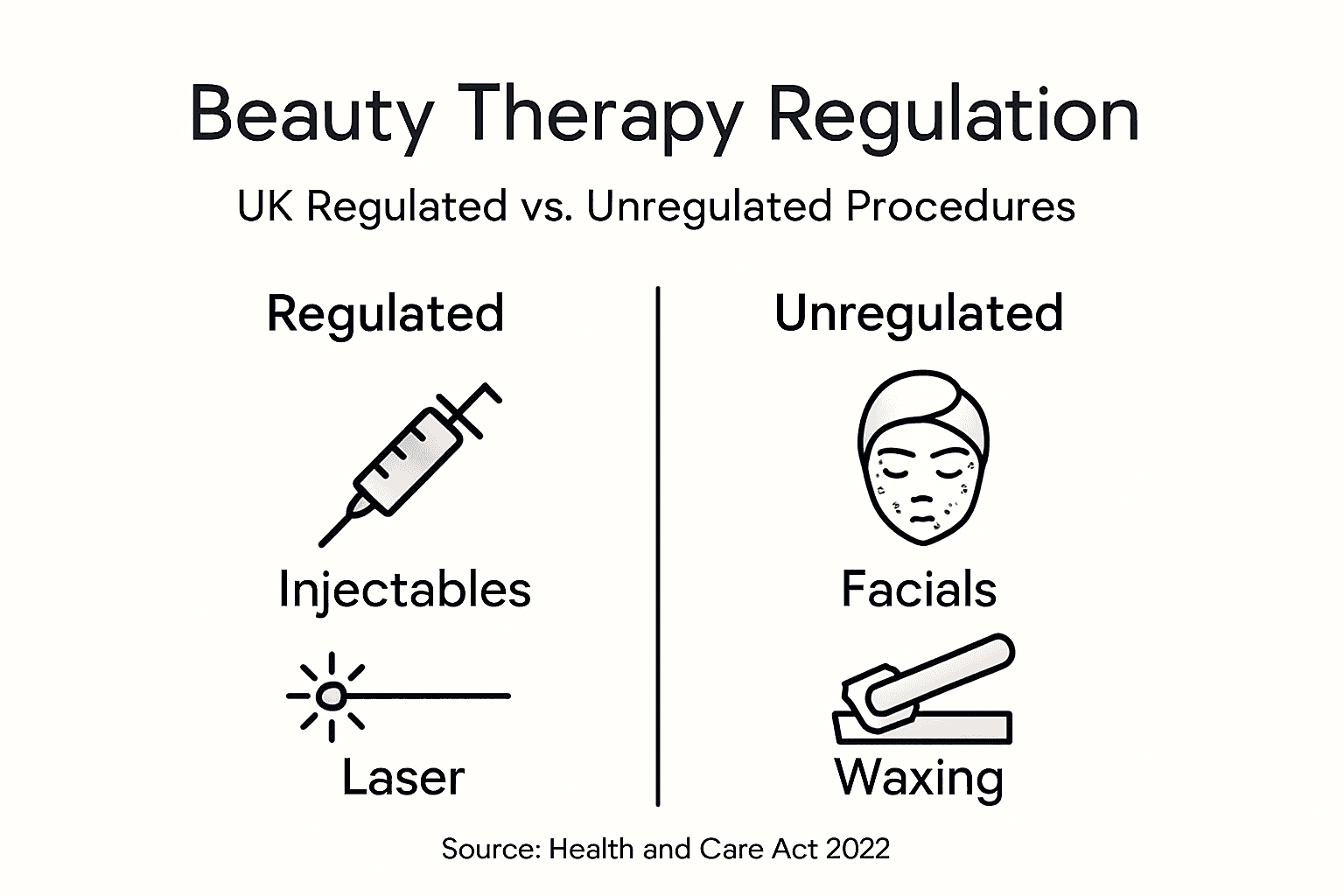
One crucial aspect is understanding professional boundaries. Regulation exists to distinguish beauty therapy from medical aesthetics and dermatology. A beauty therapist cannot diagnose skin conditions or prescribe treatments for medical purposes. Instead, you focus on enhancing appearance, promoting relaxation, and maintaining skin health through approved beauty techniques. This clarity protects both you legally and your clients medically.
The regulatory framework also addresses product knowledge and safety. You must understand the products you use—their ingredients, contraindications, and proper application methods. This isn’t just about following instructions; it’s about recognising when a client may have an adverse reaction or when a treatment isn’t suitable for their skin type or health status.
Beauty therapy regulation exists to protect clients from unsafe practices and to ensure practitioners like you have genuine, verifiable skills. This legitimacy strengthens your professional credibility and career prospects considerably.
Another important concept is client consent and record-keeping. Regulation requires you to obtain informed consent before treatments and maintain detailed client records. These records should include skin assessments, treatments performed, products used, and any reactions or concerns. This documentation protects you if disputes arise and demonstrates your professional approach to potential employers.
Pro tip: Start building your professional portfolio now by documenting your training achievements, VTCT certifications, and any specialist qualifications. Employers in London and Essex increasingly expect evidence of your regulatory compliance and continuous learning, so maintaining clear records of your qualifications becomes a competitive advantage early in your career.
Types of regulated and unregulated procedures
Not all beauty treatments are created equal when it comes to regulation. The UK now uses a tiered risk-based system to categorise procedures, which directly affects your career prospects and what you can legally perform. Understanding this classification is essential because it determines your training requirements, licensing obligations, and the settings where you can work. The system recognises that some treatments carry minimal risk, whilst others demand specialist healthcare expertise.
The framework divides procedures into three colour-coded categories: Green, Amber, and Red. Green procedures are low-risk treatments that all licensed practitioners can perform with appropriate training. These include traditional beauty therapies like facials, massages, waxing, and basic skincare treatments. Amber procedures require non-healthcare professionals to obtain a license and work under the supervision of qualified healthcare professionals. Red procedures are high-risk treatments such as non-surgical Brazilian Butt Lifts that must only be performed by qualified healthcare professionals in registered premises. This tiered system for cosmetic procedures aims to improve safety whilst allowing a structured regulatory approach suitable for different risk levels.
Your practical career options depend significantly on which category interests you:
- Green category treatments: Facials, body massages, waxing, threading, manicures, pedicures, basic skin analysis, and traditional beauty therapies. These require standard VTCT Level 2 or 3 certifications and form the foundation of most beauty therapy careers.
- Amber category treatments: Botulinum toxin injections, dermal fillers, chemical peels, and certain laser-based treatments. Performing these requires additional specialist training, a professional license under the new regulations, and supervision by a healthcare professional if you’re not medically qualified.
- Red category treatments: Advanced procedures involving high risk to facial structure or bodily systems. These typically fall outside the beauty therapy remit unless you have healthcare professional status.
Many procedures that beauty therapists commonly encounter remain partially unregulated in their current state. Non-surgical cosmetic procedures including botulinum toxin, dermal fillers, chemical peels, and laser hair removal are widely offered by various providers without mandatory training requirements in some cases. This creates a confusing landscape where regulation is rapidly evolving. The lack of consistent historical oversight has prompted the government to implement stricter licensing to protect public safety and ensure practitioners have genuine qualifications.
To help clarify regulatory categories, here’s a summary of procedure classifications and requirements:
| Category | Examples of Procedures | Practitioner Requirements | Regulation Level |
|---|---|---|---|
| Green | Facials, waxing, massages | VTCT Level 2/3 or equivalent | Low, standard licensing |
| Amber | Chemical peels, dermal fillers, Botox | Specialist training, practitioner licence | Medium, must be supervised |
| Red | Non-surgical Brazilian Butt Lift | Qualified healthcare professional, CQC registration | High, strict legal controls |
This overview shows at a glance how regulation increases with procedural risk and what credentials are necessary for each tier.
One critical distinction exists between cosmetic and medical treatments. Cosmetic dentistry remains exclusively controlled by dental professionals—you cannot legally perform any dental procedures as a beauty therapist. This boundary protects patients and maintains professional boundaries. Similarly, treatments targeting medical skin conditions (acne rosacea, psoriasis, eczema) blur the line between beauty and medical care. As a beauty therapist, you must recognise when a client’s skin condition requires dermatological referral rather than cosmetic treatment.
The regulatory landscape continues shifting. Procedures classified as Amber today may become Red or require additional qualifications as evidence around safety emerges. Your training provider should keep you informed of regulatory changes, but staying updated on government announcements and professional body guidance becomes your responsibility. Beauty therapy is evolving from an unregulated sector into one with clear professional standards.
The colour-coded system exists to protect clients and legitimise your expertise. Working within your licensed scope of practice actually strengthens your professional reputation and career security.
Understanding Your Scope of Practice
Your scope of practice defines exactly which procedures you can legally perform based on your qualifications and training. This isn’t arbitrary—it’s a legal and ethical boundary. Exceeding your scope exposes you to professional misconduct charges, client harm liability, and career damage. In London and Essex, employers check these boundaries carefully, especially when hiring for medical spas or clinics offering regulated procedures.

When you complete a VTCT-accredited course, your certificate specifies your approved treatments and scope. Additional training in specialist areas (like chemical peels or electrotherapy) expands this scope, but only within your documented qualifications. You cannot perform treatments you haven’t been properly trained in, regardless of how confident you feel.
Pro tip: Request a clear written summary of your scope of practice from your training provider and keep it alongside your certifications. When applying for roles, reference your specific qualifications and scope—this demonstrates regulatory awareness and professional responsibility that employers value highly.
Legal framework and upcoming licensing changes
The beauty therapy sector in England is undergoing significant legal transformation. The Health and Care Act 2022 grants the government powers to introduce a comprehensive licensing regime for non-surgical cosmetic procedures, marking a shift from an historically unregulated industry to one with clear legal oversight. This change affects not just practitioners like you, but also the premises where treatments happen and the products used. Understanding this framework is crucial because it shapes your career trajectory and employment prospects over the coming years.
The new legal framework operates through a structured licensing system. A new licensing scheme for aesthetic procedures prioritises high-risk treatments such as non-surgical Brazilian Butt Lifts, which will only be permitted in Care Quality Commission (CQC)-registered premises by qualified healthcare professionals. Medium and low-risk treatments like fillers and Botox also fall under local authority licensing with mandatory training and insurance requirements. This means your career pathway depends on which treatment categories you pursue. If you focus on Green procedures (traditional beauty therapies), current regulations remain relatively stable. If you aspire to perform Amber or Red category treatments, you’ll need to navigate new licensing requirements.
The government designed this licensing regime for non-surgical cosmetic procedures to protect consumers by ensuring safe practice, training standards, professional insurance, and regulatory oversight. It addresses legitimate public concerns about unregulated services that have previously caused injury and harm. Three key pillars support this framework:
- Practitioner licensing: Non-healthcare professionals performing regulated procedures must obtain an official license, demonstrating they meet training and competency standards
- Premises registration: Clinics and beauty businesses offering regulated treatments must be registered with the Care Quality Commission or local authorities, depending on risk level
- Insurance and compliance: Mandatory professional indemnity insurance protects clients and practitioners if complications arise
Age restrictions form an integral part of the new legal framework. Certain treatments carry age limits to protect younger clients from procedures they may not fully understand. For example, dermal fillers and Botox injections typically carry age restrictions in regulated settings. These boundaries aren’t arbitrary—they reflect medical evidence about treatment suitability at different life stages. As a beauty therapist, you’ll need to verify client age and eligibility before performing any regulated procedures.
The transition period matters for your career planning. Whilst the legislation is now in place, full enforcement and implementation timelines vary. Some elements roll out immediately, whilst others phase in over coming months. Professional bodies like the British Association of Aesthetic Plastic Surgeons (BAAPS) and the International Society of Aesthetic Plastic Surgery (ISAPS) provide guidance on compliance. Your training provider should inform you about regulatory changes affecting your qualifications, but staying actively informed through government announcements and professional membership keeps you ahead of changes.
The licensing framework exists to protect both clients and practitioners. Compliance positions you as a legitimate, trustworthy professional in an increasingly regulated market.
What This Means for Your Beauty Therapy Career
These legal changes create both challenges and opportunities. If you specialise in Green procedures, your existing or soon-to-be-obtained VTCT qualifications remain valuable and marketable. If you aspire to advanced treatments, you’ll need additional certifications and licensing. London and Essex clinics increasingly require evidence of regulatory compliance, making your documented qualifications and licenses competitive advantages.
Employers now expect practitioners to understand these legal boundaries. During interviews, you may face questions about scope of practice, insurance requirements, and licensing obligations. Demonstrating knowledge about the regulatory framework shows professionalism and reduces employer liability concerns.
One practical consideration: if you’re trained in treatments that now require licensing, check whether your current qualifications count towards licensing requirements. Some courses designed before the new framework may not automatically satisfy licensing criteria. Your training provider can clarify this.
Pro tip: Keep detailed records of your training dates, qualifications, and any specialist certifications you earn. When the licensing regime fully launches, you’ll need these documents to apply for practitioner licenses or to prove your competency to employers—having everything organised saves time and strengthens your application.
Training, qualifications, and accreditation standards
Your qualifications form the foundation of your beauty therapy career. In the UK, accreditation is what separates legitimate professionals from unqualified practitioners. When you complete an accredited course, you receive a recognised qualification that employers value, clients trust, and regulators accept. This matters enormously because accredited qualifications open doors to better salons, medical spas, and clinics—especially in competitive markets like London and Essex where standards are high.
The main accrediting bodies in the UK are VTCT (Vocational Training Charitable Trust) and City & Guilds. These organisations set National Occupational Standards that define what you need to know and be able to do at each qualification level. City & Guilds offers accredited beauty therapy qualifications covering essential skills such as nail technology, facials, waxing, make-up, body massage, and spa treatments across multiple levels with flexible delivery options. Similarly, VTCT qualifications range from Level 1 (introductory) through Level 4 (advanced), each with specific competency requirements. These aren’t arbitrary certificates—they demonstrate you can perform treatments safely, hygienically, and professionally.
Qualification levels determine your career progression:
- Level 1: Introductory courses covering basic beauty fundamentals. Suitable for complete beginners exploring whether beauty therapy interests them.
- Level 2: Foundation qualifications enabling you to work in salons performing core treatments like facials, waxing, manicures, and pedicures. Most salon jobs require at least Level 2.
- Level 3: Diploma level offering advanced skills in multiple treatment areas. Required for supervisory roles and performing advanced treatments like body massage therapy and some electrotherapy treatments.
- Level 4: Higher-level qualifications for specialisation in areas like beauty therapy assessment or advanced aesthetic treatments. Often pursued by those seeking management roles or specialist practice.
Accreditation standards aren’t just about what you learn—they cover how you learn it. Accredited courses must include theoretical knowledge (understanding skin anatomy, product chemistry, health and safety regulations) alongside practical, hands-on training with real clients under supervision. This combination ensures you graduate with both understanding and practical competence. Many online-only courses lack this practical element, which is why employers specifically seek candidates with accredited qualifications from recognised institutions.
Here’s a comparative guide to UK beauty therapy qualification levels and career outcomes:
| Level | Skill Development | Typical Job Roles | Career Progression |
|---|---|---|---|
| Level 1 | Foundation skills, basic theory | Assistant, trainee | Prepares for Level 2 |
| Level 2 | Core practical treatments, safety | Salon therapist, junior | Advancing to Level 3 |
| Level 3 | Advanced techniques, leadership | Senior therapist, supervisor | Management, specialisation |
| Level 4 | Complex aesthetics, assessment | Manager, advanced specialist | Teaching, clinic leadership |
This table illustrates how qualification levels impact your job prospects and enables strategic career planning.
When choosing a training provider, verify their accreditation status directly. Legitimate accredited providers display VTCT or City & Guilds accreditation prominently. Ask to see their accreditation certificate and check it matches their claims. Some courses may claim to be “industry recognised” without being formally accredited—this distinction matters for your career. Accredited qualifications appear on official registers that employers can verify, whilst non-accredited qualifications carry no official weight in regulated environments.
Accredited qualifications are portable credentials. You can move between employers, relocate, or specialise further because your qualification is recognised across the entire UK industry.
Continuing Professional Development (CPD) supplements your initial qualifications. Once qualified, the regulatory landscape expects you to maintain and update your skills. CPD might include attending workshops on new treatment techniques, completing online courses, or pursuing specialist certifications in areas like chemical peels or advanced skincare. London and Essex employers increasingly list CPD requirements in job descriptions, viewing it as evidence of commitment to professional growth. Many salons expect staff to complete a minimum of 5-10 CPD hours annually.
Insurance requirements increasingly tie to qualifications. Professional indemnity insurance—which protects you if a client claims you caused harm—often requires evidence of relevant accredited qualifications. Some insurers won’t cover you if you perform treatments without appropriate accredited training. This creates a practical incentive to pursue proper qualifications beyond just career progression.
Fast-Track and Flexible Training Options
If you’re eager to start your career quickly, fast-track accredited courses compress content into shorter timeframes. These intensive programmes deliver the same accredited qualifications as standard courses but in condensed schedules—sometimes 8-12 weeks rather than 12 months. They demand commitment and focused effort, but they’re legitimate pathways to recognised qualifications. Many beauty therapy students in Essex and London choose fast-track options to enter the workforce faster whilst maintaining accreditation standards.
Blended learning options combine online theory with in-person practical sessions. This flexibility suits working adults or those balancing other commitments. The key is ensuring the provider remains accredited and includes adequate supervised practical training—this cannot be compromised online.
Pro tip: Before enrolling in any beauty therapy course, confirm the accrediting body, check the qualification level matches your career goals, and verify that practical training includes supervised client work. Request a sample of the course curriculum and ask previous graduates about their experience securing employment after completing the course.
Practitioner obligations, risks, and enforcement
As a beauty therapy practitioner, you’re not just answerable to your employer—you’re accountable to regulators, clients, and the law itself. Understanding your obligations protects your career and protects clients from harm. The regulatory framework places specific duties on you as a practitioner, and breaching these carries real consequences ranging from financial penalties to criminal prosecution. This isn’t designed to restrict you; it’s designed to establish professional standards that benefit everyone.
Your core obligations centre on competence, safety, and transparency. Practitioners must hold licenses to perform non-surgical cosmetic procedures and adhere to prescribed training standards, demonstrate competence, and comply with strict hygiene and safety requirements. Even for treatments not requiring licensing, you must operate within your documented qualifications and scope of practice. You cannot perform treatments you haven’t been trained in, regardless of how straightforward they seem. This obligation extends to staying current—if regulations change or new evidence emerges about a treatment, you must update your knowledge.
Your key obligations include:
- Holding appropriate qualifications: Only perform treatments covered by your accredited qualifications and current licenses
- Maintaining professional insurance: Carry professional indemnity insurance that covers the treatments you perform
- Following hygiene and safety standards: Adhere to Health and Safety at Work regulations, infection control protocols, and product safety guidelines
- Recording client information: Maintain detailed, accurate records of treatments, products used, and any adverse reactions
- Obtaining informed consent: Ensure clients understand what treatment involves, potential risks, and alternatives before proceeding
- Reporting adverse incidents: Document and report serious complications or injuries to appropriate parties
- Keeping up with CPD: Maintain your knowledge through continuing professional development
Non-compliance carries genuine risks. Performing aesthetic procedures without a license will be an offence under the new licensing scheme. Local authorities and the Care Quality Commission conduct inspections to verify compliance. If they discover you’re operating outside your qualifications or without proper licenses, consequences include financial penalties, enforcement actions, professional suspension, or criminal charges. Reputational damage is equally serious—once word spreads that you’ve breached regulations, clients avoid you and employers won’t hire you.
Personal liability represents another critical risk. If a client claims you caused harm through a poorly performed treatment, they can sue you for damages. Professional indemnity insurance protects against this, but only if you were operating within your scope of practice and following proper protocols. If you performed a treatment you weren’t qualified for, your insurance may not cover you. The financial and emotional toll of defending yourself in court or paying damages out of pocket can devastate your career.
Reputational risk matters enormously in beauty therapy. Clients research practitioners online, read reviews, and ask friends for recommendations. One serious complaint can damage your reputation permanently. In London and Essex’s competitive market, reputation is everything. Operating outside your qualifications, causing client harm, or facing regulatory action creates lasting professional damage that follows you between employers.
Compliance isn’t bureaucratic burden—it’s professional credibility. Practitioners who follow regulations maintain client trust, secure better employment opportunities, and avoid career-ending consequences.
Understanding Enforcement Mechanisms
Enforcement isn’t theoretical. Local authorities conduct announced and unannounced inspections of beauty premises offering regulated treatments. They verify that practitioners hold appropriate licenses, that records are properly maintained, that hygiene standards are met, and that insurance is current. If they find breaches, they issue enforcement notices requiring remediation within specific timeframes. Failure to comply escalates to prosecution.
The Care Quality Commission handles enforcement for high-risk procedures. They have broader investigative powers than local authorities and can impose stricter penalties. If they find serious breaches—like practitioners performing high-risk treatments without qualifications—they can close premises and ban individuals from the profession.
Client complaints trigger separate investigations. If a client reports harm or misconduct, regulators investigate even without a formal complaint to authorities. This is why maintaining meticulous records is essential—they protect you by documenting what you did, why you did it, and that you followed proper protocols. Poor or missing records suggest negligence and damage your defence.
Managing Risk in Your Practice
Risk management isn’t optional. Practical steps protect you and your clients. These include obtaining professional indemnity insurance adequate for your scope of practice, maintaining detailed client records, staying current with CPD, never exceeding your qualifications, and following all relevant regulations. Build relationships with your regulator—if you’re unsure whether something falls within your scope, ask rather than guessing.
Document everything. Keep records of your training, qualifications, certifications, insurance policies, client consent forms, treatment records, and any incidents. If disputes arise years later, these records prove you operated professionally. Digital systems can help—many practice management software solutions maintain compliant records automatically.
Pro tip: Join a professional body like the British Beauty Council or International Union of Beauty and Cosmetic Sciences, which provides regulatory guidance, insurance support, and professional indemnity. Many insurance policies require membership in recognised professional bodies, and these organisations keep you informed of regulatory changes affecting your practice.
Common mistakes and compliance pitfalls to avoid
Mistakes happen in any profession, but in beauty therapy, compliance errors carry outsized consequences. Many practitioners make preventable mistakes through ignorance rather than malice—they simply didn’t realise what the regulations required. Understanding common pitfalls protects your career before problems arise. The good news is that most mistakes are avoidable if you know what to watch for.
One of the most dangerous mistakes is performing treatments without proper qualifications. You might feel confident after shadowing an experienced therapist or watching online tutorials, but this doesn’t constitute formal training. Regulators don’t care how skilled you feel—they care about documented, accredited qualifications. If you perform a treatment you’re not qualified for and something goes wrong, your lack of qualification becomes evidence against you. Your insurance won’t cover you. Employers will fire you. Regulators will investigate.
Another critical error involves product knowledge and safety. Common compliance mistakes include using restricted ingredients unknowingly and making unsupported marketing claims. This applies whether you’re a sole practitioner or working in a salon. You must know what’s in every product you use, understand contraindications, and never claim a product does something it doesn’t. Marketing a skincare product as “anti-ageing” when you can’t prove it, or claiming a treatment cures a medical condition when it doesn’t, violates advertising standards. Regulators monitor social media and marketing materials actively—they catch these claims and enforce against them.
Common mistakes practitioners make include:
- Exceeding your scope of practice: Performing treatments beyond your documented qualifications
- Inadequate record-keeping: Failing to document client information, consent, treatments, or incidents
- Insufficient insurance: Carrying professional indemnity insurance that doesn’t cover all treatments you perform
- Ignoring age restrictions: Treating clients below age thresholds for certain procedures
- Poor hygiene practices: Cutting corners on infection control or sanitation
- Making medical claims: Suggesting treatments cure or treat medical conditions
- Neglecting CPD: Not maintaining current knowledge as regulations and best practice evolve
Advertising mistakes represent a growing compliance risk. Advertising non-surgical cosmetic procedures is heavily regulated with strict restrictions against targeting under-18s and using misleading promotional content. Many beauty therapists use heavily filtered before-and-after photos, make exaggerated claims about results, or target young people through social media. These practices breach advertising standards. Regulators now use artificial intelligence to monitor social media and online advertising, catching violations automatically. Penalties range from takedown notices to fines.
Client consent errors are surprisingly common. You might assume verbal consent is sufficient, but regulations require informed, documented consent. The client must understand what the treatment involves, potential risks, realistic outcomes, and alternatives. Some practitioners skip this step to save time or because they feel it’s obvious. If a client later claims you performed a treatment without consent, your lack of documentation is damaging evidence. A simple consent form, signed and dated, protects both of you.
Most compliance mistakes stem from not knowing requirements, not from deliberately breaking rules. Education prevents problems before they start.
Record-Keeping and Documentation
Poor record-keeping is perhaps the most common mistake. Practitioners often maintain minimal records, relying on memory. When disputes arise years later, they have nothing to prove they acted properly. Strong records should document client medical history, skin type, treatments performed, products used, reactions observed, and any advice given. These records protect you by demonstrating professional conduct. They’re also legally required—health and safety regulations mandate maintaining adequate records.
Digital systems make compliance easier. Practice management software can prompt you to collect information, generate consent forms, and maintain records automatically. This removes the burden of remembering what to document.
Identifying High-Risk Situations
Certain situations carry elevated compliance risk. Treating clients with medical skin conditions, performing treatments on clients under 18, or offering newly regulated procedures all require extra care. If you’re unsure whether something fits your scope or complies with regulations, don’t proceed—ask your trainer, your regulator, or a professional body.
Pro tip: Create a simple compliance checklist for your practice covering qualifications, insurance, client consent, record-keeping, and product safety. Review it before every working day. This single habit catches potential mistakes before they happen and demonstrates due diligence if regulators ever investigate your practice.
Navigate Your Beauty Therapy Career with Confidence and Compliance
The evolving landscape of beauty therapy regulation in the UK presents both challenges and opportunities for your career. With stricter licensing and accreditation requirements shaping the industry, understanding your scope of practice and maintaining professional standards is essential to protect your clients and build a lasting reputation. At Medisoma Academy, we address these critical needs by offering high-quality, accredited, fast track courses designed to equip you with recognised qualifications and practical skills. We value your ambition and commitment to excellence, helping you rise confidently in a highly regulated environment.
Ready to future-proof your career while mastering essential skills and compliance? Explore how our expertly crafted courses empower you to align with current regulations and industry expectations. Discover guidance on building your professional profile and monetising your expertise with insights from our Growing – Medisoma resources. Learn how to effectively position yourself in the market through our Marketing – Medisoma strategies. Take the next step today by visiting Medisoma to choose your path towards a secure and successful career in beauty therapy.
Frequently Asked Questions
What is beauty therapy regulation?
Beauty therapy regulation refers to the legal frameworks and professional standards that govern how beauty treatments are delivered, who can perform them, and what qualifications they must hold. This ensures consumer safety and protects practitioners in an expanding industry.
Why is accreditation important in beauty therapy?
Accreditation demonstrates your competence and eligibility to perform specific treatments. Qualifications from recognised bodies like VTCT are essential for establishing professional credibility and career prospects in the beauty therapy field.
What are the consequences of exceeding your scope of practice?
Exceeding your scope of practice can lead to professional misconduct charges, client harm liability, and career damage. You might face fines, criminal prosecution, and reputational damage if found performing treatments you’re not qualified for.
How do the new licensing regulations affect my beauty therapy career?
The new licensing regulations create stricter requirements for performing non-surgical cosmetic procedures. Aspiring beauty therapists must obtain the appropriate training and licensing based on treatment categories, affecting career progression and job opportunities.