
Choosing your ideal beauty therapy course can feel overwhelming when every option promises career transformation. For aspiring professionals across London and Essex, understanding course requirements is a crucial step toward building confidence and achieving meaningful progress. By focusing on industry-recognised qualifications and hands-on training, you will gain clarity on which path matches your ambitions and sets you apart in the competitive British beauty sector.
Table of Contents
- Step 1: Assess Your Ideal Beauty Therapy Course Requirements
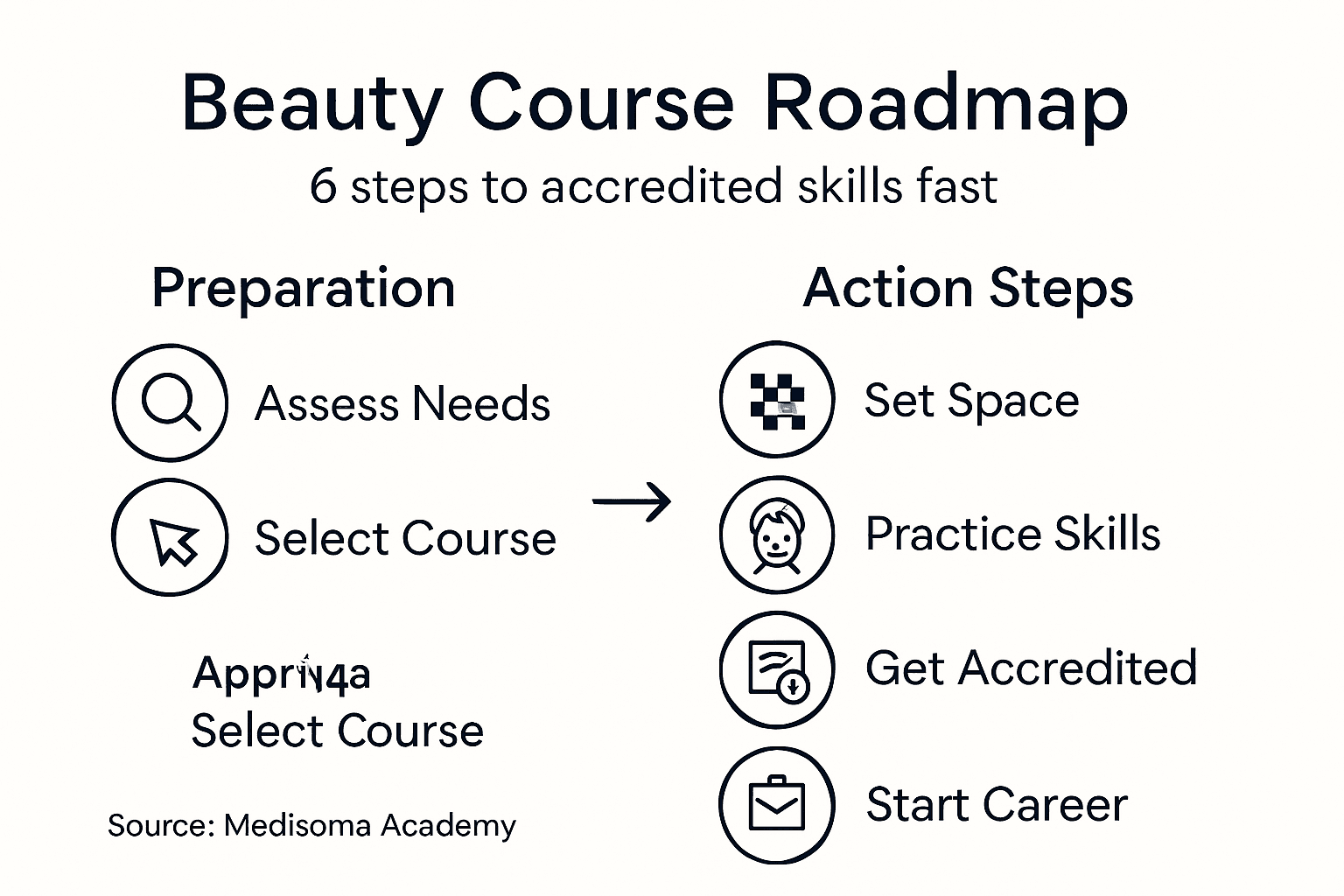
- Step 2: Select An Accredited Fast-Track Training Programme
- Step 3: Prepare Your Learning Environment For Optimal Results
- Step 4: Engage With Expert Tutors And Practical Sessions
- Step 5: Verify Your New Skills With Recognised Accreditation
- Step 6: Apply Your Qualification To Advance Your Beauty Career
Quick Summary
| Essential Insight | Detailed Explanation |
|---|---|
| 1. Define your career goals clearly | Identifying your specific aspirations helps narrow down suitable beauty therapy courses and specialisations, making your path more focused. |
| 2. Choose accredited courses for recognition | Selecting industry-recognised programmes enhances employability and ensures your qualifications are valued by employers and clients alike. |
| 3. Create a productive learning environment | An ideal study space, free of distractions and equipped with necessary resources, boosts motivation and enhances the learning experience. |
| 4. Actively engage with tutors during training | Proactive participation and seeking feedback from instructors during practical sessions lead to better skill mastery and professional development. |
| 5. Plan for professional advancement strategically | Use your qualifications to target higher roles and specialisations in beauty therapy, facilitating continuous growth and learning opportunities. |
Step 1: Assess your ideal beauty therapy course requirements
Starting your beauty therapy training journey requires careful planning and strategic thinking about your career goals and skill development pathway. Understanding the specific requirements that will best suit your professional aspirations is crucial for selecting the right course.
When assessing beauty therapy course options, you’ll want to consider several critical factors. City & Guilds beauty therapy qualifications recommend evaluating these key elements:
- Career Goals: Determine whether you want specialisation in nail technology, body massage, or comprehensive beauty therapy
- Qualification Level: Understand the progression from Level 1 to Level 3 courses
- Skills Coverage: Assess which specific techniques and treatments are included
- Industry Recognition: Check for accredited qualifications that employers value
- Practical Training: Verify hands-on learning opportunities
Research different course structures by comparing curriculum depth, duration, and potential career pathways. Some programmes offer modular learning, allowing you to build skills progressively while maintaining flexibility.

To help you evaluate different beauty therapy course levels, consider this comparison:
| Course Level | Typical Focus | Suitable For | Example Outcomes |
|---|---|---|---|
| Level 1 | Basic beauty skills introduction | Complete beginners | Entry-level certificates |
| Level 2 | Core practical techniques | Aspiring practitioners | Junior therapist roles |
| Level 3 | Advanced and specialist skills | Career progression seekers | Senior roles, salon management |
Selecting the right beauty therapy course is about matching your personal ambitions with a programme that provides comprehensive, industry-relevant training.
Practical Considerations:
- Review entry requirements for each course
- Check course accreditation and validation
- Understand assessment methods
- Consider part-time or full-time study options
- Evaluate potential progression routes
Professional Advice: Always speak directly with course providers to gain insights into their specific programme strengths and understand how they align with your individual career objectives.
Step 2: Select an accredited fast-track training programme
Choosing the right fast-track beauty therapy course requires strategic research and careful evaluation of your professional aspirations. Your goal is to find a programme that not only delivers comprehensive training but also provides industry-recognised qualifications that will open doors to exciting career opportunities.
To identify the most suitable fast-track programme, consider these essential criteria. Accreditation verification processes play a crucial role in ensuring the credibility of your chosen course:
- Course Duration: Assess programmes offering efficient training timelines
- Curriculum Depth: Examine the range of techniques and specialisations covered
- Practical Training: Verify hands-on learning components and workshop opportunities
- Instructor Expertise: Research the professional backgrounds of teaching staff
- Insurance Recognition: Confirm the programme meets industry insurance standards
When evaluating potential courses, look beyond surface-level marketing and dig deeper into the programme’s substantive offerings. Some training providers offer modular approaches that allow for flexible skill progression, enabling you to tailor your learning pathway.
Here is a summary of key advantages offered by an accredited fast-track beauty therapy course:
| Advantage | Professional Benefit | Long-term Impact |
|---|---|---|
| Recognised qualification | Enhances employability | Opens advanced job prospects |
| Intensive practical learning | Builds real-world competence | Boosts client confidence |
| Specialist instructor guidance | Improves skill mastery | Increases earning potential |
A truly exceptional fast-track beauty therapy programme combines rigorous theoretical knowledge with extensive practical experience.
Key Selection Steps:
- Request detailed course prospectuses
- Compare accreditation credentials
- Investigate graduate employment rates
- Attend open day events or virtual information sessions
- Speak with current students or recent graduates
Professional Advice: Always cross-reference course credentials with professional beauty therapy associations to ensure you’re selecting a programme with genuine industry standing and recognition.
Step 3: Prepare your learning environment for optimal results
Creating an effective learning space is crucial for success in your beauty therapy training. Your study environment can significantly impact your motivation, concentration, and overall learning experience, making it essential to design a workspace that supports your educational goals.
Establishing a productive learning environment involves strategic planning and thoughtful preparation. While no specific external resource provides direct guidance, consider these fundamental elements for creating an ideal study space:
- Lighting: Ensure bright, natural lighting or high-quality task lighting
- Ergonomics: Select comfortable, supportive seating and workspace
- Organisation: Create dedicated storage for study materials and beauty therapy equipment
- Technology: Set up reliable internet connection and necessary digital resources
- Minimal Distractions: Choose a quiet area with limited interruptions
Practical setup goes beyond physical arrangements. Mental preparation is equally important. Develop a consistent routine that signals your brain it’s time to focus on learning, such as setting specific study hours and creating a pre-study ritual.
A well-designed learning environment transforms study time from a chore into an opportunity for personal and professional growth.
Workspace Preparation Steps:
- Identify a dedicated study area
- Invest in appropriate furniture and lighting
- Organise study materials systematically
- Remove potential digital and physical distractions
- Create a comfortable, inspiring atmosphere
Professional Advice: Treat your learning environment as a professional workspace, investing time and care into creating a setting that motivates and supports your beauty therapy training journey.
Step 4: Engage with expert tutors and practical sessions
Successful beauty therapy training depends on more than just absorbing theoretical knowledge. Your ability to actively engage with expert tutors and immerse yourself in practical learning experiences will define your professional development and future career prospects.
Making the most of your interactions with instructors and hands-on training requires a strategic and proactive approach. Beauty therapy training strategies emphasise the importance of active participation and continuous skill development:
- Ask Targeted Questions: Prepare specific, thoughtful queries before each session
- Demonstrate Practical Curiosity: Show genuine interest in techniques and industry insights
- Request Personalised Feedback: Seek constructive critique of your practical skills
- Observe Experienced Practitioners: Learn from tutors’ professional demonstrations
- Participate Actively: Volunteer for practical workshops and skills practice
Practical sessions are your opportunity to translate theoretical knowledge into professional competence. Approach each session with enthusiasm, focusing on developing precise techniques and understanding the nuanced skills required in beauty therapy.
Exceptional beauty therapists are not just trained, they are mentored through intentional, hands-on learning experiences.
Engagement Strategies:
- Prepare a learning journal to track skill progression
- Set personal development goals for each practical session
- Network with tutors and fellow students
- Document your practical learning experiences
- Reflect on feedback and areas for improvement
Professional Advice: Treat every practical session as an audition for your future professional self, demonstrating commitment, precision, and genuine passion for beauty therapy.
Step 5: Verify your new skills with recognised accreditation
Transitioning from training to professional recognition requires strategic documentation of your newly acquired beauty therapy skills. Securing formal accreditation transforms your learning into credible professional credentials that employers and insurance providers will value.
Understanding the importance of beauty therapy qualification standards is crucial for establishing your professional legitimacy. The verification process involves several critical steps:
- Collect Assessment Evidence: Compile comprehensive portfolios of practical work
- Request Formal Certification: Obtain official documentation from your training provider
- Understand Qualification Levels: Recognise the differences between Level 2 and Level 3 certifications
- Register Professional Credentials: Submit documents to relevant beauty therapy associations
- Maintain Ongoing Professional Development: Track and update your qualifications
Successful accreditation means demonstrating not just technical skills, but a comprehensive understanding of professional standards and industry expectations. Your certification serves as tangible proof of your competence and commitment to excellence.
Professional recognition is not just a piece of paper, but a testament to your dedication and skill in beauty therapy.
Accreditation Verification Process:
- Complete all required assessments
- Gather comprehensive documentation
- Apply for formal certification
- Verify credentials with professional bodies
- Keep records for future professional opportunities
Professional Advice: Treat your accreditation as a dynamic professional asset, continuously updating and showcasing your evolving expertise in beauty therapy.
Step 6: Apply your qualification to advance your beauty career
Your newly acquired beauty therapy qualification represents more than a certificate—it’s a strategic passport to professional opportunities. Professional advancement requires intentional career planning that leverages your newly developed skills and credentials.
Understanding how to strategically apply your Level 3 Diploma in Beauty Therapy can transform your career trajectory. This qualification opens multiple professional pathways:
- Employment Opportunities: Target advanced beauty therapy roles
- Specialisation Paths: Explore niche treatment areas
- Further Education: Consider potential academic progression
- Professional Networking: Connect with industry professionals
- Continuous Learning: Plan ongoing skill development
Successful career advancement involves more than holding a qualification. It requires proactive strategies that demonstrate your commitment to professional excellence and continuous improvement in the beauty therapy sector.
Your qualification is a foundation—your professional approach determines how high you can build your career.
Career Application Strategies:
- Update your professional portfolio
- Research potential employer requirements
- Attend industry networking events
- Consider additional specialisation courses
- Develop a clear career progression plan
Professional Advice: View your beauty therapy qualification as a dynamic tool for professional growth, consistently seeking opportunities to expand your expertise and professional network.
Accelerate Your Beauty Therapy Career with Medisoma Academy
Navigating the complexities of beauty therapy qualifications can feel overwhelming as you seek accredited, fast-track courses that truly align with your professional goals. Whether you aim to master advanced techniques or prepare your learning environment effectively, success hinges on choosing a programme that balances practical training with recognised certification. At Medisoma Academy, we understand these challenges and provide tailored support to help you gain comprehensive skills quickly while boosting your confidence and industry readiness.
Turn your ambition into achievement by exploring our accredited courses designed for rapid skill acquisition and career growth. Discover expert-led training, innovative learning approaches, and the chance to connect with a community passionate about excellence. Take the first step now at Medisoma Academy and unlock resources that support your journey. For strategies on expanding your professional presence and monetising your skills effectively, visit our Monetizing – Medisoma and for continual career development insights, explore Growing – Medisoma. Your path to beauty therapy success starts here – embrace fast-track learning and achieve your accredited skills with confidence.
Frequently Asked Questions
How do I assess the right beauty therapy course for my career goals?
To assess the right beauty therapy course, identify your specific career goals such as specialisation in nail technology or body massage. Create a list of requirements and conduct thorough research on course structures to find a match that aligns with your aspirations.
What should I look for in an accredited fast-track beauty therapy programme?
When selecting an accredited fast-track beauty therapy programme, check the course duration, practical training opportunities, and the expertise of the instructors. Evaluating these aspects will help ensure that the programme will provide you with valuable, recognised skills in a timely manner.
How can I create an effective learning environment for my beauty therapy studies?
To create an effective learning environment, choose a dedicated space that is well-lit and free from distractions. Ensure that you have comfortable seating and organised study materials, which will significantly enhance your focus and productivity during your beauty therapy training.
What strategies can I use to engage with my tutors and maximise practical sessions?
To maximise your learning during practical sessions, prepare targeted questions and seek constructive feedback from your tutors. Actively participate in workshops and observe demonstrations to deepen your understanding of the techniques being taught.
How do I verify my skills and obtain accreditation in beauty therapy?
To verify your skills and obtain accreditation, compile a portfolio of your practical work and request formal certification from your training provider. Ensure you understand the different qualification levels and submit all necessary documentation to relevant professional bodies to establish your credentials.
What steps should I take to apply my beauty therapy qualification for career advancement?
To apply your beauty therapy qualification for career advancement, update your professional portfolio and research potential employer requirements. Attend industry networking events and consider additional specialisation courses to enhance your skill set and create a clear progression plan.