
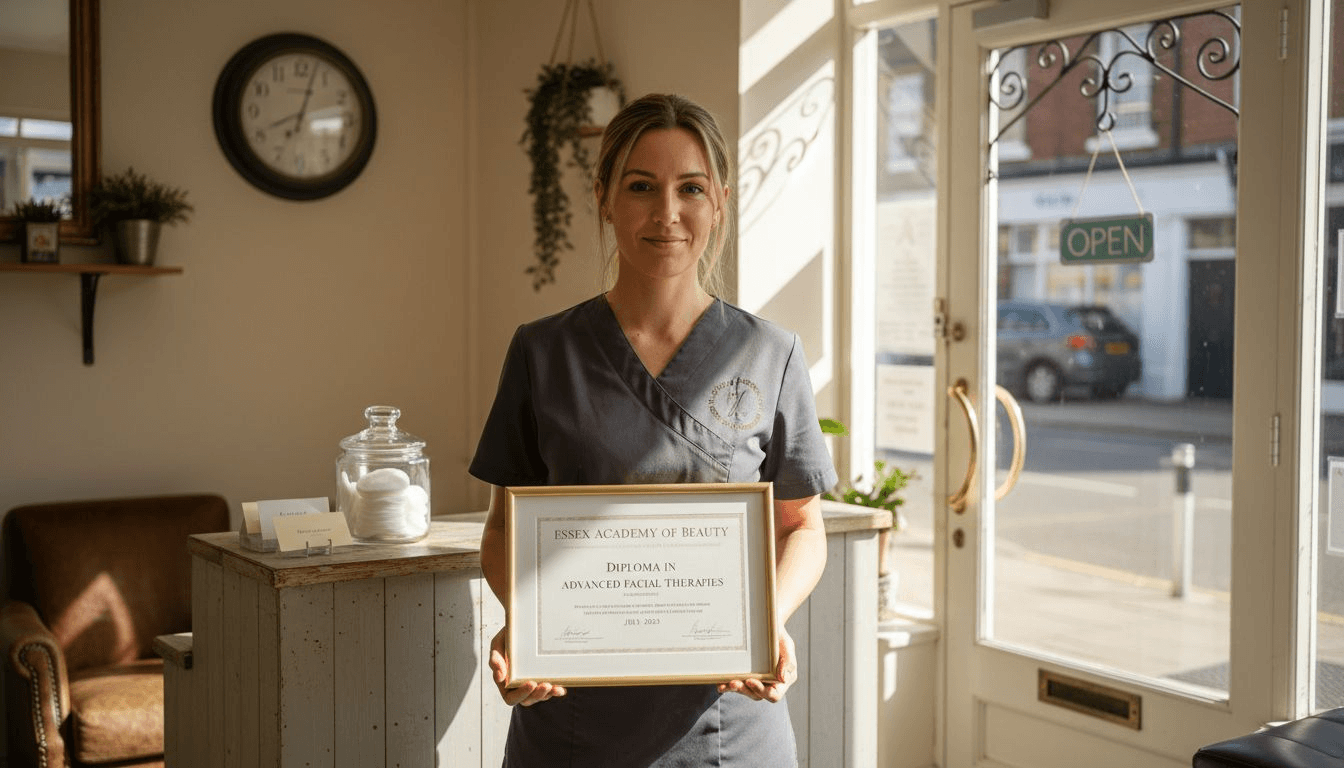
Finding the right path to certification can feel confusing when every course promises something different. For aspiring beauty therapists in Essex, understanding exactly what recognised qualifications involve is key to building a career with genuine confidence. This guide explains how national standards, practical training, and legal compliance make accredited certification your foundation for safe, professional practice and long-term success.
Table of Contents
- What Beauty Certification Involves
- Types of Beauty Therapy Qualifications
- UK Legal Standards and New Licensing Rules
- Benefits for Career Growth and Client Safety
- Common Pitfalls and How to Avoid Them
Key Takeaways
| Point | Details |
|---|---|
| Certification Validates Expertise | Achieving beauty certification confirms your professional standards, knowledge of safety protocols, and practical skills. |
| Core Components of Training | Training encompasses theoretical knowledge, practical skills, and assessment methods to ensure comprehensive competency. |
| Understand Licensing Requirements | Familiarise yourself with local licensing regulations to practice legally and safely in the beauty industry. |
| Continuous Professional Development is Essential | Ongoing learning and specialist training are crucial for career advancement and staying compliant with evolving industry standards. |
What Beauty Certification Involves
Beauty certification demonstrates you’ve met rigorous professional standards. It’s not simply a piece of paper—it confirms you understand safety protocols, client care, and hands-on techniques. Accreditation bodies in the UK set these standards to ensure quality across the industry.
National standards for beauty form the foundation of all recognised qualifications. These standards outline the specific skills, knowledge, and competencies you must demonstrate to practise professionally and safely.
The Core Components
Most beauty certifications involve three main elements:
- Theoretical knowledge – Understanding anatomy, skin types, product chemistry, and safety regulations
- Practical skills – Demonstrating treatments with correct technique under supervision
- Assessment and evaluation – Proving competency through exams, observations, and client work
Your training covers everything from facial anatomy to sterilisation procedures. You’ll learn why each step matters for client safety and satisfaction.
What You’ll Study
Accredited courses teach specific treatment areas relevant to your chosen specialism:
- Professional standards and health and safety regulations
- Client consultation and skin analysis techniques
- Treatment planning and product knowledge
- Practical application of facial and body treatments
- Aftercare advice and client communication
- Hygiene, sanitation, and infection control
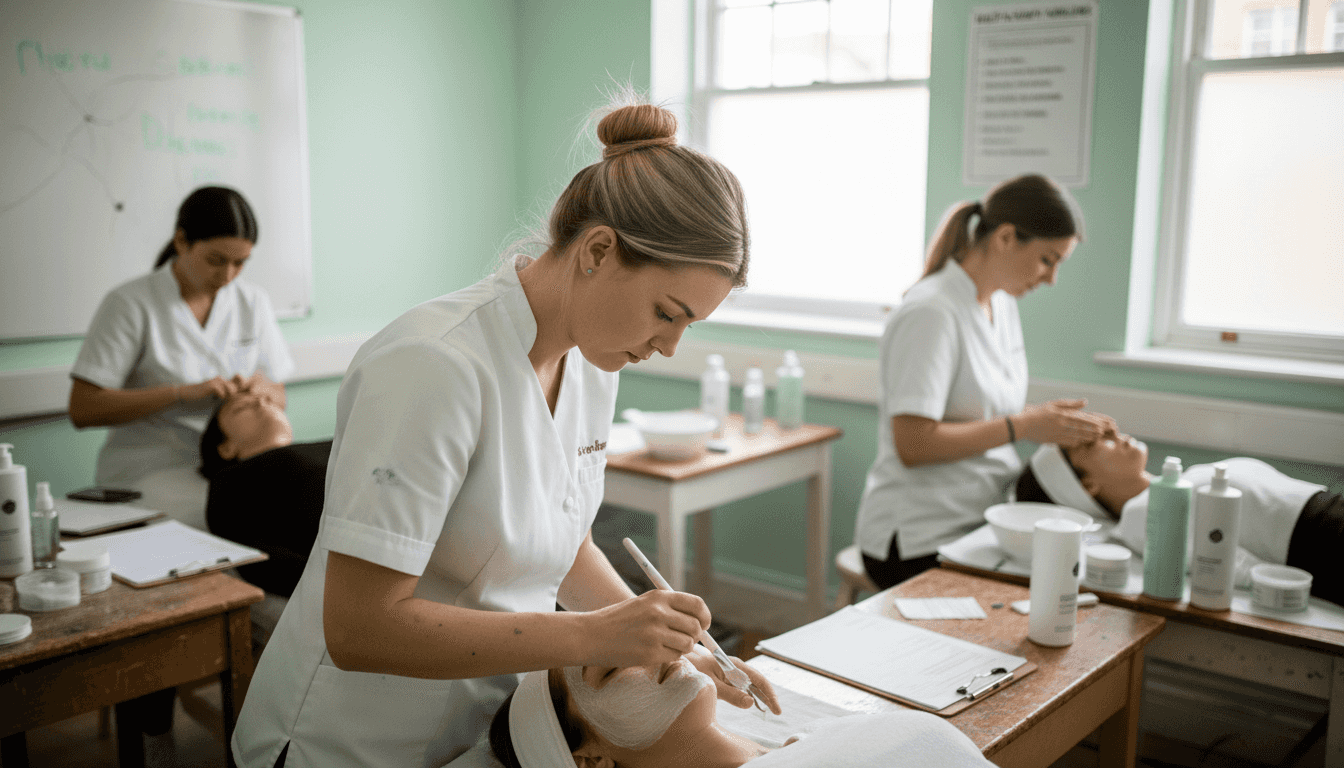
Each module builds practical confidence. You won’t just learn theory—you’ll practise on real clients under qualified supervision.
Assessment Methods
Certification requires you to prove your knowledge and skills through multiple methods. Written exams test your understanding of anatomy and safety protocols. Practical assessments evaluate your technique, speed, and client care during actual treatments.
Observers watch how you consult with clients, explain procedures, and handle products. Your portfolio documents client work, feedback, and your professional development throughout the course.
Achieving certification means you’ve met the same professional standards recognised across the UK beauty industry, giving clients confidence in your expertise.
Why the Detail Matters
These standards exist to protect clients and establish trust. When you understand the “why” behind each technique—proper product application prevents skin damage, correct pressure prevents nerve injury—you become a safer, more confident practitioner.
Accredited beauty courses typically take weeks or months depending on your chosen treatments and learning pace. Fast-track options exist for those wanting to start their careers quickly without sacrificing quality.
Pro tip: Keep detailed notes during your training on client feedback and treatment outcomes—this evidence of your learning becomes invaluable for your portfolio and demonstrates your commitment to continuous improvement.
Types of Beauty Therapy Qualifications
Beauty therapy qualifications in the UK follow a clear structure. Most start with entry-level certifications and progress to advanced, specialised qualifications. Understanding these levels helps you choose the right path for your career goals in Essex.
The UK qualification framework offers flexibility—you can specialise in specific treatments or build a broad skill set. Each level builds on the previous one, allowing you to develop expertise over time.
The Main Qualification Levels
NVQ Level 2 Diplomas cover foundational beauty techniques and prepare you for entry-level salon work. These typically include facials, manicures, pedicures, and basic massage.
NVQ Level 3 Diplomas offer advanced training in specialised treatments. You’ll learn complex techniques like advanced massage therapies, specialised skin treatments, and additional aesthetic procedures beyond basic salon work.
Here’s a summary of how Level 2 and Level 3 beauty qualifications differ in the UK:
| Qualification Level | Skill Focus | Typical Duration | Career Outcome |
|---|---|---|---|
| NVQ Level 2 Diploma | Basic beauty treatments, salon skills | 4–8 weeks (fast-track) | Entry-level therapist roles |
| NVQ Level 3 Diploma | Advanced and specialist techniques | 8–12 weeks (fast-track) | Senior therapist or specialist |
What Each Level Covers
Level 2 qualifications focus on core competencies:
- Facial treatments and skincare routines
- Nail care services (manicures and pedicures)
- Basic massage and relaxation techniques
- Client consultation and communication skills
- Health, safety, and hygiene standards
Level 3 builds advanced expertise:
- Specialised massage therapies (sports, holistic, remedial)
- Advanced facial treatments and electrotherapy
- Complex nail art and extensions
- Business management and salon operations
- Specialist treatments in aesthetics
Beyond the Standard Levels
Many beauty therapists pursue additional specialist qualifications after achieving Level 3. These might include advanced electrolysis, microblading, advanced skincare chemistry, or business management certifications.
Some practitioners combine beauty therapy qualifications with related areas like hairdressing to increase their employability and expand their service offerings to clients.
Level 2 gets you working; Level 3 makes you an expert. Choose your starting point based on your career timeline and ambitions.
Fast-Track Options in Essex
You don’t need to spend years studying. Intensive courses compress the content into shorter timeframes without reducing quality. Fast-track Level 2 programmes might take 4–8 weeks, whilst Level 3 can be completed in 8–12 weeks depending on your pace and availability.
Pro tip: Before enrolling, clarify whether your course allows you to specialise early (focusing on treatments you love most) or requires broad coverage of all techniques—this affects both your learning experience and future career flexibility.
UK Legal Standards and New Licensing Rules
Beauty therapy in the UK operates within a strict regulatory framework designed to protect clients and maintain professional standards. Understanding these rules is essential before you start your career—they directly affect what you can legally offer and where you can practise.
The landscape has shifted significantly in recent years. Local authorities now require beauty therapists to hold recognised qualifications and obtain special treatment licenses before performing certain procedures. This isn’t bureaucratic red tape—it’s client protection.
National Occupational Standards
National occupational standards set the baseline for what you must know and be able to do. Bodies like VTCT and HABIA establish these standards, covering treatment competency, client care, and health and safety practices.
When you complete an accredited course, you’re learning to these precise standards. This ensures consistency across the industry—a qualified beauty therapist in Essex meets the same standards as one in London.
Licensing Requirements
Many local authorities now require special treatment licenses for specific procedures. This typically covers treatments involving:
- Piercing or puncture of skin (microblading, semi-permanent makeup)
- Chemical peels and advanced skin treatments
- Electrical treatments (electrolysis, certain forms of electrotherapy)
- Some massage techniques on sensitive areas
You’ll need to apply through your local council environmental health department. The process usually involves proof of qualifications, hygiene training, and sometimes a premises inspection.
HABIA’s Role in Regulation
Government-recognised standard setting by HABIA ensures beauty professionals across the UK follow consistent guidelines. These standards align with health and safety laws, protecting both clients and practitioners.
Emerging regulations are standardising licensing across local councils. This means clearer rules for non-surgical cosmetic procedures and better oversight of who can legally perform them.
For clarity, here’s how professional licensing and accreditation bodies support career safety and growth:
| Regulatory Body | Main Responsibility | Career Impact |
|---|---|---|
| VTCT | Sets curriculum standards | Ensures consistent skill recognition |
| HABIA | Defines occupational norms | Maintains industry-wide credibility |
| Local Councils | Issue special licenses | Regulate legal scope of practice |
Holding recognised qualifications and appropriate licenses isn’t optional—it’s what separates professional practitioners from unqualified competitors.
Getting Compliant
Before starting work in Essex, check your specific local authority requirements. Requirements vary between councils, so what applies in one area might differ slightly nearby.
Once qualified, keep your certifications current. Many licenses require renewal every few years, and some treatments demand ongoing professional development.
Pro tip: Request a copy of your local council’s special treatment licensing requirements before enrolling in courses—this ensures your chosen qualification covers all procedures you want to offer legally.
Benefits for Career Growth and Client Safety
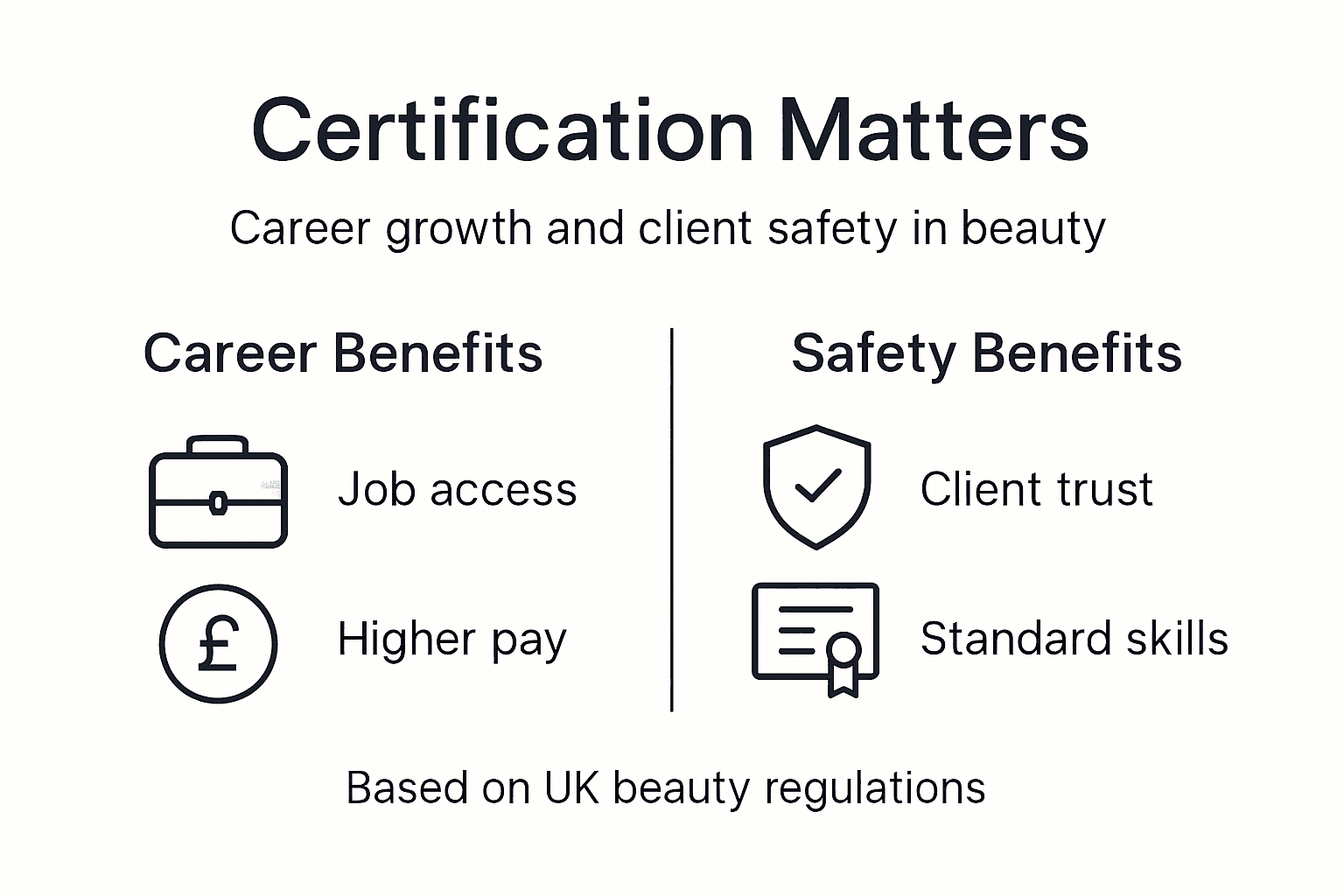
Certification transforms your career prospects in the beauty industry. It signals to employers and clients that you’re a qualified professional committed to safety and quality. Without it, you’re competing on an uneven playing field against certified therapists.
The benefits extend beyond personal advancement. Certification protects clients, establishes industry standards, and creates trust in a sector where safety matters enormously.
Career Advancement Opportunities
Certified therapists stand out in a competitive market. Employers actively seek accredited professionals because they reduce liability and attract discerning clients. You’ll access better salons, higher wages, and premium clientele willing to pay for quality.
Certification also enables career progression you simply cannot achieve without it. Moving into management, training, or salon ownership becomes realistic with recognised qualifications on your CV.
The Competitive Advantage
When clients choose a beauty therapist, they often search for credentials. Professional certification based on national standards assures them of your ability and commitment to safety.
You’ll differentiate yourself from unqualified practitioners offering cheap treatments. Certified therapists command premium pricing because clients understand they’re investing in expertise, not just a service.
Building Client Confidence
Clients feel safer with certified professionals. They know you’ve been trained to strict standards, understand contraindications, and follow proper hygiene protocols. This confidence translates into:
- Repeat bookings and loyal clientele
- Positive reviews and referrals
- Ability to charge professional rates
- Reduced complaints and disputes
- Peace of mind when handling sensitive treatments
Continuous Professional Development
Certification isn’t a static achievement—it’s the beginning of ongoing learning. Holding recognised credentials opens doors to specialist training in advanced techniques, new treatments, and business skills.
Many certified therapists pursue additional qualifications in areas like advanced electrotherapy, specialist skincare, or business management. This progression keeps you ahead of competitors and maximises earnings potential.
Certification protects clients, builds your reputation, and creates genuine career longevity in an industry where standards constantly evolve.
Safety Standards Matter
When you work to established standards, you reduce client risk significantly. Proper training in contraindications, product knowledge, and technique prevents adverse reactions and injuries.
This protects both clients and you. Certified practitioners face fewer complaints, maintain better client relationships, and build sustainable businesses.
Pro tip: After achieving initial certification, immediately plan your next qualification—whether specialist treatment training or business management—to maintain momentum and keep your career trajectory climbing.
Common Pitfalls and How to Avoid Them
Many aspiring beauty therapists make costly mistakes during their certification journey. Some choose unrecognised courses, others underestimate regulatory complexity, and many fail to plan beyond initial qualification. Understanding these pitfalls now saves time, money, and frustration later.
The beauty industry has evolved rapidly. What worked five years ago may no longer meet current licensing standards. Staying informed prevents you from investing in outdated training.
Selecting Unrecognised Qualifications
The biggest mistake is choosing a cheap course from an unaccredited provider. You’ll finish training, only to discover employers won’t accept your qualification or local councils won’t license you.
Choose recognised pathways only. Standard bodies like Habia establish qualification frameworks that employers and councils actually recognise. If a course isn’t VTCT or HABIA-approved, ask yourself why you’re considering it.
Ignoring Local Licensing Rules
Regulatory frameworks vary significantly between councils. What’s legally permitted in one Essex area might require a special license nearby. Many therapists start practising, then discover they’re operating illegally.
Before enrolling in any course:
- Contact your local council environmental health department
- Request their special treatment licensing requirements
- Confirm your chosen qualification covers those specific treatments
- Clarify any additional hygiene or premises standards
Insufficient Safety Training
Underpreparedness for professional practice is dangerous—for clients and your career. Some courses rush through health and safety modules to save time. This creates liability risks and damages your professional reputation.
Thorough health and safety training must be comprehensive, not condensed. Understand contraindications, product interactions, infection control, and emergency procedures. This knowledge directly protects clients and insulates you from complaints.
Skipping Ongoing Development
Many therapists view initial certification as the finish line. The industry evolves constantly—new techniques, products, regulations, and treatments emerge regularly. Stagnation makes you less competitive and potentially non-compliant.
Plan your continuous professional development immediately after qualifying. Budget time and money for specialist training, regulatory updates, and skill refreshers.
Choosing unrecognised courses, ignoring local rules, and skipping safety training create problems that derail careers before they start.
Building Your Compliance Checklist
Create a personal compliance document before starting any course:
- Course accreditation status (VTCT/HABIA verified)
- Local licensing requirements for planned treatments
- Health and safety coverage in syllabus
- Ongoing professional development timeline
- License renewal dates and requirements
Review this quarterly. Regulations change, and you need to adapt.
Pro tip: Contact your chosen training provider and ask specifically how they support students through local council licensing after graduation—if they can’t answer clearly, it’s a red flag about their accreditation standards.
Elevate Your Career with Accredited Beauty Certification at Medisoma
Achieving recognised certification is essential for enhancing your career and ensuring client safety in the beauty industry. If you are looking to fast-track your skills while meeting UK legal standards and industry expectations, Medisoma Academy offers high quality, accredited courses designed to build your confidence and professionalism. Our approach blends expert teaching with practical learning so you understand both the theory and real-world application crucial for success.
Take control of your professional journey with Medisoma and access tailored training that supports your growth and earning potential. Learn how to comply with licensing requirements, master specialised treatments, and differentiate yourself in a competitive market. Visit Medisoma Academy today and explore courses that not only focus on excellence but also provide ongoing career support. Dive into our Growing – Medisoma resources to expand your industry knowledge and uncover effective strategies for Monetizing – Medisoma your new skills. Start your certification journey now and build a thriving, trusted beauty career.
Frequently Asked Questions
What is beauty certification?
Beauty certification is a formal recognition that demonstrates a professional has met established standards in areas like safety protocols, client care, and hands-on techniques in the beauty industry.
Why is certification important for beauty therapists?
Certification is crucial as it builds client confidence, enhances career prospects, and ensures that professionals adhere to established safety and hygiene standards, thus protecting both clients and therapists.
What are the main components involved in beauty certification?
Beauty certification typically involves theoretical knowledge, practical skills, and assessment methods, which include written and practical exams to evaluate a professional’s competency in beauty treatments.
How can I ensure my beauty qualification is recognised?
To ensure your beauty qualification is recognised, choose accredited courses from reputable bodies such as VTCT or HABIA. Always check with your local council about licensing requirements related to your intended practice.