
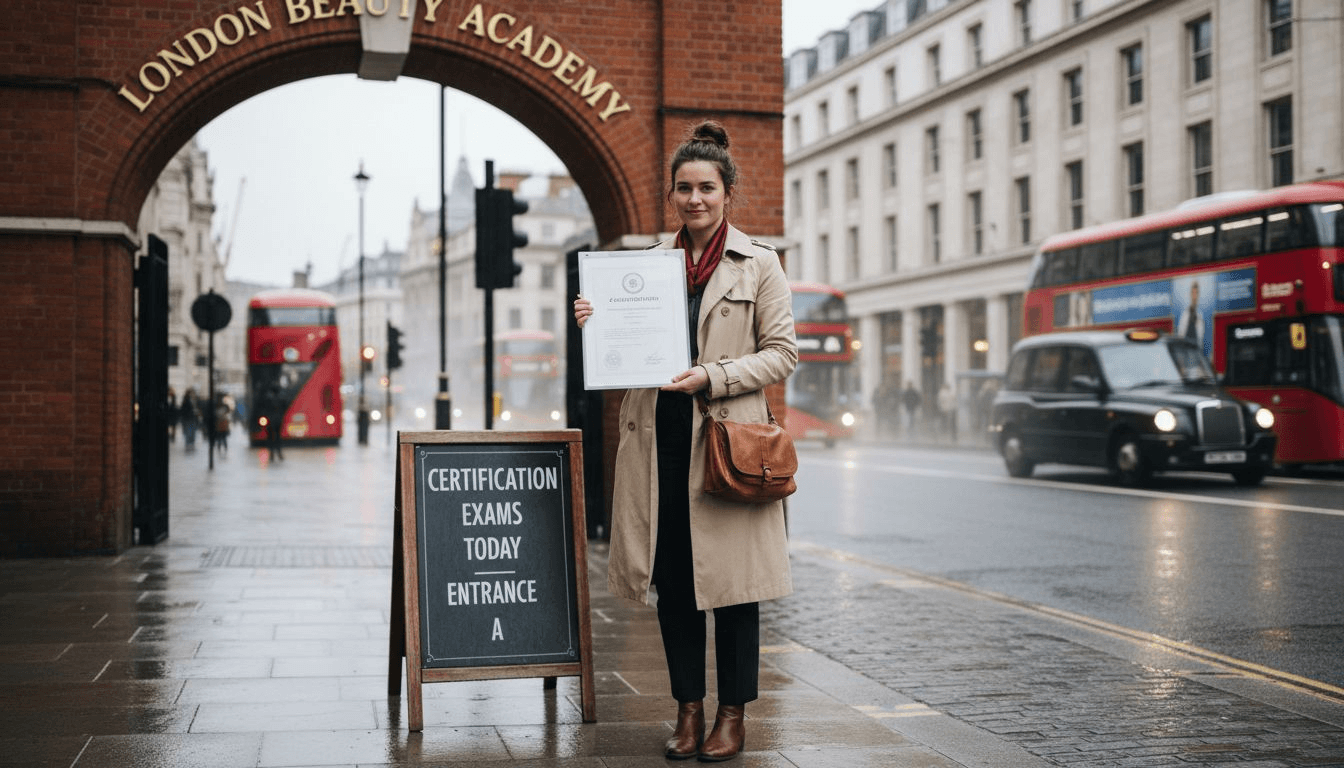
Taking the first steps toward a beauty therapy career can feel overwhelming when every job posting asks for credentials that truly stand out. For those in London eager to make a mark in the industry, understanding what counts as a recognised certification is key. Accredited certification not only builds your confidence but also signals to clients and employers that your skills meet high professional standards set by trusted organisations like the United Kingdom Accreditation Service.
Table of Contents
- Defining Accredited Certification In Beauty
- Types Of Accredited Beauty Courses In The UK
- How Accreditation Works And Who Grants It
- Key Requirements For Aspiring Beauty Therapists
- Benefits And Career Impact Of Accreditation
- Common Pitfalls And How To Avoid Them
Key Takeaways
| Point | Details |
|---|---|
| Accredited Certification | Represents formal recognition of professional competence in the beauty industry, validating practitioners’ skills and knowledge. |
| Types of Courses | Various accredited beauty courses are available, ranging from entry-level diplomas to advanced specialist qualifications that enhance career prospects. |
| Importance of Accreditation | Accreditation ensures quality training standards, enhances employability, and builds trust with clients, thus defining professional credibility in the industry. |
| Common Pitfalls | Aspiring beauty therapists should avoid unaccredited programmes and prioritise continuous professional development to maintain industry relevance and safety standards. |
Defining Accredited Certification in Beauty
Accredited certification represents a formal recognition of professional competence within the beauty industry, providing practitioners with validated credentials that demonstrate their skills and knowledge. The United Kingdom Accreditation Service (UKAS accreditation framework) plays a crucial role in establishing standardised quality assessment for beauty training programmes.
In the beauty sector, accredited certification involves a comprehensive evaluation process where training institutions undergo rigorous assessment to ensure they meet established professional standards. These certifications validate that beauty professionals have acquired specific skills, theoretical knowledge, and practical competencies required in their chosen specialisation.
Key components of accredited beauty certification typically include:
- Standardised curriculum development
- Practical skills assessment
- Theoretical knowledge examinations
- Professional conduct standards
- Continuous professional development requirements
The significance of accreditation extends beyond mere documentation. Recognised certifications provide beauty professionals with credibility, enabling them to demonstrate their expertise to potential employers, clients, and industry regulators. Moreover, accredited beauty courses offer structured learning pathways that align with industry expectations and professional growth opportunities.
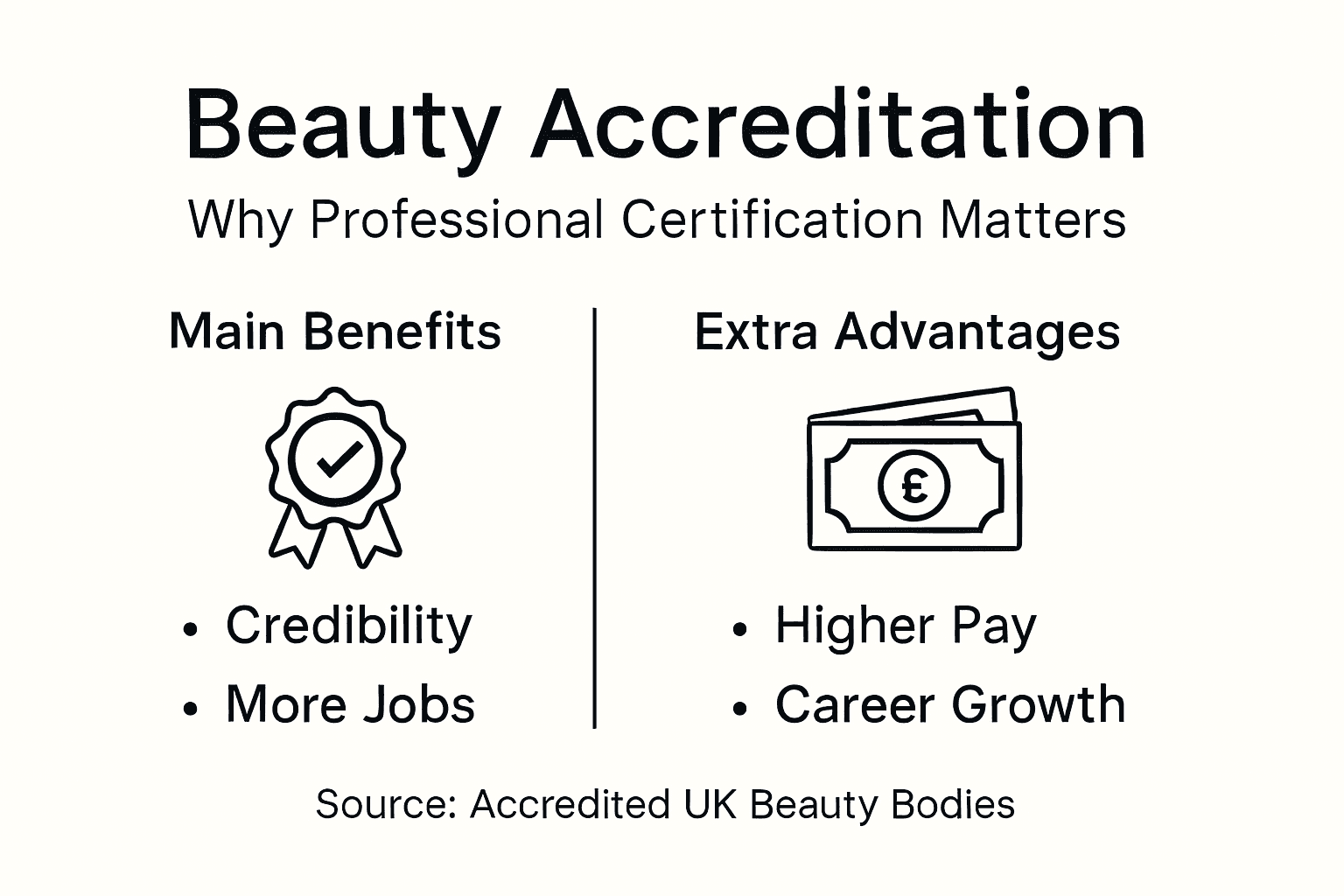
Pro tip: Always verify the accrediting body’s recognition and reputation before enrolling in any beauty certification programme.
Types of Accredited Beauty Courses in the UK
The beauty industry offers a diverse range of accredited training programmes designed to equip professionals with specialised skills and recognised qualifications. Professional beauty education encompasses various levels and specialisations, catering to different career aspirations and skill development needs.
Typically, accredited beauty courses in the United Kingdom can be categorised into several key types:
- Level 2 Beauty Therapy Diploma: Entry-level qualification for aspiring beauty professionals
- Level 3 Advanced Beauty Therapy Certificate: Comprehensive training for specialised treatments
- Level 4 Specialist Beauty Treatments Diploma: Advanced professional qualification
- Vocational Qualifications (VQ): Skill-specific certifications in areas like nail technology, makeup artistry, and spa treatments
- Foundation Degrees: Academic pathway combining practical skills with theoretical knowledge
Each course type offers unique advantages for students seeking to establish or advance their careers in the beauty sector. Recognised certifications provide structured learning pathways that blend practical skills, theoretical understanding, and professional development requirements.
Moreover, these accredited courses are typically validated by professional bodies such as VTCT (Vocational Training Charitable Trust) and City & Guilds, ensuring industry-standard quality and recognition. By choosing an accredited programme, students can gain confidence in their training and improve their employability in a competitive job market.
Pro tip: Research the specific accreditation and industry recognition of your chosen beauty course before enrolling to maximise your career potential.
To aid decision-making, here is a comparison of accredited beauty course levels and their professional outcomes:
| Course Level | Typical Duration | Entry Requirements | Career Outcome |
|---|---|---|---|
| Level 2 Diploma | 6-12 months | School leaver or beginner | Junior therapist, assistant roles |
| Level 3 Certificate | 1 year | Level 2 or equivalent | Specialist therapist, salon technician |
| Level 4 Diploma | 1-2 years | Level 3 or industry experience | Advanced practitioner, specialist services |
| Foundation Degree | 2 years | Level 3 or A-levels | Management, consultant, educator |
How Accreditation Works and Who Grants It
Accreditation in the beauty industry is a rigorous process of professional validation managed by specialized organisations that ensure educational and training standards meet industry requirements. British Accreditation Council plays a critical role in evaluating institutions across independent further and higher education sectors, establishing comprehensive quality benchmarks for professional training programmes.
The primary bodies responsible for granting accreditation in the UK beauty sector include:
- VTCT (Vocational Training Charitable Trust): Provides industry-recognised qualifications
- City & Guilds: Offers comprehensive professional certification
- United Kingdom Accreditation Service (UKAS): Oversees national accreditation standards
- British Accreditation Council (BAC): Evaluates educational institutions
- Awarding Bodies Recognised by Ofqual: Validate national qualifications
The accreditation process typically involves several comprehensive evaluation stages, including:
- Initial application and documentation review
- Detailed institutional assessment
- On-site inspection and verification
- Ongoing monitoring and periodic re-evaluation
- Maintenance of professional standards
These organisations meticulously assess training providers based on multiple criteria, including curriculum quality, teaching standards, student support, and alignment with industry professional requirements. National accreditation ensures that beauty therapy courses maintain high educational and practical skill development standards.
Pro tip: Always verify an institution’s accreditation status with multiple recognised awarding bodies before committing to a professional beauty course.
Here is a helpful summary comparing the main accreditation bodies relevant to beauty industry qualifications in the UK:
| Accrediting Body | Area of Focus | Recognition Level | Typical Courses Accredited |
|---|---|---|---|
| VTCT | Beauty & therapy | Widely recognised in UK salons | Diplomas, certificates, specialist courses |
| City & Guilds | Vocational education | Nationally respected across sectors | Beauty therapy, apprenticeships |
| UKAS | Quality assurance standards | Oversees national frameworks | Institutional accreditation only |
| BAC | Academic & vocational providers | Independent, trusted | Broad educational programmes |
| Ofqual | Regulates awarding bodies | Ensures qualification integrity | Nationally validated courses |
Key Requirements for Aspiring Beauty Therapists
Becoming a successful beauty therapist requires a combination of formal education, technical skills, and personal attributes. Apprenticeship programmes provide an excellent pathway for aspiring professionals to gain practical experience while developing essential industry competencies.
Key requirements for beauty therapy career progression include:
- Educational Qualifications
- Level 2 Beauty Therapy Certificate
- Level 3 Advanced Beauty Therapy Diploma
- Vocational training certifications
- Technical Skills
- Facial treatments
- Massage techniques
- Waxing and hair removal
- Nail care and treatments
- Make-up application
- Professional Attributes
- Strong communication skills
- Client consultation expertise
- Attention to detail
- Hygiene and safety consciousness
- Professional appearance
The typical entry pathway involves completing a recognised beauty therapy qualification, which encompasses both theoretical knowledge and practical skill development. Professional training requires demonstrating competence in various treatment techniques, understanding client needs, and maintaining high standards of personal and professional presentation.
Successful beauty therapists must also develop additional competencies such as client communication, business management skills, and continuous professional development. These skills enable practitioners to adapt to evolving industry trends and provide exceptional service in competitive beauty environments.
Pro tip: Research multiple training providers and compare their accreditation, course content, and industry connections before selecting your beauty therapy programme.
Benefits and Career Impact of Accreditation
Accreditation serves as a critical differentiator for beauty professionals, providing substantial career advantages and industry recognition. Licensing of cosmetic procedures demonstrates the importance of professional credentials in establishing credibility and ensuring consumer safety.
Key benefits of accreditation for beauty therapists include:
- Professional Credibility
- Validated skills and expertise
- Enhanced employability
- Increased client trust
- Career Progression
- Access to advanced job roles
- Higher salary potential
- Management opportunities
- Industry Protection
- Standardised quality controls
- Consumer safety assurance
- Professional conduct standards
The beauty sector offers diverse career pathways for accredited professionals, ranging from specialised treatment roles to management positions. Professional credentials demonstrate a commitment to excellence and provide a competitive edge in an increasingly sophisticated industry landscape.
Moreover, accredited certification opens doors to multiple career trajectories, including roles such as salon manager, spa specialist, beauty consultant, and advanced aesthetic practitioner. Continuous professional development through recognised qualifications ensures practitioners remain adaptable and relevant in a dynamic beauty and wellness environment.
Pro tip: Invest in ongoing professional training and seek additional specialisations to maximise your career potential in the beauty industry.
Common Pitfalls and How to Avoid Them
The beauty industry presents numerous challenges for aspiring professionals, with potential pitfalls that can significantly impact career progression and professional reputation. Non-surgical cosmetic procedure regulations highlight the critical importance of understanding and navigating industry standards effectively.
Common pitfalls for beauty professionals include:
- Educational Missteps
- Choosing unaccredited training programmes
- Neglecting continuous professional development
- Failing to update skills and knowledge
- Professional Practice Risks
- Inadequate insurance coverage
- Poor client consultation techniques
- Insufficient understanding of safety protocols
- Certification Complications
- Misunderstanding accreditation requirements
- Relying on unverified certificates
- Ignoring professional registration standards
Practitioners must be vigilant about verifying the legitimacy of their training and certifications. Professional credentials require thorough validation, ensuring that qualifications are recognised by reputable industry bodies and meet current regulatory standards.
Moreover, successful beauty professionals must continuously invest in their professional development, staying informed about emerging technologies, treatment techniques, and industry regulations. This proactive approach helps mitigate risks and demonstrates a commitment to maintaining the highest standards of professional practice.
Pro tip: Always cross-reference your professional qualifications with official accreditation bodies and maintain a portfolio of ongoing professional development evidence.
Take Control of Your Beauty Career with Accredited Training at Medisoma Academy
Navigating the complex world of beauty certification can feel overwhelming with so many accreditation bodies and course options to consider. If you want to avoid pitfalls like unaccredited training or uncertified qualifications, it is essential to choose a provider that guarantees recognised credentials and professional growth. At Medisoma Academy, we understand the challenge of finding quality accredited beauty courses in London that truly prepare you for a successful career. Our fast track programmes combine practical skills, industry knowledge and personalised support to help you excel in the competitive beauty sector.
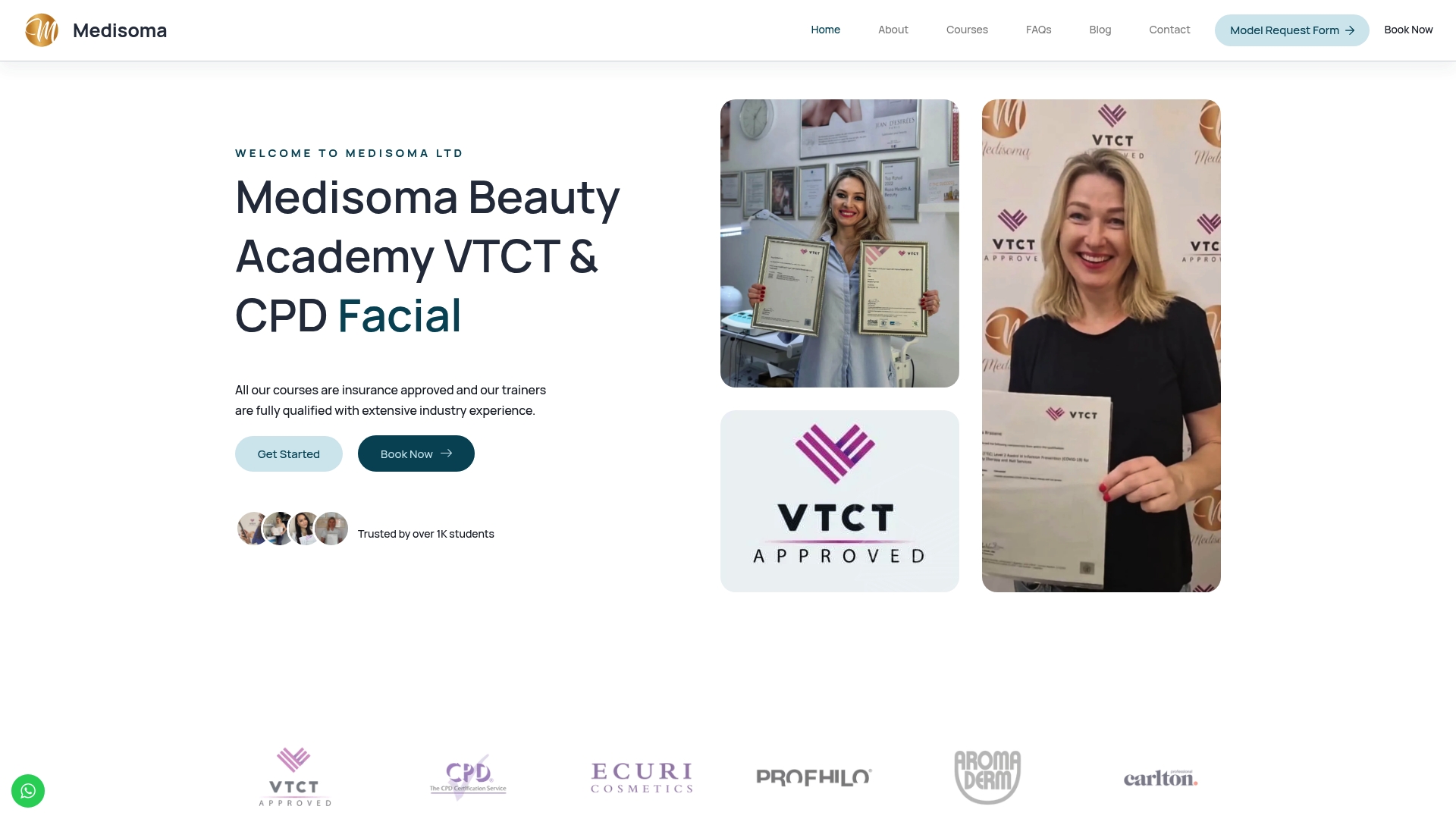
Empower yourself with confidence by enrolling in Medisoma Academy’s accredited beauty courses designed to meet UK industry standards and developed to accelerate your career progression. Discover how our commitment to excellence, innovation and student-focused teaching can transform your aspirations into reality. Visit us today to explore your training options and take the first step in unlocking your professional potential through certified, recognised qualifications from Medisoma Academy.
Frequently Asked Questions
What is accredited certification in the beauty industry?
Accredited certification in the beauty industry serves as formal recognition of a professional’s competence, validating their skills and knowledge through a rigorous evaluation process by recognised accrediting bodies.
Why is accreditation important for beauty professionals?
Accreditation is vital as it provides credibility, enhances employability, ensures compliance with industry standards, and lays the foundation for career progression within the beauty sector.
What types of accredited beauty courses are available?
Accredited beauty courses include Level 2 Beauty Therapy Diplomas, Level 3 Advanced Certificates, Level 4 Diplomas in Specialist Treatments, and vocational qualifications tailored to specific beauty disciplines.
How does the accreditation process work for beauty training providers?
The accreditation process involves several stages, including an application review, institutional assessment, on-site inspection, ongoing monitoring, and periodic re-evaluation to ensure continuous compliance with established industry standards.