
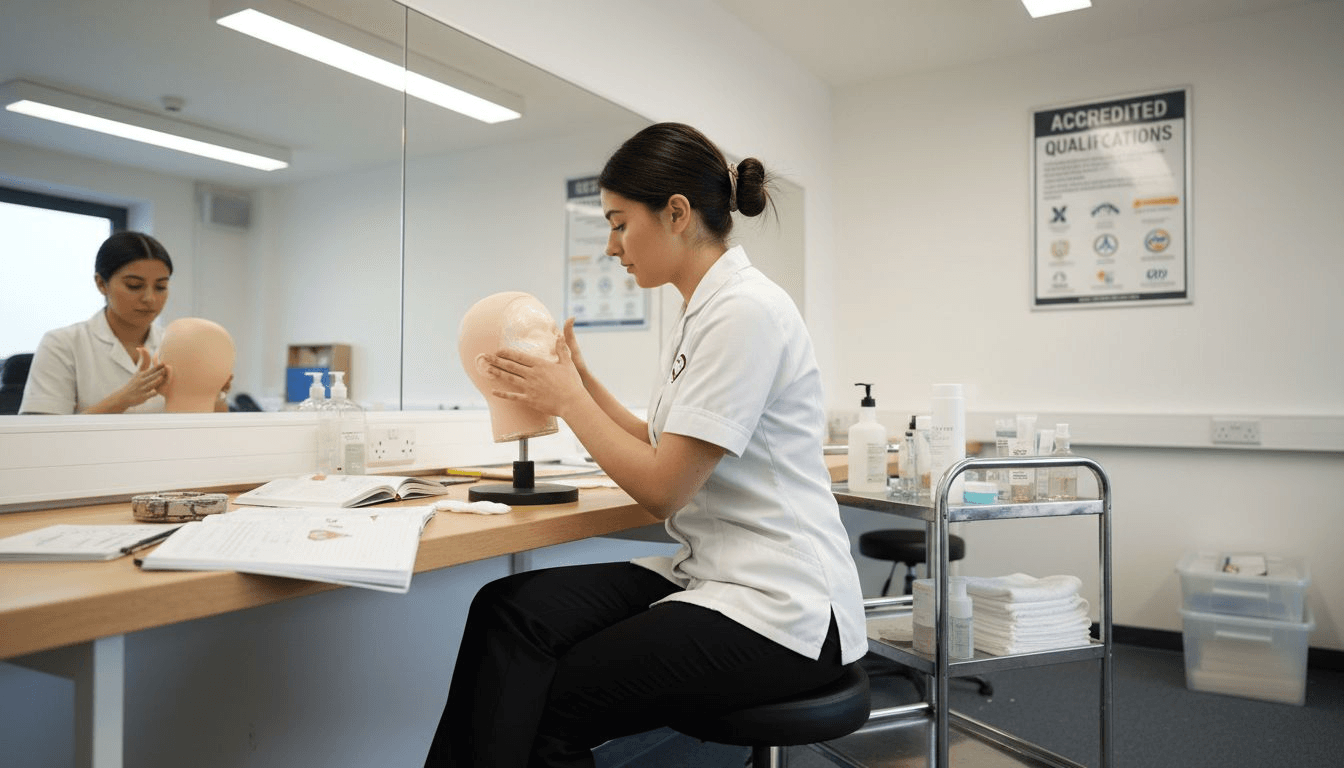
Choosing the right beauty training can feel daunting when every course promises results but not all offer true professional value. For aspiring therapists in London and Essex, understanding accredited courses is vital to stand out, gain client trust, and open professional doors. This guide unpacks the real meaning behind accreditation, clears up common misconceptions, and helps you confidently pursue qualifications that bring genuine skills, credibility, and new opportunities.
Table of Contents
- Accredited Courses Defined And Misconceptions
- Types Of Beauty Course Accreditation In The UK
- Key Features Of Accredited Beauty Training
- Legal And Insurance Implications Explained
- Comparing Accredited Versus Non-Accredited Routes
- Financial And Career Impacts For Therapists
Key Takeaways
| Point | Details |
|---|---|
| Importance of Accreditation | Accredited courses ensure professional recognition and compliance with industry standards, enhancing career prospects. |
| Credibility with Employers | Holding recognised qualifications signals commitment to professional development, making candidates more attractive to potential employers. |
| Financial Implications | Accreditation can lead to higher earning potential and diverse career opportunities, reinforcing the value of investing in accredited training. |
| Legal and Insurance Considerations | Understanding the legal requirements and ensuring qualifications meet insurance standards is critical for professional protection. |
Accredited Courses Defined and Misconceptions
In the beauty therapy industry, understanding course accreditation is fundamental to building a professional career. Accreditation represents an official recognition by a professional body that a training programme meets specific quality standards and educational requirements. While many aspiring beauty therapists believe any course will suffice, the reality is far more nuanced.
Accredited courses differ significantly from standard training programmes in several critical aspects:
- Validated Curriculum: Meets rigorous industry standards
- Professional Recognition: Acknowledged by regulatory bodies
- Quality Assurance: Consistent educational benchmarks
- Career Advancement: Enhanced credibility with employers
Accredited beauty courses in the UK represent more than just a piece of paper – they are a pathway to professional legitimacy. These programmes undergo strict external evaluation, ensuring that students receive comprehensive, industry-relevant training that aligns with current professional practices.
Common misconceptions about accreditation can significantly impact career trajectories. Many students mistakenly assume that all beauty courses are equivalent, overlooking the substantial differences in curriculum depth, practical training, and professional recognition. An accredited course provides structured learning with standardised assessments, practical skill development, and a clear progression pathway.
Professional Validation Matters
In the competitive beauty therapy landscape, employers prioritise candidates with recognised qualifications. Accreditation signals to potential employers that you have:
- Completed a standardised training programme
- Demonstrated competence in essential skills
- Committed to professional development
- Understand industry best practices
Accreditation is not just a credential – it’s a commitment to professional excellence.
Pro tip: Always verify a course’s accreditation status with official professional bodies before enrolling to ensure your qualification will be recognised in the industry.
Types of Beauty Course Accreditation in the UK
In the United Kingdom, beauty course accreditation is a nuanced landscape with several key certification bodies determining professional standards. Professional beauty accreditation in the UK encompasses multiple levels and types of recognition, each serving distinct career development objectives.
The primary accreditation bodies in the beauty industry include:
- ABT (Association of Beauty Therapists): Focuses on practical, industry-ready qualifications
- VTCT (Vocational Training Charitable Trust): Provides government-regulated professional qualifications
- CPD (Continuing Professional Development): Offers ongoing skills enhancement programmes
Each accreditation type brings unique advantages to aspiring beauty professionals. VTCT qualifications, for instance, represent the most comprehensive route, offering structured levels that demonstrate increasing expertise and specialisation. These qualifications are particularly valuable for those pursuing advanced clinical or medical aesthetic work, with clear progression pathways from entry-level to specialist certifications.
Professional Recognition Levels
The accreditation landscape in beauty therapy is structured to support different career stages:
- Entry-level certifications for new practitioners
- Intermediate qualifications for skill expansion
- Advanced specialisation programmes
- Professional development and continued learning tracks
Professional accreditation is not just a credential, but a commitment to excellence and continuous learning.
While ABT courses offer rapid certification suitable for immediate client work, VTCT provides more in-depth, government-recognised qualifications. CPD courses complement these by offering targeted skill development and keeping professionals updated with the latest industry trends and techniques.
To help clarify the accreditation landscape, here is a summary of the primary UK accreditation bodies and their unique focus:
| Accreditation Body | Main Focus | Typical Qualification Outcome | Career Impact |
|---|---|---|---|
| ABT | Practical, industry-ready training | Certificate for immediate practice | Swift entry to client work |
| VTCT | Government-regulated qualifications | Structured diplomas with progression | In-depth skills, wider recognition |
| CPD | Ongoing professional development | Skills update or specialisation | Keeps professionals current, enhances expertise |
Pro tip: Research each accreditation body’s specific requirements and insurance recognition to select the most suitable qualification for your career goals.
Key Features of Accredited Beauty Training
Accredited beauty training represents a comprehensive approach to professional development that goes far beyond simple skill acquisition. Benefits of accredited beauty courses demonstrate the critical importance of structured, recognised educational programmes in advancing beauty therapy careers.
Key features of high-quality accredited beauty training include:
- Standardised Curriculum: Ensures consistent, industry-approved learning outcomes
- Professional Assessment: Rigorous evaluation of practical and theoretical skills
- Industry-Recognised Certification: Credentials valued by employers and insurers
- Comprehensive Skill Development: Balanced theoretical knowledge and hands-on practice
- Continuous Learning Pathways: Clear progression routes for career advancement
The structured learning environment of accredited courses provides aspiring beauty professionals with a robust foundation. These programmes meticulously design training modules that cover not just technical skills, but also critical aspects of professional practice, client communication, and industry standards.
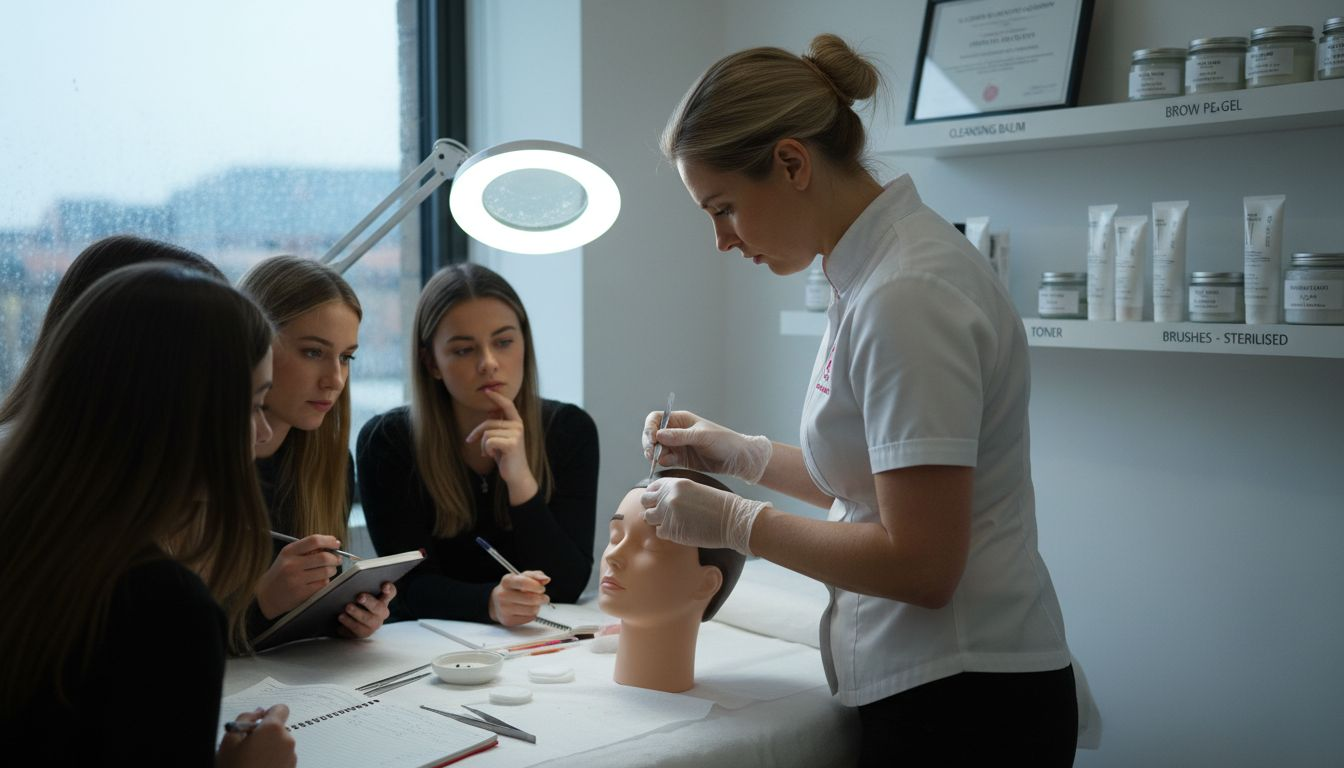
Practical Training Components
Accredited beauty training typically encompasses multiple critical elements:
- Comprehensive theoretical instruction
- Supervised practical skill development
- Clinical practice and simulation scenarios
- Professional ethics and client management training
- Industry-standard safety and hygiene protocols
Professional training transforms technical skills into genuine expertise.
These comprehensive programmes distinguish themselves by offering more than just basic technique instruction. They provide a holistic approach to professional development, ensuring students are fully prepared for the complexities of modern beauty therapy practice.
Pro tip: Always verify that your chosen beauty training programme offers comprehensive, industry-recognised accreditation to maximise your career potential.
Legal and Insurance Implications Explained
Navigating the complex landscape of legal and insurance requirements is crucial for beauty professionals seeking to establish a credible and protected career. Benefits of accredited beauty courses highlight the critical role of understanding professional liability and insurance coverage in the beauty therapy sector.
Key legal and insurance considerations for beauty professionals include:
- Professional Liability Protection: Comprehensive coverage against potential client claims
- Regulatory Compliance: Meeting industry-specific legal requirements
- Treatment Risk Management: Understanding potential professional risks
- Certification Validity: Ensuring qualifications meet insurance provider standards
- Ongoing Professional Development: Maintaining insurance eligibility
The legal framework surrounding beauty therapy is complex and multifaceted. Accredited courses provide essential insights into professional responsibilities, helping practitioners understand the nuanced legal landscape that governs their practice. This knowledge goes beyond technical skills, encompassing critical aspects of client safety, consent, and professional conduct.
Insurance Coverage Essentials
Professional insurance for beauty therapists typically covers:
- Personal injury claims
- Professional negligence
- Treatment-related incidents
- Equipment and property damage
- Public liability protection
Professional insurance is not just a requirement – it’s a fundamental protection for your career.
Unaccredited or poorly recognised qualifications can compromise insurance coverage, leaving practitioners vulnerable to significant financial and legal risks. Comprehensive training programmes ensure that students understand the intricate relationship between professional qualifications, legal obligations, and insurance requirements.
Pro tip: Always verify your insurance policy details and ensure your qualifications fully meet the specific requirements of professional insurance providers.
Comparing Accredited Versus Non-Accredited Routes
Choosing between accredited and non-accredited beauty training routes represents a critical career decision with far-reaching consequences. Benefits of accredited beauty courses illuminate the substantial differences that can dramatically impact professional opportunities and long-term success.
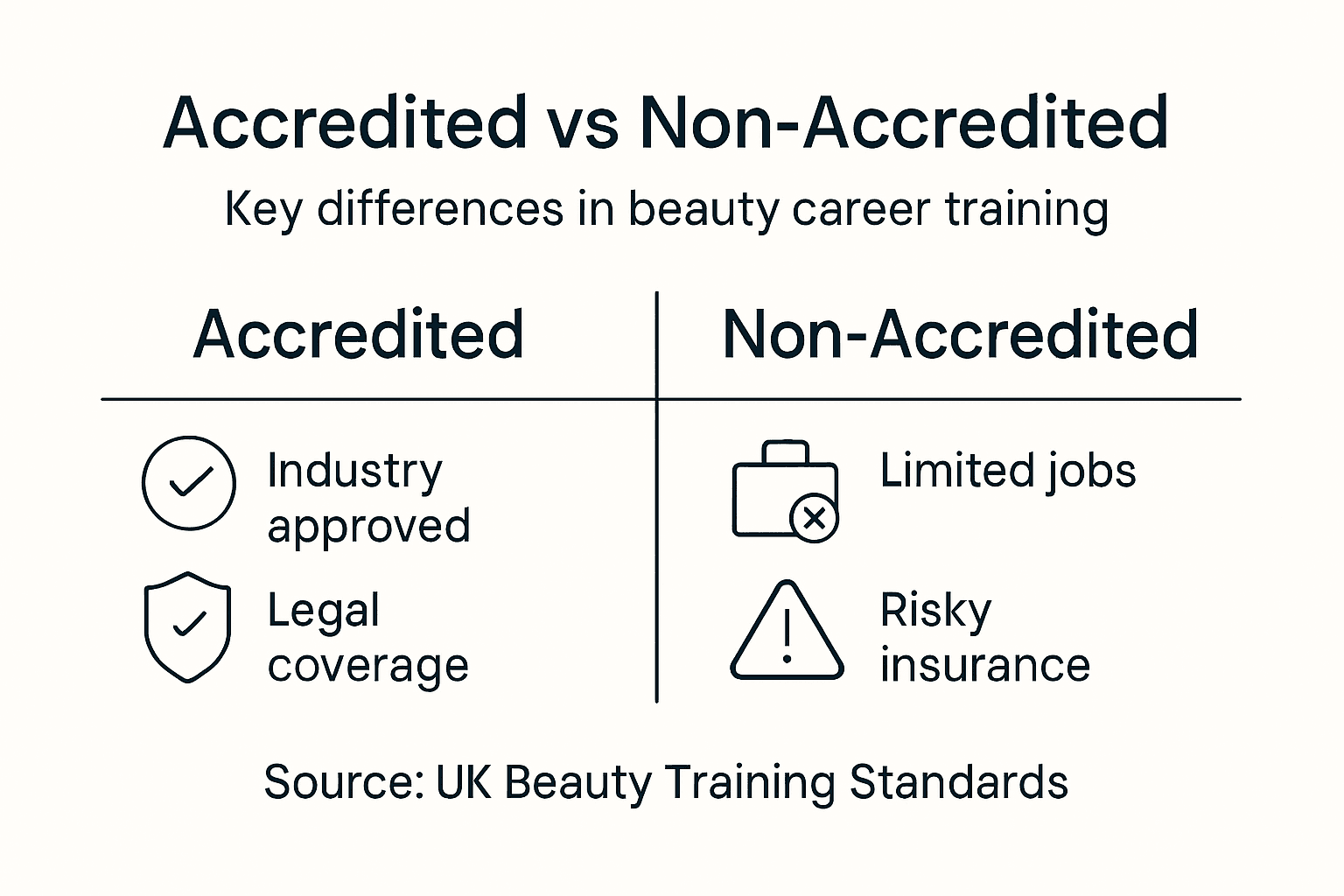
Key distinctions between accredited and non-accredited routes include:
- Curriculum Quality: Standardised versus variable learning experiences
- Professional Recognition: Widely acknowledged versus limited credentials
- Career Progression: Clear pathways versus uncertain advancement
- Insurance Eligibility: Comprehensive coverage versus potential limitations
- Industry Credibility: Strong professional standing versus potential scepticism
The fundamental difference lies in the structured, professionally validated approach of accredited programmes. Non-accredited routes often provide fragmented learning experiences that lack comprehensive industry standards, potentially leaving practitioners with incomplete skill sets and limited professional recognition.
Comparative Performance Metrics
Professional outcomes typically demonstrate significant variations between accredited and non-accredited training:
- Higher employment rates for accredited graduates
- More substantial initial and long-term earning potential
- Greater client trust and professional credibility
- Enhanced skill verification and competence assessment
- Clearer career development trajectories
Accreditation transforms training from a transaction into a strategic career investment.
While non-accredited routes might initially appear more affordable or convenient, they frequently result in higher long-term costs through restricted professional opportunities, limited insurance options, and reduced marketability in an increasingly competitive beauty therapy landscape.
Understanding the ramifications of qualification type, here is a concise comparison between accredited and non-accredited routes:
| Aspect | Accredited Courses | Non-Accredited Courses |
|---|---|---|
| Employer Preference | Strongly favoured | Often overlooked |
| Insurance Eligibility | Broadly accepted | Frequently limited or restricted |
| Earning Potential | Higher starting salary | Lower earning ceiling |
| Career Mobility | Extensive opportunities | Limited advancement |
| Client Trust | Enhanced credibility | Client scepticism possible |
Pro tip: Prioritise comprehensive, industry-recognised accreditation as a strategic investment in your professional future, not merely an educational expense.
Financial and Career Impacts for Therapists
Understanding the profound financial and career implications of professional training is crucial for aspiring beauty therapists. Benefits of accredited beauty courses reveal how strategic educational investments can transform career trajectories and economic potential in the beauty industry.
Key financial and career advantages include:
- Enhanced Earning Potential: Higher salary brackets for qualified professionals
- Expanded Service Offerings: Ability to provide more specialised treatments
- Professional Credibility: Increased client trust and marketability
- Career Mobility: More diverse employment and entrepreneurial opportunities
- Long-term Economic Stability: Better career progression and job security
The economic landscape for beauty therapists is increasingly competitive, with accredited qualifications serving as a critical differentiator. Professionally trained therapists can command higher rates, access more sophisticated job markets, and develop a more robust professional reputation compared to their non-accredited counterparts.
Career Progression Pathways
Accredited training opens multiple career advancement opportunities:
- Advanced clinical specialisations
- Management and training roles
- Independent business ownership
- Higher-tier salon and spa positions
- International career opportunities
Investing in professional education is investing in your future economic potential.
The financial implications extend beyond immediate earnings. Accredited professionals typically experience more stable career trajectories, with consistently improving skill sets that translate directly into economic opportunities and professional growth.
Pro tip: Calculate the long-term return on investment for your training by comparing potential earnings and career opportunities across accredited and non-accredited routes.
Secure Your Future with Accredited Beauty Training at Medisoma Academy
Choosing the right accredited course is the first step to overcoming the challenges of professional recognition, insurance eligibility and assured career progression outlined in the article. At Medisoma Academy, we understand the importance of standardised curriculum, professional validation and quality assurance that truly prepare you for success. Our fast track beauty therapy courses combine expert teaching with real-world practical skills so you can confidently enter the industry knowing you hold respected qualifications.
Experience the difference of training designed to boost your client trust, enhance your earning potential and provide a clear pathway to career advancement. Visit Medisoma Academy today and explore how our accredited courses offer not just education but a professional future you can be proud of. Take the step now to join a community that values your growth, self-esteem and creativity. Discover more on our official website and let us help you turn ambition into achievement.
Frequently Asked Questions
What is the importance of course accreditation in beauty therapy?
Accreditation is crucial in beauty therapy as it ensures that a training programme meets specific quality standards and industry requirements, providing students with the knowledge and skills needed for professional practice.
How do accredited courses enhance my career prospects in the beauty industry?
Accredited courses enhance career prospects by offering recognised qualifications that signal to employers your competence, commitment to professional development, and understanding of industry best practices.
What are the key differences between accredited and non-accredited beauty courses?
Accredited courses have standardised curricula, professional recognition, and clear pathways for career progression, while non-accredited courses may lack these standards, potentially restricting professional opportunities and credibility.
How can I verify if a beauty course is accredited?
You can verify a beauty course’s accreditation status by checking with the relevant professional bodies or accreditation organisations that oversee beauty education, ensuring the recognition and validity of your qualification.