
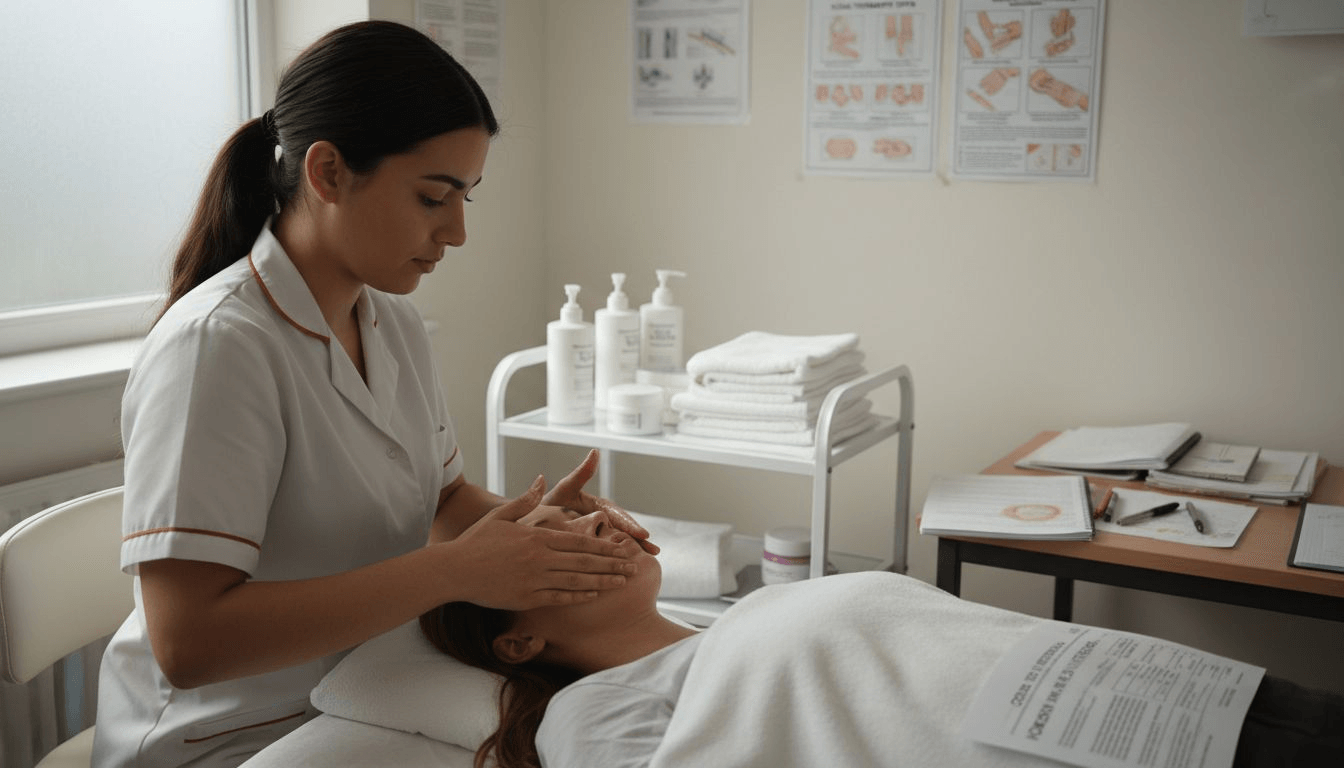
Starting a beauty therapy career in London or Essex can feel overwhelming when there are so many courses to choose from and industry requirements to consider. You want practical training that unlocks real job opportunities, builds your confidence, and keeps you competitive in a fast-changing market. The right approach will help you become not just qualified, but a trusted professional clients and employers actively seek. This list reveals concrete ways accredited beauty courses support your ambitions, from unlocking career paths to mastering current industry techniques. Get ready to discover how you can gain hands-on experience, build valuable skills, and connect with supportive professionals—all essential steps for a successful beauty career.
Table of Contents
- 1. Accredited Qualifications Open New Career Paths
- 2. Fast-Track Learning For Quick Skill Improvement
- 3. Boost Self-Esteem And Confidence Through Training
- 4. Hands-On Practical Experience With Expert Tutors
- 5. Access To Current Industry Techniques And Trends
- 6. Networking Opportunities With Peers And Professionals
Quick Summary
| Takeaway | Explanation |
|---|---|
| 1. Accredited qualifications enhance career opportunities | Completing accredited courses unlocks paths in salons, spas, or self-employment, strengthening employability and earning potential. |
| 2. Fast-track courses offer efficient skill development | Intensive learning compresses months of education into weeks, preparing you for professional work quickly without sacrificing quality. |
| 3. Hands-on training builds confidence and competence | Practical experience with expert feedback accelerates skill mastery and prepares you for real-world client interactions. |
| 4. Current techniques maintain market relevance | Training updates ensure you learn popular methods, keeping you competitive with evolving client preferences and industry standards. |
| 5. Networking provides career support and opportunities | Building relationships during training establishes a professional network that can lead to job opportunities and collaborations. |
1. Accredited Qualifications Open New Career Paths
Accredited beauty qualifications are your professional passport. They transform your aspirations into concrete career opportunities, whether you want to work in established salons, luxury spas, or build your own business.
When you complete an accredited course, you gain more than certificates. You develop foundational and advanced skills in key areas like skincare, waxing, massage, and makeup application. These aren’t generic skills—they’re industry-recognised competencies that employers actively seek.
Why Accreditation Matters
Accreditation isn’t just a badge on your CV. Beauty therapy qualifications in the UK enable employment across diverse settings and support career progression through structured progression pathways.
Here’s what accreditation unlocks for you:
- Salon and spa employment – Establish credibility with high-end establishments that require certified therapists
- Self-employment opportunities – Build your own client base with confidence in your professional standing
- Level progression – Advance from Level 2 to Level 3 Diplomas to broaden your expertise and improve earning potential
- Competitive advantage – Stand out in a crowded beauty market where clients demand qualified professionals
London and Essex’s beauty industry moves fast. Employers notice candidates with verified credentials. You’re not just another therapist; you’re a trained professional who meets industry standards.
Accredited qualifications give you the credibility to command better rates, access premium clients, and progress your career without limits.
The progression structure matters too. Starting with foundational training, you build skills methodically. Then, advancing to higher levels deepens your expertise in specialised areas. This structured approach means you’re never overwhelmed—you develop confidence at each stage.
Many successful therapists in your area started exactly where you are now. They chose accredited training and now run thriving practices or manage busy salons. Your choice of course today directly influences your career trajectory tomorrow.
Professional tip: When selecting your accredited course, prioritise programmes offering both Level 2 and Level 3 pathways. This flexibility lets you plan progression without changing providers mid-journey.
2. Fast-Track Learning for Quick Skill Improvement
Time is your most valuable asset. Fast-track beauty courses compress months of learning into weeks, allowing you to gain professional qualifications without sacrificing your current commitments.
Unlike traditional programmes that stretch over a year, intensive courses deliver concentrated skill development in a shorter timeframe. You’re not learning less—you’re learning smarter through structured, focused delivery.
The intensity actually works in your favour. When you immerse yourself fully in a subject, knowledge sticks better. Your brain consolidates information faster when you engage with it consistently over concentrated periods rather than spreading it thinly across months.
How Fast-Track Learning Works
Accelerated beauty courses combine theoretical knowledge with hands-on practice from day one. Experienced instructors guide you through essential techniques whilst building your confidence simultaneously.
Here’s what makes fast-track courses effective:
- Intensive scheduling – Structured daily sessions maximise your learning absorption
- Experienced instructors – Expert teachers deliver content efficiently without wasting time
- Practical focus – You spend significant time practising techniques, not just listening to lectures
- Real-world readiness – You emerge prepared for immediate professional work or business launch
You’ll develop skills in massage techniques, skincare treatments, waxing, and makeup application at an accelerated pace. The key difference is that every hour counts—there’s no padding or filler.
Fast-track courses deliver fully accredited training and professional insurance eligibility in weeks, not months, getting you work-ready quickly.
Many aspiring therapists in London and Essex worry about time constraints. Perhaps you’re juggling other responsibilities or eager to start earning. Fast-track courses solve this problem by delivering compressed excellence without compromising quality.
The practical benefits matter too. You can start accepting clients sooner, build your portfolio faster, and begin earning income earlier. Whether you’re launching a salon business or seeking employment, speed gives you competitive advantage.
You’ll gain the confidence that comes from focused, intensive learning. When you emerge, you’re not just qualified—you’re battle-ready with genuine practical experience.
Professional tip: Choose a fast-track course that emphasises hands-on practice over theory. The more time you spend actually performing treatments during training, the more confident and competent you’ll be with your first real clients.
3. Boost Self-Esteem and Confidence Through Training
Beauty training does something remarkable—it transforms not just your skills, but your entire sense of self-worth. As you master techniques and gain professional competence, your confidence naturally follows.
This isn’t superficial. When you learn to create visible transformations in others, you experience genuine empowerment. You’re not simply applying products; you’re delivering tangible psychological uplift to your clients and reinforcing your own value simultaneously.
The act of helping others feel better about themselves creates a powerful feedback loop. Every satisfied client, every compliment, every visible transformation strengthens your professional identity and personal confidence.
The Psychology Behind Professional Training
Beauty therapy training engages you in personalized, meaningful work. Unlike assembly-line jobs, you’re creating bespoke experiences tailored to individual clients. This personal connection matters enormously for your mental health and self-perception.
Professional training in beauty therapy encourages genuine empowerment through mastery and client relationships. You’re not following scripts; you’re developing expertise that clients actively seek and value.
Here’s how training builds your confidence:
- Mastery of techniques – Repeating skills until they become second nature eliminates self-doubt
- Client feedback – Positive responses from real clients validate your abilities immediately
- Professional identity – Wearing your credentials with pride transforms how you see yourself
- Financial independence – Earning income through your own expertise proves your market value
- Continuous growth – Advanced training opportunities keep you engaged and progressing
You’ll notice changes beyond the salon floor. As your professional confidence grows, it spills into other areas of your life. You stand taller, speak with more authority, and approach challenges with resilience.
Beauty training transforms your self-perception by giving you measurable, visible proof of your professional competence and value.
Many students arrive uncertain about their abilities. They worry whether they can master the techniques or handle client interactions. Within weeks of training, those doubts dissolve as they experience real success with real techniques on real people.
The beauty industry rewards confidence. Clients notice therapists who believe in their abilities. When you complete accredited training, you’re not faking assurance—you’ve earned it through genuine skill development.
Professional tip: Actively seek client feedback during your training and early career. Written testimonials or simple verbal compliments serve as powerful confidence anchors when you doubt yourself during challenging periods.
4. Hands-On Practical Experience with Expert Tutors
Theory alone won’t make you a skilled therapist. You need direct, supervised practice with someone who knows exactly what they’re doing. This is where expert tutors become invaluable to your development.
Beauty therapy demands muscle memory, precision, and intuition. You develop these only through repetition under watchful guidance. Your tutor spots mistakes immediately, corrects your technique, and refines your approach before bad habits form.
Learning from experienced professionals means you’re absorbing years of accumulated knowledge. They’ve solved problems you haven’t encountered yet and can anticipate where you’ll struggle.
Why Hands-On Training Matters
You cannot learn facial massage techniques by watching videos. You cannot perfect waxing angles from a textbook. Practical skills require doing, failing, adjusting, and trying again with expert feedback.
Structured practical training combined with theoretical knowledge creates comprehensive learning that prepares you for real clients. You’re not just accumulating hours; you’re developing genuine competence through meaningful repetition.
Here’s what hands-on experience delivers:
- Muscle memory development – Your hands learn correct technique through supervised repetition
- Real-time feedback – Tutors correct mistakes instantly before they become habits
- Treatment diversity – You practise skincare, waxing, manicure, and client communication techniques
- Confidence building – Performing treatments successfully under expert observation proves your capability
- Problem-solving skills – Experience teaches you how to adapt techniques for different client needs
During training, you’ll work on mannequins, models, and eventually real clients under supervision. Each stage builds your confidence and competence progressively.
Expert tutors transform your learning speed dramatically by providing immediate correction and personalised guidance that independent study simply cannot match.
Your tutor brings something videos cannot offer—presence. They observe your posture, your pressure application, your client communication. They notice tension in your shoulders that’s affecting your technique or identify why your waxing strips aren’t adhering properly.
This personalised attention accelerates your learning exponentially. You avoid months of self-directed trial and error. Instead, you benefit from proven methods and professional shortcuts that experienced therapists have refined over years.
The beauty industry rewards therapists with genuine practical competence. Clients sense the difference immediately. When you’ve trained extensively with expert tutors, your confidence shows through in every treatment.
Professional tip: During practical training, always ask your tutor “why” they’re using specific techniques. Understanding the reasoning behind methods helps you adapt them confidently for different client situations later.
5. Access to Current Industry Techniques and Trends
The beauty industry evolves constantly. New techniques emerge, client preferences shift, and standards change. Training courses keep you aligned with current market demands rather than outdated methods.
When you train with accredited providers, you’re learning what salons and clients want right now. You’re not studying techniques from five years ago that nobody requests anymore. This currency is crucial for your employability and earning potential.
Outdated training leaves you competing with therapists who know modern methods. Clients notice immediately when you’re unfamiliar with trending treatments they’ve seen on social media or discussed with friends.
What Current Training Covers
Today’s beauty therapy extends far beyond basic facials and waxing. The market demands diverse, specialised skills. Professional training incorporates popular treatments including nail art, lash and brow services, and current health and safety protocols.
Your training should include:
- Waxing techniques – Modern methods for eyebrows, body, and facial hair removal
- Advanced facial treatments – Current skincare protocols using contemporary products and devices
- Nail services – Gel extensions, acrylics, nail art, and nail health standards
- Lash and brow work – Tinting, lamination, lifting, and extensions that clients actively seek
- Makeup services – Bridal, special occasion, and trend-focused application techniques
- Client service protocols – Current standards for hygiene, communication, and professionalism
Accredited courses update their curriculum regularly to reflect industry shifts. What you learn isn’t theoretical or academic; it’s practical knowledge that generates income immediately.
Current industry training ensures you’re never outdated, always competitive, and always relevant to what clients actually want.
The beauty market in London and Essex moves quickly. Clients expect therapists to know about the latest treatments—Korean skincare innovations, lash lifting, brow lamination, gel nail extensions. These weren’t standard five years ago, but they’re expected now.
When you train with providers who stay current, you gain confidence in discussing trends with clients. You understand why certain techniques matter and can recommend treatments confidently rather than defaulting to basics.
This knowledge also protects your career longevity. Industries that evolve constantly favour professionals who embrace change. By starting with current training, you develop habits of continuous learning that serve you throughout your career.
Professional tip: Ask any course provider which treatments they’ve added to their curriculum in the last year. Regular updates signal they’re genuinely connected to the industry and invested in your market relevance.
6. Networking Opportunities with Peers and Professionals
Your peers and mentors matter enormously for your career trajectory. Beauty courses connect you with people who understand your journey, share your ambitions, and become valuable contacts for years to come.
Networking isn’t about forcing relationships or collecting business cards. It’s about building genuine connections with people navigating the same industry. These relationships lead to job opportunities, business collaborations, referrals, and continuous learning.
When you train alongside other aspiring therapists, you’re creating a support network. These people understand your challenges because they’re experiencing them too. That shared experience builds bonds that extend far beyond your course.
Why Professional Connections Matter
The beauty industry thrives on relationships and recommendations. Salons often hire through referrals. Clients discover therapists through word-of-mouth. Independent therapists build businesses on client networks. All of this starts with connections.
Beauty industry events and networking opportunities connect emerging talent with established professionals, brand leaders, and mentors, facilitating relationships that accelerate career growth. These gatherings expose you to possibilities you wouldn’t discover alone.
Here’s what networking during training provides:
- Job leads and employment contacts – Meet people working in salons and spas who might hire you
- Mentorship relationships – Connect with experienced therapists willing to guide your career development
- Collaboration opportunities – Build relationships with peers for potential business ventures or shared client referrals
- Supplier connections – Meet product representatives and equipment providers relevant to your work
- Industry knowledge – Learn from professionals about market trends, challenges, and opportunities
- Emotional support – Maintain friendships with people who genuinely understand your professional life
Your course isn’t just about skills; it’s about positioning yourself within the beauty community. The people you meet become your professional ecosystem.
Strong professional networks accelerate career growth, create opportunities you’d never find alone, and provide ongoing support throughout your career.
Consider joining professional associations and industry events that facilitate networking among beauty professionals after completing your course. These memberships extend your network beyond your immediate cohort.
Many successful therapists built their thriving practices largely through networks established during training. They employed classmates, referred clients to trusted peers, and collaborated on business ventures. These connections started with simple relationships formed in the classroom.
London and Essex’s beauty market is competitive, but it’s also interconnected. Building relationships now saves you enormous effort later. The salon manager you meet during training might hire you in six months. The peer you study alongside might become your business partner in two years.
Professional tip: Exchange contact details with classmates and stay genuinely connected after your course ends. Send occasional messages, share relevant industry articles, and genuinely support their successes. These small efforts maintain relationships that yield surprising opportunities later.
Below is a comprehensive table summarizing the key aspects discussed in the article regarding accredited beauty qualifications and their benefits for aspiring professionals.
| Aspect | Description | Key Advantages |
|---|---|---|
| Accredited Qualifications | Professional certifications that align with recognised industry standards. | Enhance career opportunities in salons, spas, and self-employment. |
| Structured Learning | Courses offer a clear progression from foundational skills to advanced techniques in beauty therapy. | Gradual skill development ensures confidence building and industry readiness. |
| Fast-Track Courses | Intensive training delivering comprehensive education in a condensed timeframe. | Allows faster qualification while maintaining skill quality. |
| Confidence Building | Training improves professional competence, leading to elevated self-esteem and a positive self-image. | Enables therapists to handle clients with assurance and provide high-quality services. |
| Practical Experience | Hands-on practice under expert supervision, focusing on real-world applicability. | Direct skill refinement and preparation for handling diverse client needs. |
| Industry Updates | Courses incorporate latest trends and treatment methods to keep therapists current. | Enhances employability and client satisfaction through up-to-date expertise. |
| Networking Opportunities | Interaction with peers, instructors, and industry professionals during training programmes. | Facilitates connections that can lead to job opportunities, mentorship, and professional growth. |
Unlock Your Beauty Career with Accredited, Fast-Track Training
Are you ready to overcome the challenges of gaining verified credentials and fast-tracking your skills in the competitive beauty industry? At Medisoma Academy, we understand the importance of accredited qualifications, hands-on experience, and current industry knowledge to boost your confidence and career potential. Our courses are designed to help you develop mastery through expert tuition while connecting you with a supportive community that promotes self-esteem and professional growth.
Start your journey today by exploring our tailored courses that emphasise skill development and career advancement. Visit our Growing – Medisoma category to learn how we help you expand your expertise. Ready to turn your passion into a rewarding profession? Discover more at Medisoma Academy and see how our training empowers you to monetise your talents with confidence by visiting Monetizing – Medisoma. Take the first step to transforming your future now.
Frequently Asked Questions
What are the main benefits of taking beauty courses for aspiring therapists?
Accredited beauty courses provide foundational and advanced skills recognised by employers, opening new career paths in salons and spas. To maximise your opportunities, choose a course that offers both Level 2 and Level 3 pathways.
How quickly can I complete a beauty course and start working?
Fast-track beauty courses compress months of learning into weeks, allowing you to gain professional qualifications rapidly. Aim to gain your qualifications and be work-ready within as little as 4 to 12 weeks.
How does beauty training improve my confidence as a therapist?
Beauty training enhances your professional skills and provides immediate client feedback, which boosts your self-esteem. Participate actively in your training and seek out client interactions to solidify your confidence as you develop.
Why is hands-on practice crucial in beauty therapy education?
Hands-on practice with expert tutors helps you develop muscle memory and correct techniques efficiently. Ensure that your training includes extensive practical sessions to build your competence and readiness for real clients immediately.
What modern techniques will I learn in beauty courses?
Current beauty therapy training focuses on in-demand skills like advanced facials, lash services, and contemporary waxing methods. Select a course that frequently updates its curriculum to include the latest trends and techniques.
How can networking during beauty courses benefit my career?
Networking during beauty courses builds valuable connections with peers and industry professionals, leading to job opportunities and collaborations. Engage with your classmates and seek mentorship opportunities to create a lasting professional network.