
Choosing how to start your journey as a beauty therapist can feel confusing. Many in London and Essex worry that fast track courses mean cutting corners or missing out on vital skills. The reality is that accredited fast track programmes offer focused, industry-recognised training designed to launch your career sooner without sacrificing quality. This guide reveals what sets these intensive courses apart, clears up common misunderstandings, and helps you confidently select the pathway that matches your ambition.
Table of Contents
- Fast Track Courses Explained and Debunked
- Types of Accredited Beauty Fast Track Courses
- How Fast Track Programmes Accelerate Careers
- Entry Requirements and Qualifications Needed
- Comparing Fast Track Versus Traditional Routes
Key Takeaways
| Point | Details |
|---|---|
| Fast Track Courses Are Intentional | These programmes compress the same content into shorter timeframes, maintaining standards through intensive delivery, not rushing. |
| Quick Path to Employment | Graduating in weeks rather than months allows you to start your career and earn sooner, enhancing your competitive edge. |
| Employers Value Accreditation | VTCT accreditation is crucial; both fast track and traditional routes yield equal professional recognition if accreditation is met. |
| Entry Requirements Are Flexible | Most foundational courses accept a wide range of educational backgrounds, focusing on practical ability rather than purely academic qualifications. |
Fast Track Courses Explained and Debunked
Fast track beauty therapy courses get a lot of attention. Some people think they’re shortcuts that skip important content. Others believe they’re simply compressed versions of traditional programmes. The truth? Fast track courses are purposefully designed learning pathways, not rushed compromises.
What makes a course “fast track” isn’t less content. It’s a different delivery method. Traditional beauty therapy diplomas might spread learning across 12 months with part-time attendance. Fast track courses compress the same or similar content into intensive programmes lasting weeks or months. The key difference lies in contact hours, scheduling, and teaching intensity rather than reduced standards.
MediaSoma Academy courses, for instance, are VTCT accredited and deliver comprehensive training in focused timeframes. Students still cover facial treatments, body treatments, electrotherapy, and professional skills. They’re completing the same industry-recognised qualifications, just through concentrated study and hands-on practice.
One common misconception: fast track means lower quality. In reality, intensive programmes require highly experienced tutors who can deliver complex information efficiently. Students benefit from consistent, dedicated teaching without long gaps between lessons. Knowledge builds quickly when you’re immersed in material weekly rather than monthly.
Another myth suggests employers prefer traditional qualifications. Not true. Employers care about accreditation status and practical competency. A VTCT-certified beauty therapist from a fast track programme holds the same professional standing as someone from a part-time route. What matters is the qualification itself, not how long it took.
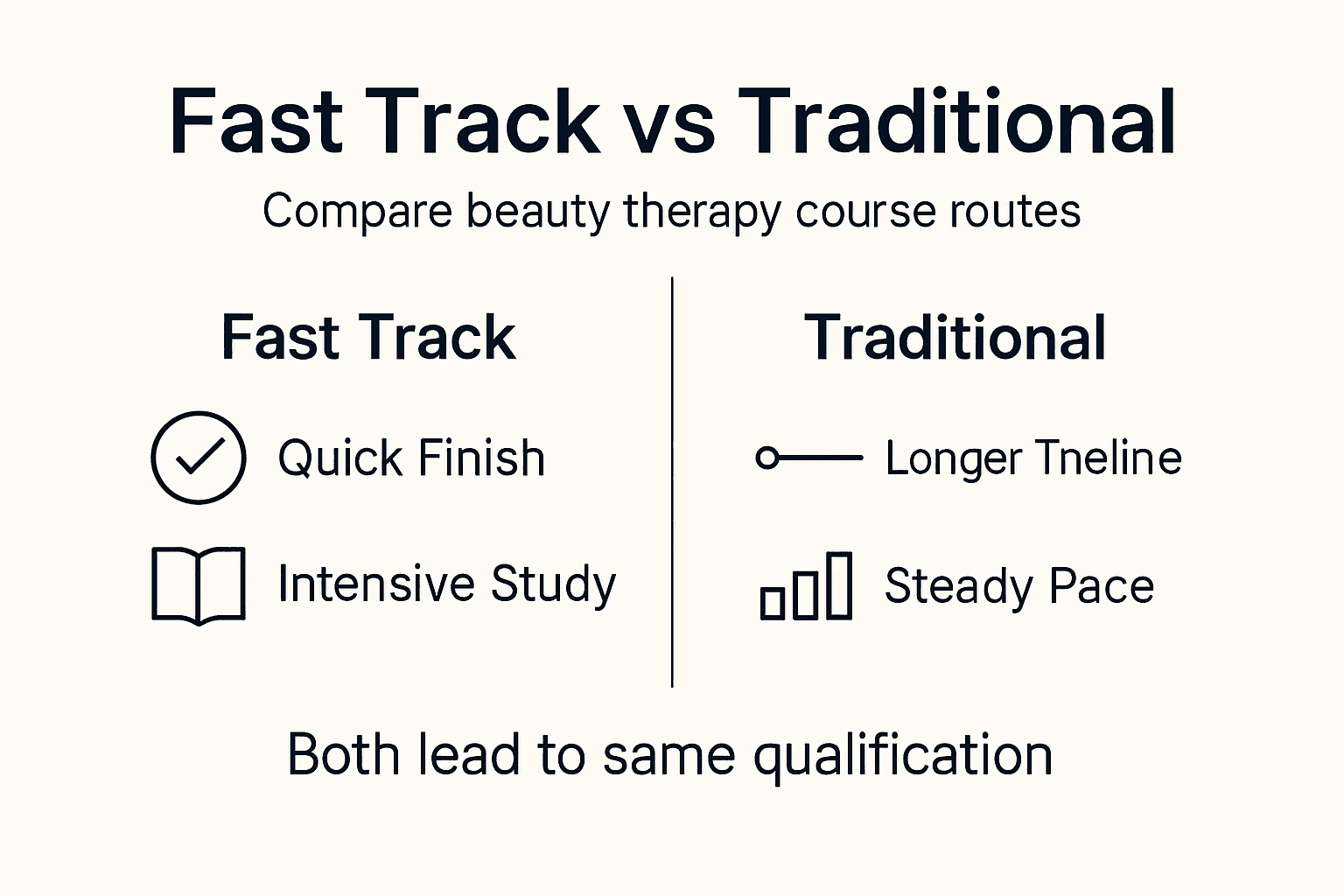
The real advantage for London and Essex aspiring therapists? Speed to employment. Completing your training in 8 weeks rather than 12 months means starting your career sooner. You begin earning, building clientele, and gaining experience while others are still attending classes.
Pro tip: Before enrolling in any course, verify VTCT accreditation and confirm contact hours match industry standards for your chosen specialisation. This ensures you’re gaining legitimate, employer-recognised credentials regardless of programme length.
Types of Accredited Beauty Fast Track Courses
Accredited fast track beauty courses in London and Essex come in several distinct varieties. Each serves different career goals, skill levels, and professional ambitions. Understanding what’s available helps you choose the right pathway for your circumstances.
Diploma and Certificate Programmes
Foundational diplomas form the core of fast track training. These comprehensive qualifications cover essential beauty therapy skills across facial treatments, body treatments, and client consultation. Most run between 8 and 12 weeks with intensive daily or weekly schedules. They’re designed for those entering the industry without prior experience.
Specialist and Advanced Courses
Once you’ve gained foundational knowledge, specialist fast track courses let you deepen expertise in specific areas. Treatments like laser and IPL therapy require dedicated training beyond basic diplomas. These level 4 qualifications add professional credibility and allow you to offer premium treatments that command higher prices.
VTCT Accredited Pathways
VTCT certified courses remain the industry standard across the United Kingdom. Fast track VTCT programmes compress the required contact hours into intensive delivery without compromising content depth. Employers recognise VTCT accreditation immediately, making these qualifications invaluable for career progression. Whether you’re pursuing nail technician training, massage therapy, or comprehensive beauty therapy diplomas, VTCT accreditation ensures your qualification opens doors.
Continuing Professional Development Courses
Experienced therapists use fast track CPD programmes to refresh skills and stay current with industry trends. Professional development courses run shorter timeframes, typically a few days to weeks, focusing on specific techniques or product knowledge rather than complete retraining.
Customised Intensive Tracks
Some academies offer bespoke fast track options tailored to your schedule and goals. Weekend intensives, evening programmes, and condensed full-time options mean you can train whilst maintaining other commitments.
Pro tip: Always verify VTCT accreditation before enrolling, as this single credential determines whether employers will recognise your qualification and whether you can legally perform certain treatments like electrotherapy.
This summary outlines major types of accredited fast track beauty courses:
| Course Type | Description | Typical Candidate |
|---|---|---|
| Diploma/Certificate Programmes | Foundational, all core skills | Beginners, career starters |
| Specialist & Advanced Courses | Focus on advanced treatments, e.g. laser | Qualified therapists, upskilling |
| VTCT Accredited Pathways | Intensive, industry-standard qualification | All aspiring professionals |
| CPD/Professional Development | Short, skill refreshers or updates | Experienced beauty therapists |
| Customised/Intensive Tracks | Flexible scheduling, bespoke content | Those needing tailored timetables |
How Fast Track Programmes Accelerate Careers
Fast track beauty therapy courses compress years of learning into weeks. This acceleration doesn’t just save time, it fundamentally changes your career trajectory. You start earning sooner, building experience faster, and accessing advancement opportunities whilst peers are still in training.

The financial advantage is immediate. Completing your qualification in 8 weeks instead of 12 months means you enter the job market a year earlier. That’s 52 weeks of salary, client relationships, and professional experience gained. For therapists in London and Essex where demand is high, this head start compounds quickly.
Intensive programmes build muscle memory faster. Daily hands-on practice with facial treatments, body treatments, and consultation skills creates competency rapidly. You’re not waiting months between lessons to practise facials or massage techniques. Instead, you’re performing treatments repeatedly across weeks, embedding skills deeply into your professional toolkit.
Career progression accelerates with specialist qualifications. After completing foundational training, you can immediately pursue advanced certifications. Therapists who’ve completed fast track diplomas often advance to professional development courses within months, gaining new treatment capabilities. This allows you to offer premium services and command higher prices faster than traditionally trained competitors.
Networking happens at speed in intensive programmes. You’re surrounded by focused, motivated peers for weeks on end. These relationships become your professional network, referral sources, and collaborators. You build meaningful connections quickly when studying intensively alongside people who share your career ambitions.
Employers actively seek fast track graduates. They recognise that intensive programmes require genuine commitment and produce job-ready therapists. Many beauty clinics prefer candidates who’ve completed fast track training because they understand the rigorous selection process and concentrated learning involved.
Pro tip: Start building your social media presence and client list during your course, so you’re ready to launch or transition into employment immediately upon qualification rather than waiting weeks after completion.
Entry Requirements and Qualifications Needed
Beauty therapy fast track courses aren’t restricted to those with extensive prior qualifications. Entry requirements vary by course type and level, but most foundation programmes welcome candidates from diverse educational backgrounds. What matters more than your exam results is genuine interest in the beauty industry and commitment to hands-on learning.
Academic Entry Standards
Most fast track diploma courses require GCSE English and Maths at grade 4 or equivalent, or simply demonstrate basic numeracy and literacy. Some academies accept candidates without these formal qualifications if they can show competency through assessment. The focus shifts away from academic credentials towards practical ability and professional attitude.
Age and Legal Requirements
You must be at least 16 years old to enrol in beauty therapy training. Many courses accept school leavers directly, making fast track programmes accessible immediately after secondary education. There are no upper age limits, so career changers and mature students are equally welcome in intensive programmes.
Prior Experience
No previous beauty industry experience is necessary for foundation courses. Complete beginners start alongside people who’ve worked in salons informally. Specialist courses like laser and IPL training typically require foundation beauty therapy qualifications first, but this isn’t a barrier since you can complete foundational training rapidly.
Health and Disclosure Requirements
You’ll need to disclose any conditions affecting your ability to perform hands-on treatments safely. This isn’t automatic disqualification, but academies must understand your situation. Some roles require enhanced Disclosure and Barring Service checks, particularly if working with vulnerable clients.
Professional Attitude
The real entry requirement? Professionalism. Tutors assess your reliability, punctuality, and willingness to learn during initial consultations. Fast track courses demand commitment because the pace is intensive. Candidates who demonstrate genuine enthusiasm progress through assessments regardless of prior qualifications.
Pro tip: Contact MediaSoma Academy directly before applying to discuss your specific circumstances. Many barriers aren’t as rigid as they appear, and academic advisors can assess whether alternative qualifications or experience satisfy entry criteria.
Comparing Fast Track Versus Traditional Routes
Choosing between fast track and traditional beauty therapy training requires understanding the genuine differences. Both lead to valid qualifications, but they suit different lifestyles, financial situations, and learning preferences. The right choice depends on your circumstances, not which option sounds more impressive.
Timeline and Commitment
Traditional part-time courses spread learning across 12 months or longer, usually one or two evenings weekly plus weekend sessions. Fast track programmes compress identical content into 8 to 12 weeks of intensive daily study. Traditional routes work better if you’re juggling full-time employment or family responsibilities. Fast track suits those who can dedicate themselves exclusively to learning.
Financial Investment
Fast track courses typically cost more per week but cost less overall because you’re paying tuition for fewer months. Traditional programmes spread costs across a longer period, which eases monthly budgeting but costs more cumulatively. If you’re borrowing money, fast track’s shorter repayment period often proves more affordable long-term.
Earning Timeline
This is where fast track excels. You qualify in weeks rather than months, entering the job market whilst traditional students are still attending classes. That 52-week head start in earnings and experience compounds significantly in London and Essex’s competitive beauty market.
Learning Intensity
Fast track demands consistent focus across consecutive weeks. There’s no time for extended breaks between modules to process information. Traditional routes allow spacing, which some people find easier for absorbing complex skills. However, intensive daily practice in fast track builds muscle memory faster than monthly lessons spread across a year.
Flexibility and Life Balance
Traditional courses offer flexibility. You maintain employment, childcare, or other commitments. Fast track requires putting your life on pause temporarily. This suits recent school leavers or career changers more than parents balancing multiple responsibilities.
Qualification Equivalence
Both routes deliver VTCT accredited qualifications with identical professional standing. Employers don’t distinguish between graduates based on programme length. Your qualification carries the same weight regardless of pathway.
Here’s a quick comparison to help you choose between fast track and traditional beauty therapy courses:
| Factor | Fast Track Programme | Traditional Programme |
|---|---|---|
| Duration | 8–12 weeks intensive | 12+ months part-time |
| Learning Style | Daily, immersive | Weekly, spaced out |
| Entry to Job Market | Immediate, after course | Delayed, after year-long study |
| Financial Outlay | Higher per week, lower overall | Lower per month, higher overall |
| Flexibility | Suits full-time commitment | Compatible with other obligations |
| Skill Application | Rapid practical skill building | Practice spread across year |
| Employer Recognition | Equal (if VTCT accredited) | Equal (if VTCT accredited) |
Pro tip: Choose fast track if you can commit full-time for 8-12 weeks and need to enter the job market quickly. Choose traditional if you’re earning whilst studying or need flexibility. Both paths succeed; pick the one matching your reality.
Accelerate Your Beauty Therapy Career With Medisoma Academy
Choosing the right fast track beauty therapy course means overcoming challenges like finding accredited training that balances speed and quality. If you want to avoid prolonged study periods and enter the job market sooner while ensuring you gain comprehensive skills and VTCT-recognised qualifications, Medisoma Academy is here to transform your ambitions into reality. Our intensive courses demand commitment but reward you with professional competence and confidence in weeks not months.
Start your journey with our high calibre training that values individual growth, promotes self-esteem, and encourages creativity and innovation. Discover our full range of courses including VTCT Accredited Programmes and explore how fast track learning can fast forward your career. Don’t wait to build your expertise and financial freedom. Explore all options and enrol today at Medisoma Academy to step confidently into your future as a skilled beauty therapist.
Frequently Asked Questions
What are fast track courses in beauty therapy?
Fast track courses in beauty therapy are intensive training programmes that compress standard learning content into shorter timeframes, allowing students to gain qualifications more quickly than traditional courses.
Are fast track beauty therapy courses of lower quality than traditional programmes?
No, fast track courses maintain the same quality and standards as traditional programmes. They are designed for efficient delivery of the same content, often requiring experienced tutors to ensure comprehensive training.
How quickly can I complete a fast track beauty therapy course?
Fast track beauty therapy courses typically range from 8 to 12 weeks, allowing you to gain your qualification and enter the job market much sooner than traditional courses.
What qualifications do I need to enrol in a fast track beauty therapy course?
Most fast track courses require basic GCSE qualifications in English and Maths, but some may accept candidates based on practical ability and interest in the beauty industry, making them accessible to various backgrounds.