
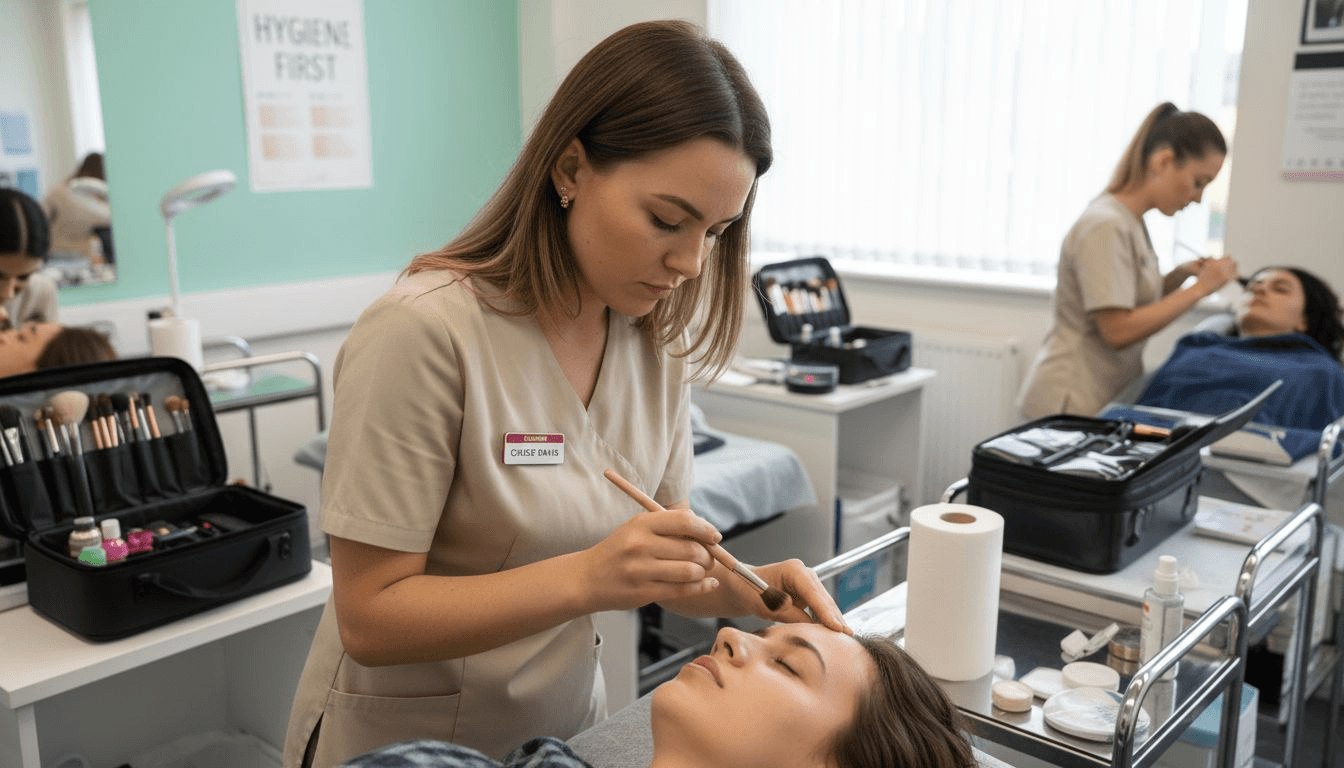
Starting a new beauty career can feel like a race against time, especially in a city as demanding as London. For many aspiring beauty professionals, finding a faster way to professional recognition without sacrificing expertise is a top priority. Accredited fast track beauty courses give you the chance to earn respected qualifications in weeks rather than years, providing a practical route to meet industry standards and help you stand out with up-to-date skills that employers value most.
Table of Contents
- Understanding Fast Track Beauty Courses
- Types of Accredited Fast Track Programmes
- Key Features and Learning Structure
- Entry Requirements and Professional Standards
- Career Advantages and Employability Impact
- Comparing Fast Track and Traditional Training
Key Takeaways
| Point | Details |
|---|---|
| Fast Track Benefits | Fast track beauty courses enable rapid entry into the industry, allowing students to gain qualifications in weeks rather than months. |
| Focused Curriculum | These courses prioritise hands-on training and real-world skills, ensuring graduates are job-ready upon completion. |
| Accreditation Matters | It is essential to verify that the training provider is accredited by recognised bodies like VTCT to ensure qualification credibility. |
| Commitment Required | Fast track programmes demand significant personal commitment and intense daily engagement for effective learning. |
Understanding Fast Track Beauty Courses
Fast track beauty courses are structured training programmes designed to compress traditional curriculum timelines without compromising quality or depth. Rather than spreading learning over months or years, these courses condense essential beauty therapy skills, theoretical knowledge, and practical experience into intensive schedules. For aspiring beauty professionals in London, fast track options offer a practical pathway to enter the industry quickly whilst maintaining the rigorous standards employers expect. The courses typically combine hands-on training with classroom instruction, allowing you to gain industry-recognised credentials in weeks rather than traditional lengthy programmes.
What makes fast track courses distinct is their focused, outcomes-driven approach. Every lesson is carefully structured to eliminate unnecessary filler content whilst retaining the core competencies you need. Instructors concentrate on teaching what matters most, and students benefit from compressed learning environments where accountability runs high. You’re expected to engage fully with every session because there’s no room for passivity or extended review periods. This intensity accelerates skill development significantly. For instance, a VTCT Certified hairdressing or beauty therapy qualification that typically requires months of part-time study can be completed in several weeks through a well-designed fast track programme. The key is that accreditation standards remain unchanged. Whether you complete your training over 12 months or 12 weeks, your final qualification carries identical professional recognition and credibility in London’s competitive beauty industry.
The structure of these courses reflects real industry demands. Fast track beauty training typically incorporates several core elements: intensive practical sessions where you work directly on clients or mannequins under expert supervision, theoretical modules covering anatomy, health and safety regulations, and client consultation techniques, and assessment opportunities that mirror professional standards. Many programmes build in apprenticeship-style components, meaning you’re learning whilst gaining exposure to actual salon environments. This hands-on focus differs sharply from purely classroom-based learning. You develop muscle memory, client communication skills, and confidence with professional tools simultaneously, rather than learning theory first and hoping practical application clicks later. Medisoma Academy’s approach emphasises this balance, ensuring students gain both the high-quality instruction and practical experience necessary to succeed immediately after completion.
Understanding whether a fast track course suits your circumstances requires honest self-assessment. These programmes demand significant personal commitment. Compressed schedules mean intensive daily or multi-day-per-week attendance, focused study time outside class hours, and rapid skill acquisition without extended break periods for processing. However, if you’re prepared for this intensity and motivated to launch your beauty career quickly, the payoff is substantial. You enter the job market sooner, avoid prolonged training costs, and gain credentials that employers recognise immediately. Many students pursuing fast track beauty career advancement find that condensed programmes actually reinforce learning through consistent daily engagement rather than weakening it. Your brain maintains focus when sessions build directly upon previous day’s content rather than spreading concepts across months with gaps in between.
Professional tip: Before enrolling in any fast track course, verify that the training provider holds proper accreditation from recognised bodies such as VTCT, and confirm that the accelerated schedule matches your personal circumstances, including your capacity to attend consistently and manage study commitments alongside any existing work or family responsibilities.
Types of Accredited Fast Track Programmes
Accredited fast track beauty courses come in several distinct formats, each designed to suit different career goals and personal circumstances. The main categories reflect the breadth of the beauty therapy industry, from specialised treatments to comprehensive qualifications. Understanding which type aligns with your ambitions is crucial because your choice determines not only your timeline but also the scope of skills you’ll develop and the doors that open afterwards. London’s competitive beauty market values specialists and generalists equally, so your pathway depends on whether you want depth in one area or broad competency across multiple treatments.
VTCT Certified Qualifications form the backbone of professional beauty training in the United Kingdom. These nationally recognised credentials cover everything from hairdressing and beauty therapy to nail services and advanced treatments like facial electrotherapy. A fast track VTCT course typically runs 4 to 12 weeks depending on the specific qualification level. You might pursue a Level 1 introductory qualification to explore whether beauty work suits you, or jump straight to Level 2 or Level 3 if you have prior experience or particular motivation. The advantage of VTCT accreditation is universal recognition. When you complete your training and pass your assessments, employers across London and beyond understand exactly what competencies you hold. Another significant category includes specialised short courses that focus on individual treatments. Rather than pursuing a comprehensive qualification, you might take a fast track course in areas like eyebrow design, eyelash extensions, gel manicures, or advanced skincare techniques. These programmes typically last 1 to 6 weeks and work brilliantly if you already have some beauty background and want to add high-demand skills quickly. For instance, many salons specifically recruit technicians with current lash or brow certifications because client demand for these services continues rising.
Continuing Professional Development (CPD) programmes represent another important pathway. CPD courses allow already qualified beauty professionals to upgrade their credentials, learn new techniques, or maintain their professional standing. If you’ve been out of the industry and want to refresh your skills before returning, or if you want to specialise further, CPD options provide focused training on contemporary methods and products. These programmes typically assume baseline knowledge, so they move faster than foundational courses. They’re also ideal if you’re seeking to enhance your existing qualification with advanced modules. Some practitioners use CPD to prepare for management roles, business ownership, or teaching positions within the beauty industry. The compressed format means you’re not repeating basics you already understand.
When evaluating which accredited fast track programme suits you, consider three practical factors. First, what is your current experience level? Complete beginners need foundational training, whilst those with prior beauty knowledge can often compress their learning through specialist or CPD routes. Second, what career outcome do you want? A salon employee role, freelance technician position, or salon owner aspirations each suggest different qualification pathways. Third, what timeline works for your life? Some people can commit to intensive daily training, whilst others need flexible schedules that spread learning across evenings or weekends. Medisoma Academy offers flexibility in how these programmes are delivered, recognising that fast track doesn’t always mean inflexible.
The relationship between course type and employability matters significantly in London’s market. VTCT certified qualifications remain the gold standard that virtually all salons recognise immediately. Specialised certifications appeal to boutique salons targeting specific services. CPD credentials demonstrate ongoing professional commitment to employers evaluating candidates for senior roles. Rather than viewing these as competing options, think of them as building blocks for your career trajectory. Many successful beauty professionals combine multiple credentials over time, starting with a fast track VTCT Level 2, adding specialist certifications, then pursuing CPD for management preparation.
This summary outlines key accredited fast track programme types and their career impact:
| Programme Type | Typical Duration | Best For | Employability Value |
|---|---|---|---|
| VTCT Certified | 4–12 weeks | Entry-level to advanced | Widely recognised by London salons |
| Specialist Short Course | 1–6 weeks | Upskilling in niche treatments | High demand in specific services |
| CPD Course | 1–4 weeks | Qualified professionals | Enhances career progression or role change |
Professional tip: Before selecting your fast track programme type, speak directly with salons in your area about which qualifications they prioritise when hiring, as this insight will guide you toward the accreditation that maximises your job prospects immediately after graduation.
Key Features and Learning Structure
Fast track beauty courses achieve their accelerated timelines through deliberate design choices that set them apart from traditional part-time learning. The learning structure is intensive, purposeful, and centred on producing job-ready professionals rather than simply delivering curriculum content. Understanding how these courses are organised helps you appreciate what makes them effective and prepares you mentally for the commitment they require. The key features work together to create an environment where compressed timelines don’t compromise quality.
Hands-on practical training dominates the schedule. Most fast track programmes allocate 60 to 80 percent of contact time to practical application rather than theory alone. You’re working with real clients, mannequins, or fellow students from day one, building muscle memory and confidence simultaneously. This differs significantly from classroom-heavy learning where theory comes first and practical application happens later. In a fast track setting, you learn hairdressing techniques by doing them, master skincare protocols through repetition under supervision, and develop client consultation skills through actual interactions. Medisoma Academy prioritises this hands-on approach because practical competence builds faster when you’re doing rather than listening. The theoretical components—anatomy, health and safety regulations, product chemistry, infection control—are woven directly into practical sessions rather than taught in isolation. Your instructor might explain the structure of hair whilst you’re actually cutting it, explaining why certain angles matter for specific client needs.
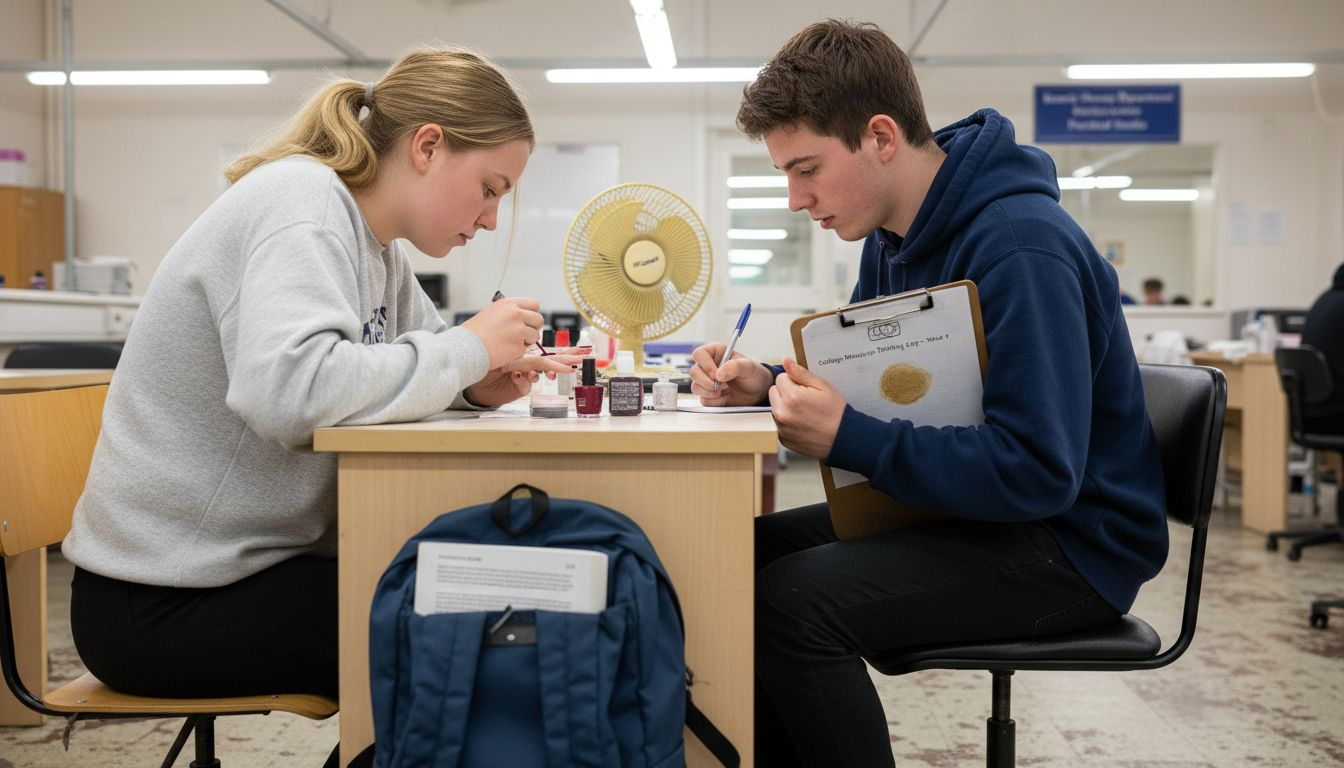
Small class sizes and individualised feedback create conditions where learning accelerates naturally. Rather than sitting in large lecture halls, you’re typically in groups of 8 to 15 students with direct access to experienced instructors. This ratio means your instructor notices when your technique isn’t quite right and corrects it immediately, rather than weeks later during an assessment. You receive constant feedback on your progress, which tightens your learning curve considerably. Additionally, small groups create peer learning opportunities. You’re working alongside others at similar skill levels, observing different approaches to the same techniques and learning from their successes and mistakes. This social learning component shouldn’t be underestimated because watching a fellow student master a technique you’re struggling with often provides the breakthrough moment you need.
Assessment is integrated and continuous rather than lumped into final exams. Fast track programmes use formative assessment throughout—meaning you’re constantly being evaluated on small tasks, practical demonstrations, and mini-projects rather than relying on one final test. This approach serves multiple purposes. It prevents the anxiety of high-stakes final exams, it gives your instructor clear data about where you need extra support, and it mimics real professional environments where you’re constantly demonstrating competence. By the time you reach your summative assessment (the final qualification assessment), you’ve already proven you can do the work repeatedly. You’re not cramming before an exam; you’re demonstrating mastery you’ve already developed. The assessment criteria align directly with professional beauty industry standards, ensuring that passing your course genuinely means you’re work-ready.
Flexible scheduling options ensure fast track doesn’t mean inflexible. Whilst some students can attend intensive full-time programmes (say, Monday through Friday, 9 am to 5 pm for six weeks), others manage better with evening or weekend schedules spread over a longer calendar period. Medisoma Academy recognises this reality. The content remains rigorous and the timeline compressed compared to traditional routes, but delivery flexibility prevents the programme from becoming impossible for people with existing work or family commitments. Some students combine intensive week-long blocks with supplementary online or evening sessions. This structure requires discipline because you can’t procrastinate when your next intensive block is in two weeks, but it makes fast track accessible to more people.
Industry-standard tools and products feature throughout your training. You’re learning on equipment and products your potential employers actually use. If you’re training in nail services, you’re using professional UV lamps and gel systems that London salons use daily. If you’re studying hair, you’re working with professional-grade scissors and colour formulations. This detail matters because your skills transfer directly to your first job rather than requiring a relearning curve with different equipment.
Professional tip: Ask prospective training providers specifically about their client ratio (how many clients per student in practical sessions), their instructor-to-student ratio, and how frequently you’ll receive one-on-one feedback, as these factors directly determine how much your skills actually improve during the compressed timeframe.
Entry Requirements and Professional Standards
Entry requirements for fast track beauty courses vary considerably depending on the specific qualification level and programme type, but they’re generally more flexible than you might expect. Most fast track providers don’t demand extensive prerequisites because these programmes are designed to take you from wherever you currently are and move you forward quickly. That said, understanding what different courses actually require helps you identify which option matches your situation and avoids disappointment when you discover you’re not eligible for a particular pathway.
For foundational fast track qualifications at Level 1 and Level 2, most providers require very little formally. You typically need to be at least 16 years old, have basic numeracy and literacy skills, and demonstrate genuine motivation to work in beauty. Some providers ask you to complete a simple assessment to confirm you can read, write, and communicate clearly, since these skills matter when you’re consulting with clients or recording product usage information. You don’t need GCSEs, A-levels, or previous beauty experience. This accessibility is intentional because the beauty therapy industry recognises that talent and dedication matter far more than academic credentials. A person without formal qualifications but with genuine passion, reliability, and work ethic will progress faster than someone with excellent exam results but minimal motivation. What matters is whether you can absorb instruction, repeat techniques until you master them, and treat clients professionally.
For Level 3 qualifications and specialist advanced courses, the bar rises slightly. Many providers require you to have completed a Level 2 qualification first, or to demonstrate equivalent prior experience. This makes sense because Level 3 assumes foundational knowledge you’d have built in Level 2. If you’re pursuing specialist courses like advanced electrotherapy, chemical peels, or micro-needling, trainers typically want confirmation that you understand basic skincare principles and infection control protocols. Some courses require you to be currently registered with a professional body or to have professional indemnity insurance in place. Additionally, certain treatment-specific fast track courses—particularly those involving injectables or laser treatments—require you to be a healthcare professional already (such as a nurse or aesthetics practitioner) due to regulatory restrictions around who can perform those treatments. Before committing to any course, verify the specific entry requirements because they do vary.
Professional standards in fast track beauty training maintain consistency with traditional routes. Your qualification carries the same weight whether you completed it in 12 weeks or 12 months. The VTCT accreditation framework sets the assessment criteria, and these don’t change based on how quickly you progress. You must demonstrate the same practical competencies, understand the same theoretical concepts, and pass the same assessments. Medisoma Academy adheres strictly to these standards, meaning no corner-cutting occurs to achieve faster timelines. The compression comes from intensive scheduling and focused teaching, not from lowered expectations. When you complete your qualification, your certificate states you’ve met the full professional standards—because you have.
Healthy and safety competency sits at the centre of professional standards. Every beauty therapy course, regardless of speed, must cover infection control, sterilisation procedures, health and safety legislation, and safeguarding protocols. You’ll learn how to identify contraindications that prevent treatment, understand when to refer clients to medical professionals, and recognise signs of abuse or vulnerability that require reporting. These aren’t optional elements or things you learn once and forget. They’re woven through every module because client safety and professional conduct are non-negotiable.
Client communication and consultation skills form another critical professional standard. You’re not just learning technique; you’re learning to listen to clients, understand their needs, identify realistic expectations, manage difficult conversations, and maintain professional boundaries. Fast track courses dedicate significant time to these soft skills because they determine whether clients return and recommend you. A therapist with excellent technical skills but poor communication abilities won’t sustain a successful career. Conversely, someone with outstanding client interaction abilities but developing technical skills will build a loyal clientele whilst refining their craft.
One practical consideration worth mentioning: some employers or regulatory bodies (particularly those handling advanced treatments) may ask whether your qualification was completed full-time or part-time, and fast track programmes typically fall into the full-time category. This isn’t a problem—it’s actually an advantage because it demonstrates your commitment and intensity of learning. However, if you’re considering relocating or working internationally after your qualification, verify that your specific qualification is recognised in that location, as recognition can vary.
Professional tip: Contact the specific training provider directly and ask them to confirm in writing which entry requirements apply to your particular course, as requirements can differ between providers and even between different levels of the same qualification type, preventing any surprises before you enrol.
Career Advantages and Employability Impact
Completing a fast track beauty qualification fundamentally changes your employability trajectory in London’s competitive market. The advantages aren’t simply about speed; they’re about demonstrating commitment, gaining current skills, and entering the job market at precisely the moment when salons are actively recruiting. Understanding these concrete advantages helps you appreciate why fast track training is gaining traction amongst career-focused beauty professionals and how it positions you competitively against candidates who took traditional routes.
Time to earning potential is your most immediate advantage. If you complete a six-week intensive course instead of a six-month part-time programme, you’re entering the job market five months earlier. In practical terms, that’s five months of salon income you’ve gained. A junior beauty therapist in London typically earns between £16,000 and £20,000 annually depending on the salon, location, and specific role. Five months represents roughly £6,700 to £8,300 in additional income you wouldn’t have if you’d chosen a slower path. Beyond the financial benefit, entering the market sooner means you’re building your client base, developing your skills in real professional environments, and establishing your reputation whilst your slower-moving peers are still studying. After two years, that advantage compounds significantly. You’ve had nearly two years of professional experience whilst others are just reaching the six-month mark. Experience, not just qualifications, is what employers genuinely value.
Employer perception of intensity and motivation works heavily in your favour. When a salon manager reviews two candidates with identical VTCT Level 2 qualifications, one completed through a traditional 12-month part-time route and another through an intensive six-week programme, they see something different in each. The part-time candidate juggled learning with other commitments, which is respectable. The fast track candidate demonstrated the ability to commit fully to developing expertise rapidly, to engage intensely with learning, and to prioritise their career advancement decisively. This perception matters because salons need team members who are driven and focused. You’re not just qualified; you’re showing that you have the discipline and determination to rapidly acquire skills and apply them professionally. Some employers specifically seek fast track graduates because they’ve filtered for these qualities.
Your skills are immediately current because you learned them recently. Beauty treatments, products, techniques, and industry standards evolve constantly. If someone completed their training 18 months ago through a traditional part-time course, they finished training 12 months ago but spent 18 months learning, meaning some of their knowledge is already slightly dated. Fast track graduates finish learning mere weeks ago, so your knowledge of current techniques, contemporary product formulations, and latest industry standards is genuinely fresher. You’re walking into your first role with recently updated information about what works now rather than what was cutting-edge when your course started. This freshness is particularly valuable in areas like colour trends, skincare innovations, and product technology where rapid evolution is normal.
Specialisation becomes accessible faster. Many professionals use fast track qualifications as a strategic stepping stone. They complete a comprehensive Level 2 qualification quickly (6 to 8 weeks), gain initial salon experience (6 to 12 months), then pursue specialist certifications in high-demand areas like lash extensions, brows, or advanced skincare. This pathway—foundational qualification quickly, practical experience, then specialisation—can have you earning as a specialist technician within 18 months rather than three or four years. Specialist roles command higher hourly rates and often attract more consistent clientele, which directly impacts your earning potential and career satisfaction.
Building your professional network accelerates through intensity. In a fast track programme, you’re working closely with 8 to 15 fellow students daily for weeks, learning from experienced instructors with established industry connections, and often receiving guidance about London’s beauty salon landscape and best employers. These compressed relationships often become stronger than loose friendships built over months because you’re sharing intensive daily learning experiences. When you finish your course, you graduate with classmates who understand your skill level (you’ve been working alongside them), experienced instructors who can recommend you to employers, and shared knowledge of which salons value what. This network immediately becomes valuable when you’re job hunting. Instructors’ referrals matter considerably because they’re coming from someone employers trust.
Demonstrating professional commitment to clients matters once you’re employed. When clients ask about your training and you explain you completed an intensive accredited qualification recently, it signals that you’re current, dedicated, and serious about your profession. Many clients appreciate learning that their therapist invested significantly to develop expertise quickly. This professional presentation—combined with genuinely current skills—builds client confidence and loyalty faster than a less focused career path would.
One important reality check: fast track doesn’t guarantee employment. You still need to apply to positions, interview effectively, and demonstrate during your trial shifts that you can perform in a real salon environment. However, you’re applying with genuinely fresh skills, recent training references, and demonstrable intensity and commitment. You’re not competing with vague claims about what you learned sometime in the past; you’re competing with concrete recent accomplishment.
Professional tip: As soon as you enrol in your fast track programme, start researching specific London salons where you’d like to work, follow them on social media, note their treatment offerings, and prepare to apply immediately upon completing your qualification whilst your training is fresh in hiring managers’ minds and salon recruitment needs are at their peak.
Comparing Fast Track and Traditional Training
Fast track and traditional beauty training routes both lead to legitimate, industry-recognised qualifications, but they differ substantially in delivery method, pace, financial investment, and suitability depending on your personal circumstances. Neither approach is objectively superior; instead, the right choice depends on your current situation, learning style, financial capacity, and career timeline. Understanding these differences honestly helps you select the pathway that actually fits your life rather than the one that sounds appealing in theory.
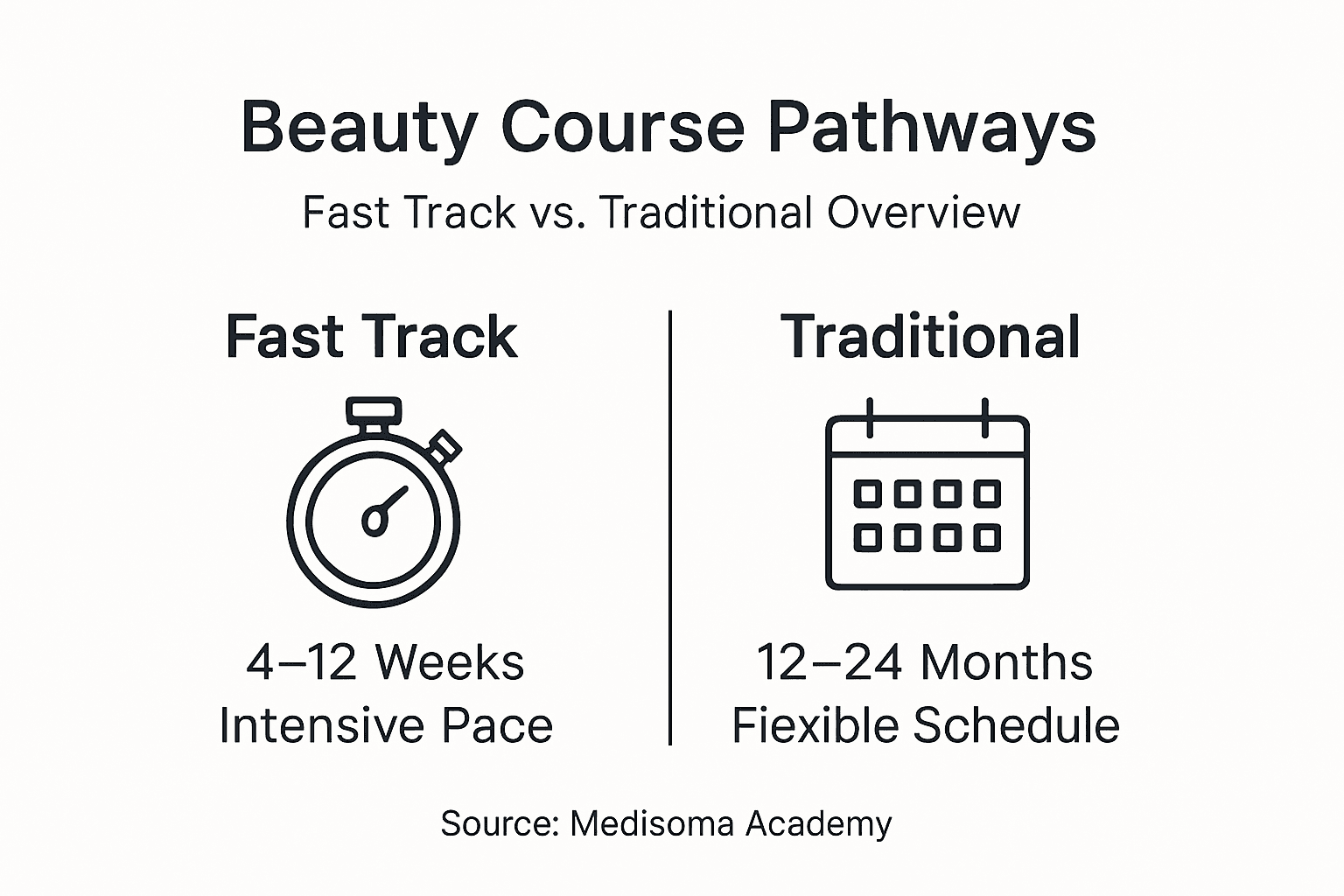
Traditional beauty training typically spreads over 12 to 24 months, usually delivered through evening classes, weekend workshops, or one or two days per week alongside employment or other commitments. The financial investment is often lower per month because fees are spread across a longer period, though the total cost may ultimately be similar or occasionally higher once you factor in extended travel costs and extended opportunity cost of delayed earning. The pace allows you to absorb information gradually, revisit concepts when you’re confused, and space out assessment deadlines across many months. This approach suits people juggling significant work or family commitments, those with financial constraints that make large upfront fees impossible, and learners who genuinely benefit from extended consolidation periods. However, traditional training requires sustained motivation over many months. You’re committing to evening classes after a full day’s work, or weekend sessions when you might prefer leisure time. That commitment can waver after month six or seven when the novelty wears off and the finish line still seems distant. Additionally, the knowledge you learn early in your training (say, month one or two) may have evolved by the time you complete assessment (month eighteen), meaning you might be examining techniques that are no longer cutting-edge practice.
Fast track training compresses everything into weeks or a few months of intensive daily or multi-day-per-week attendance. The financial demand is immediate and substantial, but the commitment period is finite and well-defined. You know precisely when your intensive learning block ends. This approach suits people who can manage the upfront cost and time commitment, those who work better under pressure and intensity, and anyone eager to enter the job market quickly. Fast track learners often find that concentrated daily engagement actually reinforces learning more effectively than sporadic weekly sessions because concepts build directly upon previous day’s content and remain fresh in working memory. However, fast track demands genuine personal capacity. If you’re managing childcare, working full-time, or navigating significant personal challenges, an eight-week intensive course might be genuinely impossible despite your motivation. The intensity also means less time to absorb information gradually or revisit confused concepts at your own pace; you’re expected to engage fully and keep moving forward.
Here’s a comparison of fast track and traditional beauty courses to help you select the right route:
| Aspect | Fast Track Courses | Traditional Courses |
|---|---|---|
| Duration | 4–12 weeks intensive | 12–24 months part-time |
| Upfront Cost | £1,500–£3,500 | £400–£800 per term |
| Schedule | Full-time or block learning | Evenings, weekends, or part-time |
| Learning Pace | Rapid daily progression | Gradual with review opportunities |
| Peer Interaction | Close daily collaboration | Weekly or sporadic contact |
| Work Experience | Gained post-qualification | Often concurrent with studies |
| Employer Perception | Values intensity, recent skills | Values sustained commitment |
| Suitability | Ideal for quick career launch | Best for flexible, gradual learning |
Key Differences in Practice
Cost and cash flow differs meaningfully. Fast track courses typically cost £1,500 to £3,500 upfront, whilst traditional training might cost £400 to £800 per term over two years, totalling perhaps £1,600 to £3,200 overall. Fast track requires larger immediate outlay but shorter total investment period. Traditional routes spread costs but extend financial commitment over months.
Practical experience accumulation works differently. Fast track students complete their comprehensive practical training during the course, then enter the job market. Traditional learners often work simultaneously with studying, meaning they’re gaining workplace experience whilst still completing qualifications. This can be advantageous—you’re learning theory whilst immediately applying it in real salons—or disadvantageous if your workplace is using outdated methods not aligned with current standards.
Assessment timing varies substantially. Fast track programmes compress assessments into final weeks, meaning your final qualification is literally your most recent achievement. Traditional courses spread assessment across months, which can be less anxiety-inducing but means your qualification certificate represents work completed many months earlier.
Social and support dynamics differ in unexpected ways. Fast track students form tight peer networks through intensive daily contact, with classmates understanding your exact skill level and progress. Traditional learners might feel isolated attending single evening classes weekly, though some traditional providers build community effectively. Instructor support is typically more accessible in fast track settings due to small class sizes.
Flexibility during learning favours traditional routes. If you need to pause for illness, family emergency, or unexpected work demands, traditional programmes often accommodate breaks more easily. Fast track’s compressed timeline means missing even a few days can derail your progress significantly.
Industry perception slightly favours neither, though this nuance matters. Some employers specifically value fast track graduates’ demonstrated intensity and recent training. Others equally value traditional route candidates’ proven ability to balance competing demands over extended periods. When comparing career advancement opportunities, both routes lead to identical professional qualifications and equivalent job prospects if you’ve developed genuine competence.
Honestly, the best choice is whichever route you’re actually capable of completing successfully. A fast track qualification you’ve genuinely mastered is worth far more than a traditional qualification you didn’t complete or completed whilst struggling. Conversely, a traditional qualification completed thoroughly beats an incomplete fast track course every time. Your personal circumstances, learning preferences, and actual capacity matter more than which option sounds better in marketing materials.
Professional tip: Before deciding between fast track and traditional routes, calculate your actual available time honestly (including commute, family, and work obligations), check your financial capacity for upfront costs, and reflect on whether you learn better under pressure or with extended time, then select the approach that matches reality rather than your ideal self.
Accelerate Your Beauty Career with Medisoma Academy
If you are ready to overcome the challenge of lengthy training and fast-track your journey into the beauty industry, Medisoma Academy offers expertly designed accredited courses that balance rapid skill acquisition with professional standards. Our programmes embrace the intensity of fast track learning without compromising quality. You will receive hands-on experience, continuous feedback, and up-to-date techniques that align perfectly with the demands highlighted in the article. Whether you seek foundational qualifications or want to enhance your expertise, we provide flexible options tailored for your busy lifestyle.
Don’t let time or uncertainty hold you back from launching your dream beauty career. Visit Medisoma to explore our range of courses and join a supportive community that values excellence, creativity, and self-esteem. Take advantage of insights shared in our Growing and Monetizing sections to boost your career beyond qualifications. Start your fast track beauty journey today at Medisoma Academy and transform your passion into a thriving profession.
Frequently Asked Questions
What are fast track beauty courses?
Fast track beauty courses are accelerated training programmes that condense traditional beauty therapy learning into a shorter timeframe, allowing students to gain industry-recognised qualifications and practical skills more quickly.
How long does it typically take to complete a fast track beauty course?
Most fast track beauty courses can be completed in 4 to 12 weeks, depending on the specific qualification level and training provider.
What types of qualifications are available through fast track courses?
Fast track courses offer various qualifications, including VTCT Certified Qualifications, specialised short courses in niche treatments, and Continuing Professional Development (CPD) programmes for qualified professionals looking to enhance their skills.
Are fast track beauty courses suitable for beginners?
Yes, many fast track beauty courses accommodate beginners. Level 1 and Level 2 qualifications generally have minimal entry requirements, making them accessible to those with little to no prior beauty experience.