

Trying to launch a successful beauty therapy career in Essex can feel confusing when every provider claims industry recognition. The truth is, course accreditation is the genuine difference between qualifications employers value and those they overlook. With accredited training, your skills are formally reviewed and approved by regulatory bodies such as Ofqual. This level of verification shapes how employers and clients view you, supports career growth, and ensures every aspect of your learning meets high professional standards.
Table of Contents
- What Course Accreditation Means In The UK
- Types Of Accreditation For Beauty Courses
- How Accreditation Benefits Beauty Students
- Accreditation Process And Key Criteria
- Avoiding Non-Accredited Course Pitfalls
Key Takeaways
| Point | Details |
|---|---|
| Importance of Accreditation | Accreditation ensures that beauty therapy courses meet industry standards, providing genuine professional credibility. |
| Types of Accreditation | Regulated qualifications are widely recognised and valued by employers, while endorsed programmes offer flexibility but may have limited recognition. |
| Benefits of Accredited Courses | Graduating from an accredited course significantly enhances employability and career progression opportunities in the competitive beauty industry. |
| Risks of Non-Accredited Courses | Non-accredited courses can lead to wasted time and resources, as their qualifications may not be recognised by employers, hindering career advancement. |
What Course Accreditation Means in the UK
In the UK beauty industry, accreditation is far more than a certificate hanging on a wall. It represents a formal verification that your course meets strict quality standards set by recognised regulatory bodies. When you enrol in an accredited beauty therapy qualification, you’re joining a programme that has been officially assessed and approved by authoritative organisations such as Ofqual, ensuring the training you receive holds genuine weight in the industry and with employers.
Accreditation is the process of assessing and approving educational programmes to confirm they conform to predefined professional standards. For beauty therapy students, this means your course content, teaching methods, and assessment practices have all been scrutinised and verified. Whether you’re studying facial electrotherapy, anatomy and physiology, or specialised treatments, an accredited programme guarantees that your learning meets recognised benchmarks across the UK. This matters enormously when you’re building your professional portfolio. Employers recognise accredited qualifications immediately. Clients trust practitioners who hold them. And most importantly, you gain genuine competence in your chosen area, not just surface-level knowledge.
The significance becomes even clearer when you consider career progression. Many advanced beauty therapy roles require staff to hold accredited qualifications as a baseline requirement. If you’re planning to work in high-end clinics, spas, or establish your own practice, accreditation demonstrates your commitment to professional standards and continuous improvement. Accredited courses signal to students and employers that the education provided meets professional and academic benchmarks, directly supporting your career progression and professional credibility. At Medisoma Academy, our fast-track beauty therapy courses are deliberately structured around these accredited standards, meaning you’re not simply gaining knowledge but earning a qualification that genuinely matters in the competitive UK beauty market.
Tip: When evaluating any beauty therapy course, always verify its accreditation status upfront by checking with Ofqual or the awarding body. An accredited qualification from a reputable provider like Medisoma Academy ensures your investment in training translates into real professional advantage and industry recognition.
Types of Accreditation for Beauty Courses
Accreditation in the beauty therapy sector comes in different forms, each serving a specific purpose and offering distinct benefits to students and employers. Understanding which type of accreditation your chosen course holds is crucial because not all accredited qualifications are created equal. Some accreditations carry more weight in the job market, whilst others are tailored to meet specific industry needs. In the UK, the main types you’ll encounter are regulated qualifications and endorsed programmes, each with its own quality assurance framework.
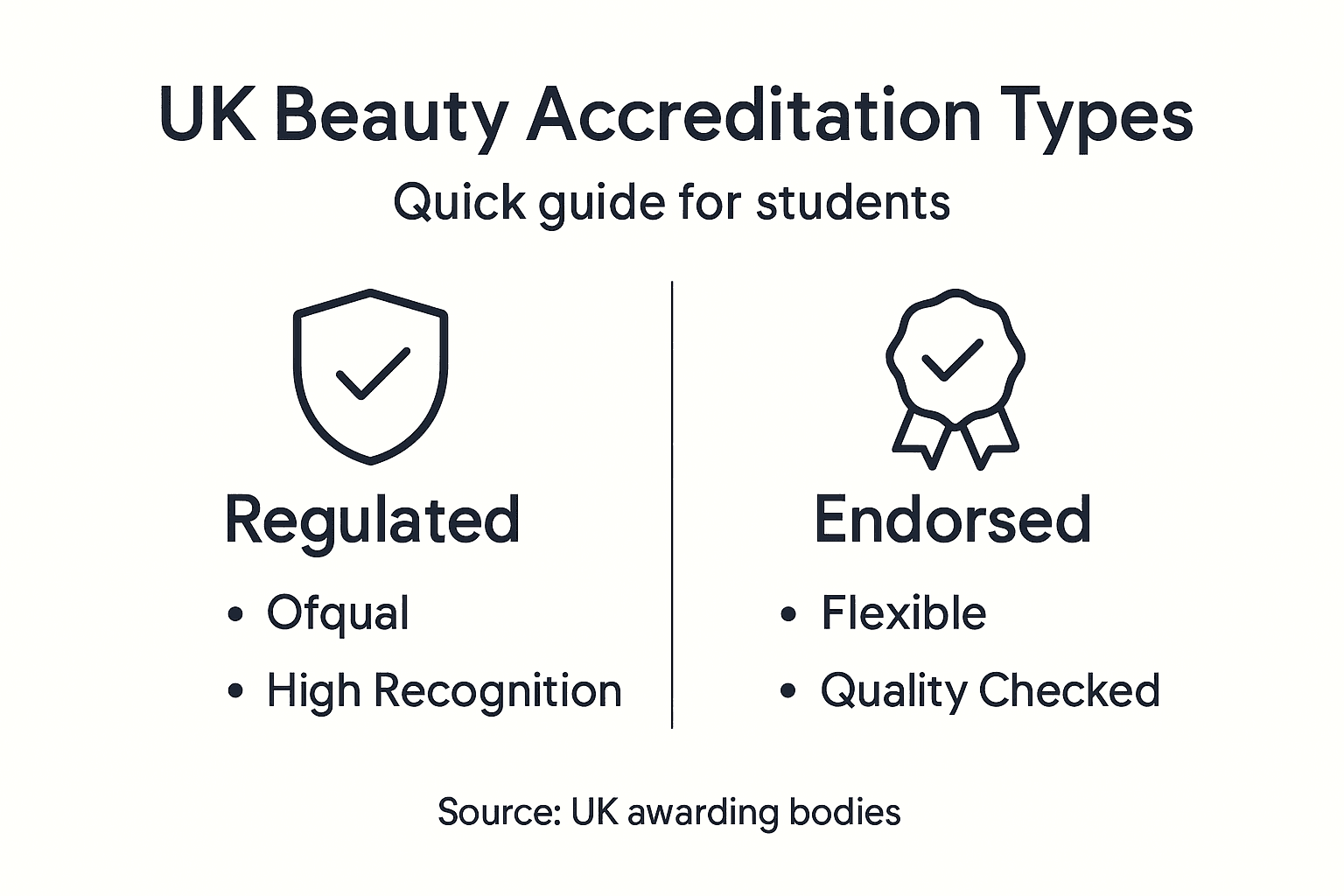
Regulated qualifications represent the most formal and widely recognised type of accreditation. These are developed to meet nationally recognised standards and are typically overseen by awarding bodies such as VTCT (Vocational Training Charitable Trust) or City & Guilds. When you complete a VTCT accredited beauty therapy course, you’re earning a qualification that employers across the UK instantly recognise. These regulated programmes have strict requirements around curriculum content, assessment practices, and teaching quality. They ensure consistency, so a beauty therapy qualification earned in Essex holds the same value as one earned in London or Manchester. Professional, Statutory and Regulatory Body accreditations impose standards related to curriculum content, assessment, and outcomes, guaranteeing you gain genuinely relevant skills for the industry.

Then there are customised and endorsed qualifications, which offer more flexibility whilst still maintaining quality assurance. Customised qualifications are unregulated but developed to meet sector-specific needs and endorsed programmes involve recognition of informal training activities, both providing a quality assurance stamp from awarding organisations. These might be offered by specific training providers to address emerging beauty trends or niche specialisations. Whilst they may not carry quite the same universal recognition as regulated qualifications, they still demonstrate commitment to professional standards. At Medisoma Academy, we prioritise regulated accreditations because we understand what matters most to our students in Essex: qualifications that employers genuinely value and that support real career progression from the moment you graduate.
Here’s a summary of the main types of accreditation available for beauty therapy courses in the UK:
| Accreditation Type | Who Awards It | Recognition Level | Typical Benefits for Students |
|---|---|---|---|
| Regulated Qualification | Ofqual, VTCT, City & Guilds | National and industry-wide | High employer acceptance, career mobility |
| Endorsed Programme | Awarding organisation | Varies; often sector-specific | Tailored content, supports niche skills |
| Customised Qualification | Training provider & awarding partner | Local or company-specific | Focus on emerging trends, flexible learning |
Pro tip: Always check whether a beauty course is regulated or endorsed before enrolling, as this directly impacts how potential employers and clients perceive your qualification. Medisoma Academy’s focus on VTCT and other regulated accreditations ensures your investment in training delivers maximum professional credibility.
How Accreditation Benefits Beauty Students
Choosing an accredited beauty therapy course isn’t just a box-ticking exercise. The benefits extend far beyond graduation day and directly shape your professional future. When you enrol in an accredited programme, you’re investing in your career trajectory, not merely completing a training course. Accredited courses have undergone rigorous quality assessments which ensures that the learning experience is robust and aligned with industry standards, meaning you’re learning skills that employers genuinely need and value. This quality assurance creates confidence that your time, effort, and money translate into genuine professional development rather than superficial knowledge.
The employer recognition factor cannot be overstated. When you apply for positions at salons, spas, or medical aesthetic clinics across Essex and beyond, having accredited qualifications on your CV immediately sets you apart. Employers recognise these credentials instantly because they know an accredited course has met stringent standards covering everything from curriculum content to assessment rigour. Students benefit from accredited training as it creates confidence that the course content is rigorous, fit-for-purpose, and tailored to industry needs. This directly translates into faster hiring decisions, better salary negotiations, and access to more prestigious positions. You’re no longer competing as an unknown quantity; you’re presenting yourself as a trained professional who meets industry benchmarks.
Accreditation also opens doors for continuous professional development and career advancement. Once you’ve completed an accredited qualification like Beauty Therapy General Level 2, you can progress to higher-level courses and specialisations with confidence. Many employers require staff to pursue CPD courses to stay current with industry trends, and having already succeeded in an accredited programme demonstrates you take professional development seriously. Beyond employability, accreditation equips you with hands-on skills and theoretical knowledge that genuinely prepare you for client interaction. You’ll understand the science behind treatments, recognise when clients need referral to medical professionals, and deliver services with professional confidence. At Medisoma Academy, our accredited fast-track courses ensure you graduate with not just a certificate, but the actual competence and industry credibility that launches real beauty therapy careers.
Pro tip: Before enrolling, ask prospective providers specifically about their accreditation body and what progression pathways exist after completing their courses. Accredited programmes at established providers like Medisoma Academy typically offer clear routes to specialisation and advanced qualifications, maximising your long-term career potential.
Accreditation Process and Key Criteria
You might wonder what happens behind the scenes before a beauty therapy course earns its accreditation badge. The process is thorough and deliberate, designed to ensure only quality training programmes receive recognition. Training providers like Medisoma Academy don’t simply declare themselves accredited; they undergo a formal assessment process that scrutinises everything from teaching quality to facilities and student support systems. Understanding what this involves gives you confidence that your chosen course has genuinely met professional standards rather than just ticking boxes.
The UK accreditation process typically involves several stages including an initial application and documentation review, an inspection phase covering educational provision and facilities, and a final full inspection focusing on academic quality. Accrediting bodies examine the curriculum to ensure it covers all essential beauty therapy skills and theoretical knowledge. They assess teaching staff qualifications and experience, check that learning environments meet health and safety standards, and verify that assessment methods genuinely test student competency. The institution must also demonstrate regulatory compliance and robust quality management systems. This isn’t a quick process; it requires providers to compile extensive documentation proving they meet each criterion. For you as a prospective student, this thorough vetting means the accreditation you see on a provider’s website represents genuine achievement, not marketing speak.
Key criteria that providers must satisfy include student support systems, quality assurance mechanisms, and curriculum relevance to industry needs. Accreditation of qualifications involves submitting detailed documentation showing compliance with regulatory principles and standards, with a review by an Accreditation Manager and presentation to an Accreditation Committee. Providers must demonstrate how they support students through their learning journey, handle complaints, and continuously improve based on feedback. The curriculum must align with current industry practices, so beauty therapy courses include up-to-date treatment techniques and professional standards. Assessment validity matters too; examiners ensure that how students are tested genuinely measures whether they can perform beauty therapy tasks competently. Once accreditation is granted, it isn’t permanent; providers must maintain standards and undergo regular re-accreditation checks to keep their credentials current. This ongoing scrutiny protects students by ensuring quality doesn’t slip once accreditation is achieved.
The following table outlines key steps providers must pass for a course to become accredited:
| Accreditation Stage | What Is Reviewed | Student Benefit |
|---|---|---|
| Initial Application | Provider credentials, intent | Ensures institutional credibility |
| Documentation Review | Curriculum, quality systems | Guarantees syllabus meets standards |
| Facilities Inspection | Premises, equipment, H&S standards | Safe, up-to-date learning setting |
| Final Accreditation Inspection | Teaching and assessment processes | Confirms staff and exam rigour |
| Ongoing Re-accreditation | Quality maintenance | Ensures course stays industry-relevant |
Pro tip: When researching beauty therapy providers, ask to see their accreditation certificates and find out when their next re-accreditation review is scheduled. Providers that openly discuss their accreditation standards and recent inspection results demonstrate transparency and genuine commitment to quality, giving you additional confidence in your course choice.
Avoiding Non-Accredited Course Pitfalls
The internet is flooded with beauty therapy courses promising quick results and low prices. Some of these look tempting, especially when you’re keen to start your career and budget is tight. But here’s the reality: choosing a non-accredited course is a false economy that can haunt your professional prospects for years. Taking non-accredited courses can pose risks such as lack of formal recognition, insufficient quality assurance, and limited career progression opportunities. You might complete the training only to discover employers don’t recognise your qualification, or worse, that the skills you learned don’t align with industry standards. Imagine investing months of your time and hundreds of pounds, only to find yourself unable to progress into the roles you actually want.
The hidden costs of non-accredited training extend beyond the initial course fee. Non-accredited courses often lack the rigorous external validation that accredited programmes undergo, which increases the risk of learners investing time and money in training that does not meet professional or regulatory standards. Without external scrutiny, these courses may have outdated content, inexperienced tutors, or inadequate facilities. You could graduate with gaps in your knowledge that become embarrassingly obvious when you’re working with clients. Some students find themselves needing to retrain entirely with an accredited provider just to gain credentials employers will accept. Others face the frustrating situation of working in entry-level roles because their non-accredited qualification doesn’t qualify them for better positions. The time you save upfront becomes time wasted later trying to catch up professionally.
The beauty industry in Essex is competitive. Salons and clinics receive far more applications than positions available, so they naturally filter for candidates with recognised qualifications. When two candidates are equally personable and keen, the one with accredited credentials wins every time. Non-accredited courses also offer limited progression pathways; you can’t build a career trajectory on qualifications employers don’t recognise. At Medisoma Academy, our fast-track accredited courses cost less than you might expect when you consider the genuine career advantages they deliver. You’re not just purchasing a course; you’re investing in credentials that open doors throughout your beauty therapy career.
Pro tip: Always ask training providers directly about their accreditation body, how long they’ve held accreditation, and whether their qualifications are recognised by major employers in your area. Request to speak with former students about how their qualification was received by employers; this real-world perspective will help you avoid costly mistakes.
Secure Your Future with Accredited Beauty Therapy Training at Medisoma Academy
Understanding the importance of course accreditation is essential for anyone serious about a career in the UK beauty industry. The challenge you face is clear you want a qualification that employers respect and a learning experience that equips you with genuine skills and confidence. At Medisoma Academy, we recognise these crucial goals and offer fast-track beauty therapy courses designed around regulated accreditations such as VTCT that guarantee your training meets nationally recognised standards. We know how vital it is to avoid non-accredited pitfalls and how accreditation opens doors to career progression and professional credibility.
Take control of your career today by choosing an accredited course where excellence, innovation, and personalised support come together. Visit Medisoma Academy now to explore our high calibre beauty programmes that promote self-esteem and real professional growth. Begin your journey towards a respected qualification with us and gain access to courses that truly matter like our fast-track accredited options. Your investment in accredited training will pay off immediately with employers recognising your expertise across the UK beauty market.
Frequently Asked Questions
What is course accreditation in the beauty industry?
Accreditation in the beauty industry is a formal verification that a training course meets strict quality standards set by recognised regulatory bodies. It ensures that the programme has been officially assessed and approved, providing validity and recognition in the industry.
Why is accreditation important for beauty therapy courses?
Accreditation is crucial because it signifies that the course content, teaching methods, and assessment practices comply with industry standards. Accredited qualifications are more recognised by employers, enhancing job prospects and career progression.
What types of accreditation exist for beauty courses?
The main types of accreditation for beauty courses include regulated qualifications and endorsed programmes. Regulated qualifications are nationally recognised and overseen by awarding bodies like VTCT or City & Guilds, while endorsed programmes are tailored to specific industry needs and provide a quality assurance stamp from awarding organisations.
How can I verify a beauty therapy course’s accreditation status?
You can verify a course’s accreditation status by checking with Ofqual or the relevant awarding body. This ensures that the qualifications are recognised and respected by employers in the beauty industry.